Liu Hanwenheng, Earley Brian, Mendoza Adelita, Hunt Patrick, Teng Sean, Schneider Daniel L, Kornfeld Kerry
Department of Developmental Biology, Washington University School of Medicine, 660 S. Euclid Ave, St. Louis, MO 63130, USA.
Current address: Blackfoot High School, 870 S. Fisher Avenue, Blackfoot, Idaho 83221, USA.
bioRxiv. 2025 Mar 26:2024.11.19.624376. doi: 10.1101/2024.11.19.624376.
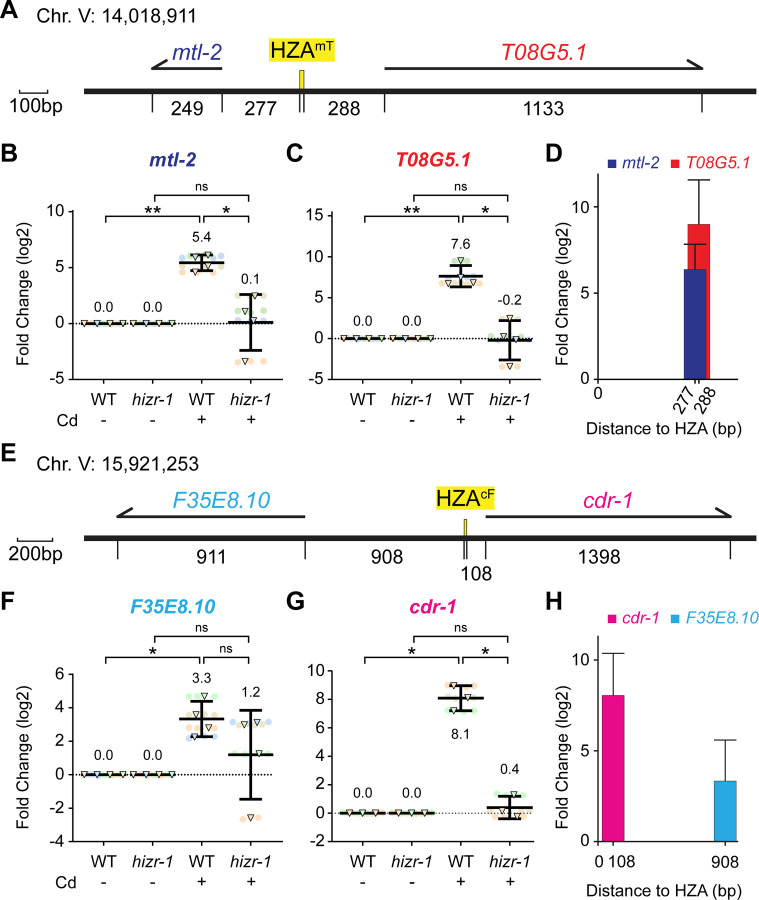
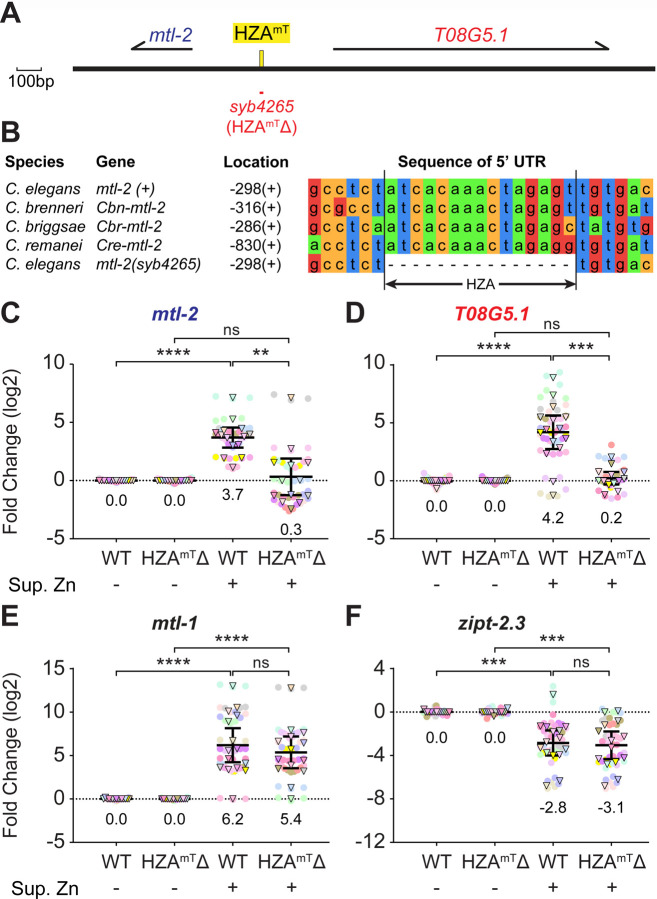
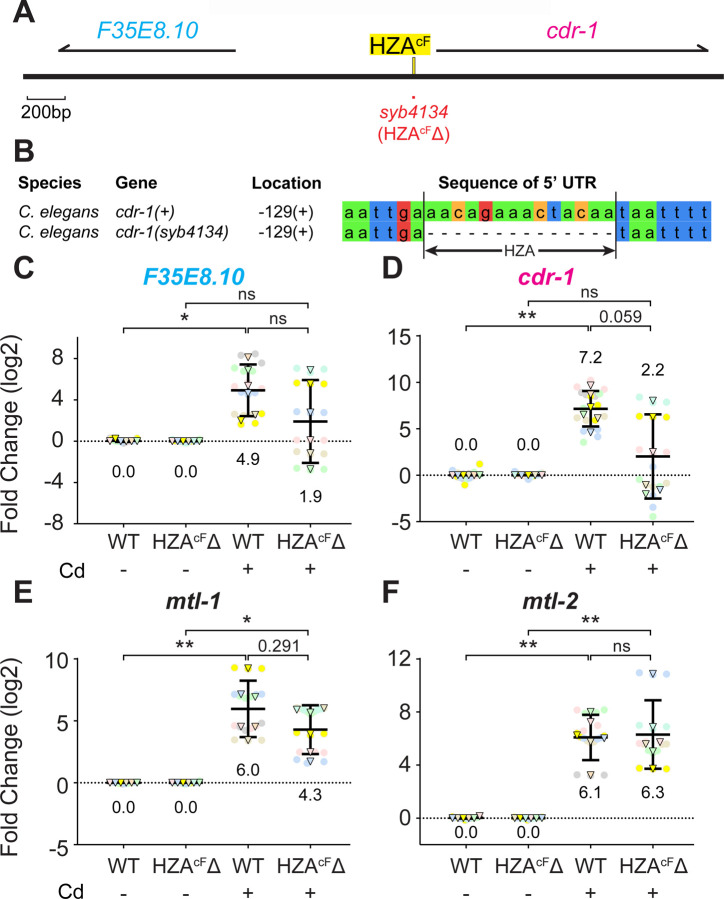
Enhancers play critical roles in gene expression, but a full understanding of their complex functions has yet to be defined. The cellular response to excess zinc levels in requires the HIZR-1 transcription factor, which binds the high-zinc activation (HZA) enhancer in the promoters of multiple target genes. Cadmium hijacks the excess zinc response by binding and activating HIZR-1. By analyzing the genome-wide transcriptional response to excess zinc and cadmium, we identified two positions in the genome where head-to-head oriented genes are both induced by metals. In both examples, a single predicted HZA enhancer is positioned between the two translational start sites. We hypothesized that a single enhancer can control both head-to-head genes, an arrangement that has not been extensively characterized. To test this hypothesis, we used CRISPR genome editing to precisely delete the HZA enhancer positioned between and ; in this mutant, both head-to-head genes display severely reduced zinc-activated transcription, whereas zinc-activated transcription of more distant genes was not strongly affected. Deleting the HZA enhancer positioned between and caused both head-to-head genes to display reduced cadmium-activated transcription, whereas cadmium-activated transcription of more distant genes was not strongly affected. These studies rigorously document that a single HZA enhancer can control two head-to-head genes, advancing our understanding of the diverse functions of enhancers.
增强子在基因表达中发挥着关键作用,但对其复杂功能的全面理解尚未明确。细胞对过量锌水平的反应需要HIZR-1转录因子,该因子与多个靶基因启动子中的高锌激活(HZA)增强子结合。镉通过结合并激活HIZR-1来劫持过量锌反应。通过分析对过量锌和镉的全基因组转录反应,我们在基因组中确定了两个位置,其中头对头排列的基因均被金属诱导。在这两个例子中,一个预测的HZA增强子位于两个翻译起始位点之间。我们假设一个单一的增强子可以控制两个头对头的基因,这种排列尚未得到广泛表征。为了验证这一假设,我们使用CRISPR基因组编辑精确删除位于[具体基因1]和[具体基因2]之间的HZA增强子;在这个突变体中,两个头对头的基因都显示出锌激活转录严重减少,而更远距离基因的锌激活转录没有受到强烈影响。删除位于[具体基因3]和[具体基因4]之间的HZA增强子导致两个头对头的基因镉激活转录减少,而更远距离基因的镉激活转录没有受到强烈影响。这些研究严格证明了一个单一的HZA增强子可以控制两个头对头的基因,推进了我们对增强子多样功能的理解。