Zhang Zhiyuan, Zhang Pengwei, He Fumin, Hou Yingdong, Geng Xiaowen, Xu Ruilong, Li Ruiting, Tian Yadong, Li Wenting, Sun Guirong, Jiang Ruirui, Liu Xiaojun, Han Ruili, Li Guoxi, Kang Xiangtao, Li Donghua
College of Animal Science and Technology, Henan Agricultural University, Zhengzhou, 450046, P. R. China.
Henan University of Animal Husbandry and Economy, Zhengzhou, 450046, China.
BMC Genomics. 2025 Apr 7;26(1):348. doi: 10.1186/s12864-025-11543-8.
Tyrosine is a prerequisite for melanin biosynthesis and plays a crucial role in the growth and development of melanocytes, but the underlying mechanism is still unclear. In our previous research, we added 10-10 mol/L tyrosine to the melanocytes of black-bone chickens and found that 10 mol/L tyrosine significantly increased the tyrosinase content in melanocytes.
In this study, melanocytes from Xichuan black-bone chickens were used as research objects, 10 mol/L tyrosine was added for transcriptome sequencing. By analyzing miRNA and mRNA expression profiles, the miRNA-mRNA network was constructed, the targeting relationship was demonstrated by double luciferase reporting experiments, and the influence of tyrosine-mediated miRNA-mRNA network on melanin deposition was verified by constructing overexpression and interference vectors.
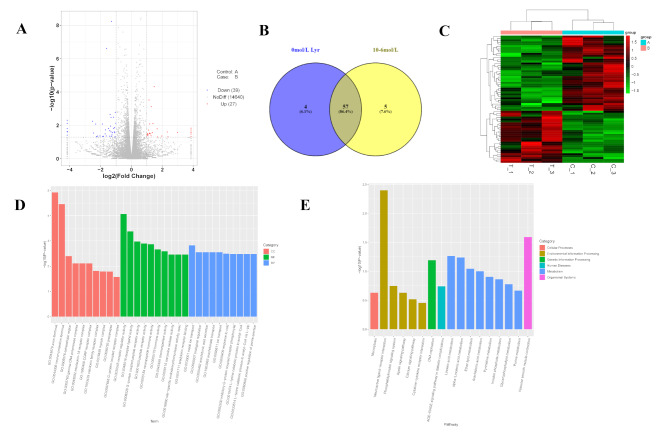
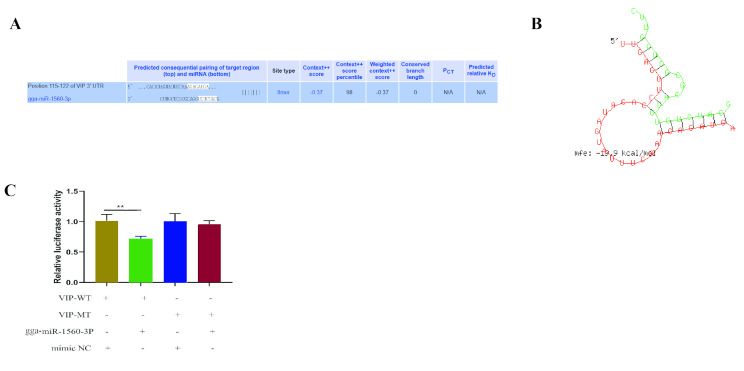
We found that tyrosine promoted the proliferation and migration of melanocytes, and expression profile analysis identified 57 differentially expressed mRNAs (DEGs) and 19 differentially expressed miRNAs (DEMs). Fifty miRNA‒mRNA target gene pairs were identified via coexpression network analysis of the DEGs and the DEMs that were predicted to target various genes. Notably, VIP gene was reported to be involved in the development and deposition of melanoma cells. The binding of VIP to miR-1560-3p was further validated by a dual-luciferase reporter assay. In addition, test confirmed that miR-1560-3p inhibited the proliferation and migration of melanocytes and reduced the tyrosinase content. In conclusion, we found that tyrosine may affects melanin deposition in Xichuan black-bone chickens by affecting the miR-1560-3p-VIP axis. The results of this study provide experimental evidence for elucidating the mechanism of tyrosine in melanin deposition in black-bone chickens, and may serve as a reference for future investigations.
酪氨酸是黑色素生物合成的前提条件,在黑素细胞的生长和发育中起关键作用,但其潜在机制仍不清楚。在我们之前的研究中,我们向乌鸡的黑素细胞中添加了10⁻¹⁰ mol/L的酪氨酸,发现10 mol/L的酪氨酸显著增加了黑素细胞中酪氨酸酶的含量。
在本研究中,以西川乌鸡的黑素细胞为研究对象,添加10 mol/L酪氨酸进行转录组测序。通过分析miRNA和mRNA表达谱,构建miRNA-mRNA网络,通过双荧光素酶报告实验验证靶向关系,并通过构建过表达和干扰载体验证酪氨酸介导的miRNA-mRNA网络对黑色素沉积的影响。
我们发现酪氨酸促进了黑素细胞的增殖和迁移,表达谱分析鉴定出57个差异表达的mRNA(DEGs)和19个差异表达的miRNA(DEMs)。通过对DEGs和预测靶向各种基因的DEMs进行共表达网络分析,鉴定出50个miRNA-mRNA靶基因对。值得注意的是,据报道VIP基因参与黑色素瘤细胞的发育和沉积。双荧光素酶报告试验进一步验证了VIP与miR-1560-3p的结合。此外,试验证实miR-1560-3p抑制了黑素细胞的增殖和迁移,并降低了酪氨酸酶含量。总之,我们发现酪氨酸可能通过影响miR-1560-3p-VIP轴影响西川乌鸡的黑色素沉积。本研究结果为阐明酪氨酸在乌鸡黑色素沉积中的作用机制提供了实验依据,可为今后的研究提供参考。