Odiase Osamuedeme J, Smith Kierra, Ogunfunmi Grace, Afulani Patience A
Department of Obstetrics, Gynecology & Reproductive Sciences, University of California, San Francisco, USA.
San Francisco State University, San Francisco, USA.
EClinicalMedicine. 2025 Mar 20;82:103145. doi: 10.1016/j.eclinm.2025.103145. eCollection 2025 Apr.
Person-centered maternity care (PCMC) refers to respectful, responsive, and compassionate childbirth care. The PCMC scale enables quantitative measurement of PCMC. Despite the widespread use of the PCMC scale, no global synthesis exists. We, therefore, conducted a global systematic review of studies using the PCMC scale to quantitatively assess women's childbirth experiences, evaluate the scale's psychometric properties, and identify predictors of PCMC.
We searched PubMed, Web of Science, and Embase from inception to September 3, 2024. Included studies used the PCMC scale by Afulani et al. to examine the facility-based childbirth experiences of women in any setting, with no time or language restrictions. Three reviewers independently assessed titles, abstracts, and full texts. We assessed study quality using Joanna Briggs Institute critical appraisal tools. We utilized a standardized extraction template to extract full PCMC and sub-scale scores (standardizing scores to a 0-100 range for easier comparison), predictors, and psychometric properties. The primary outcome is the mean PCMC score.
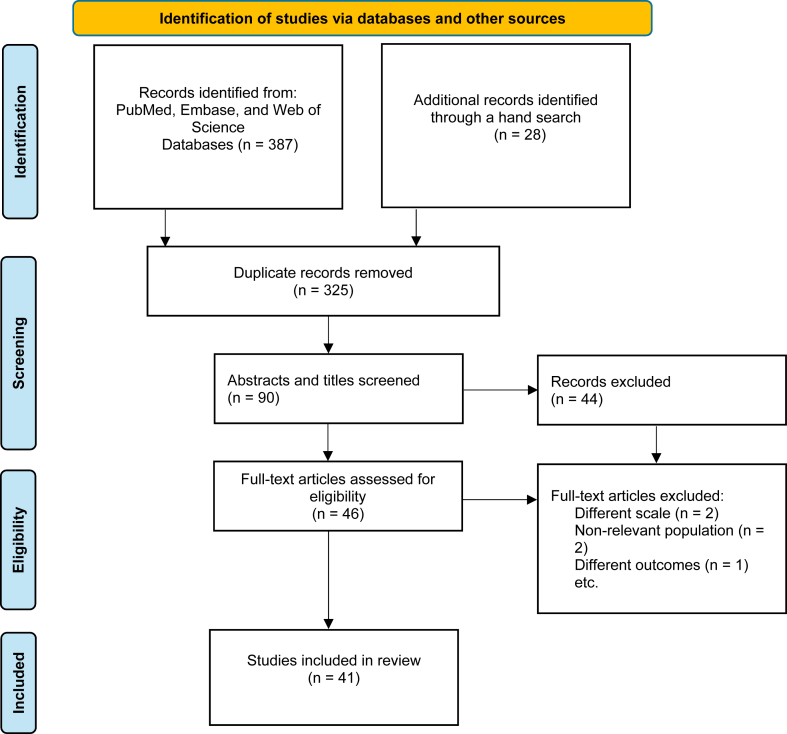
Our initial search yielded 415 articles, of which 41 publications from 32 independent samples were included. Most studies were conducted in Africa (63%). Mean PCMC scores were generally lower in studies from Africa (under 75), moderate in Asia (60 to over 90), and higher in North America (over 80). The lowest score reported was 38.2/100 (SD = 15.8) in an observational study conducted in Sierra Leone, while the highest was 97.1/100 (SD = 2.9) following an intervention in India. The lowest scoring domain across countries was communication and autonomy, with the lowest score at 18.1/100 in a study in Ethiopia. Positive predictors of PCMC included higher wealth, education, early antenatal care, and birth in lower-level and private health facilities. Inconsistent predictors included age, marital status, and obstetric complications.
PCMC is sub-optimal globally, particularly in the domain of communication and autonomy. There are also inequities in PCMC driven by various sociodemographic and health systems-related factors. Interventions to improve women's experiences and to address the inequities are therefore needed.
None.
以产妇为中心的护理(PCMC)是指尊重、响应性和富有同情心的分娩护理。PCMC量表能够对PCMC进行定量测量。尽管PCMC量表被广泛使用,但尚无全球综合研究。因此,我们对使用PCMC量表的研究进行了一项全球系统评价,以定量评估女性的分娩经历,评估该量表的心理测量特性,并确定PCMC的预测因素。
我们检索了从数据库建立到2024年9月3日的PubMed、Web of Science和Embase。纳入的研究使用了阿富拉尼等人的PCMC量表,以考察任何环境下女性在医疗机构的分娩经历,没有时间或语言限制。三位评审员独立评估标题、摘要和全文。我们使用乔安娜·布里格斯研究所的批判性评价工具评估研究质量。我们使用标准化的提取模板来提取完整的PCMC和子量表分数(将分数标准化到0-100范围以便于比较)、预测因素和心理测量特性。主要结果是PCMC的平均分数。
我们的初步检索产生了415篇文章,其中包括来自32个独立样本的41篇出版物。大多数研究在非洲进行(63%)。非洲研究中的PCMC平均分数普遍较低(低于75),亚洲为中等(60至90以上),北美较高(超过80)。报告的最低分数是在塞拉利昂进行的一项观察性研究中的38.2/100(标准差=15.8),而最高分数是在印度进行干预后的97.1/100(标准差=2.9)。各国得分最低的领域是沟通和自主权,在埃塞俄比亚的一项研究中最低分数为18.1/100。PCMC的积极预测因素包括较高的财富、教育程度、早期产前护理以及在较低级别和私立医疗机构分娩。不一致的预测因素包括年龄、婚姻状况和产科并发症。
PCMC在全球范围内未达到最佳水平,尤其是在沟通和自主权领域。PCMC还存在由各种社会人口学和卫生系统相关因素导致的不平等。因此,需要采取干预措施来改善女性的体验并解决不平等问题。
无。