Wang Qiang, Zhang Shuqing, He Xiaohua, Li Siyi, Xu Xiaohui, Feng Yanwei, Yang Jianmin, Sun Guohua
School of Fisheries, Ludong University, Yantai, 264025, China.
Shandong Anyuan Seed Industry Technology Co., Ltd, Yantai, 264001, China.
BMC Genomics. 2025 Apr 10;26(1):363. doi: 10.1186/s12864-025-11532-x.
Global climate change has significantly increased environmental stress in marine ecosystems, with rising sea surface temperatures and declining dissolved oxygen (DO) levels. These stressors pose critical challenges to aquaculture, particularly for Apostichopus japonicus, an economically significant species in China. A. japonicus is highly sensitive to combined high-temperature and hypoxia stress, which disrupts physiological processes, suppresses immune responses, and increases mortality. While epigenetic mechanisms such as N6-methyladenosine (m6A) RNA modifications are known to regulate stress adaptation, their role under dual stressors in A. japonicus remains poorly understood.
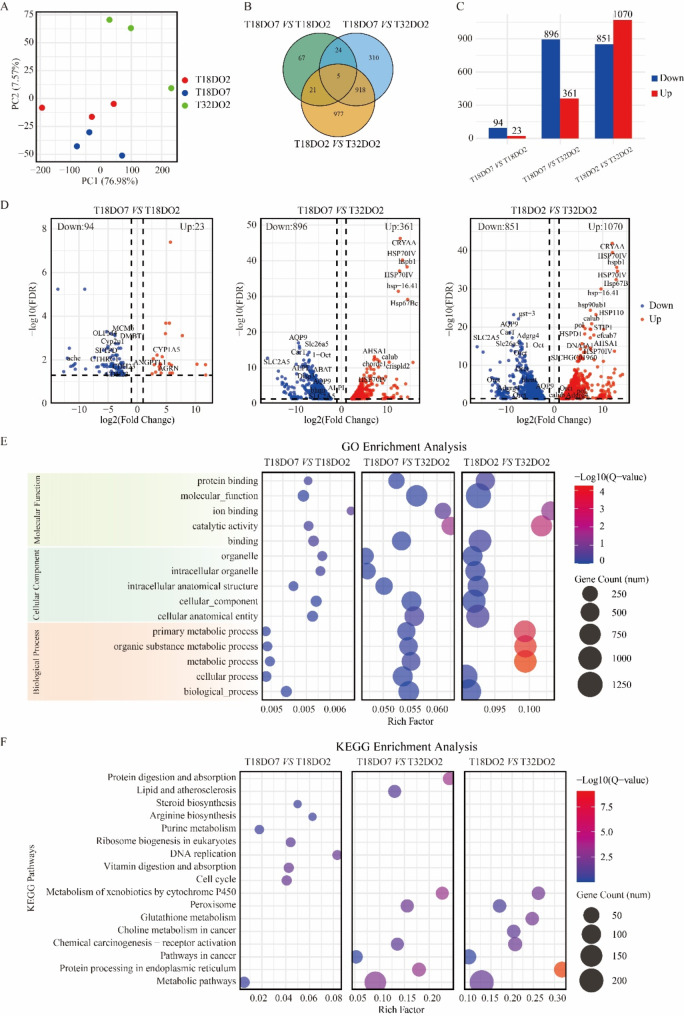
This study integrates m6A methylation sequencing (MeRIP-seq) and transcriptomic analysis (RNA-seq) to investigate molecular responses in A. japonicus under combined high-temperature (32 °C) and hypoxia (DO = 2 mg/L). Results show that approximately 90% of genes had 1-3 m6A peaks, with single peaks being the most frequent (∼ 60%). Genes with m6A modifications exhibited varying expression levels, with some showing significantly higher expression, suggesting a complex relationship between m6A methylation and stress-responsive gene expression. GO and KEGG enrichment analyses revealed that m6A-modified genes regulate pathways associated with oxidative stress, protein homeostasis, and energy metabolism, such as the PI3K-Akt and MAPK signaling pathways. Key stress-responsive genes, including HSP70, NOX5, and SLC7A11, exhibited dynamic m6A methylation changes, highlighting their roles in redox homeostasis and cellular resilience. Comparative analysis across experimental groups revealed distinct molecular responses to hypoxia, high-temperature stress, and their combination, with combined stress inducing more pronounced changes in m6A methylation and gene expression.
In this study, we explored the central regulatory role of m6A RNA methylation in the response of A. japonicus to the dual environmental stress of high-temperature and hypoxia. The findings show that m6A modification regulates the expression of key genes, allowing A. japonicus to effectively adapt to harsh environmental conditions. This study not only provides an important new perspective on the molecular stress recovery mechanism of marine invertebrates in the face of complex environmental stress, but it also provides theoretical support for aquaculture practice, assisting in the development of more stress-resistant aquaculture systems to deal with the severe challenges posed by global climate change.
全球气候变化显著增加了海洋生态系统中的环境压力,导致海面温度上升和溶解氧(DO)水平下降。这些压力源给水产养殖带来了严峻挑战,尤其是对中国具有重要经济意义的刺参(Apostichopus japonicus)而言。刺参对高温和缺氧复合胁迫高度敏感,这种胁迫会扰乱生理过程、抑制免疫反应并增加死亡率。虽然已知N6-甲基腺苷(m6A)RNA修饰等表观遗传机制可调节应激适应,但它们在刺参双重胁迫下的作用仍知之甚少。
本研究整合了m6A甲基化测序(MeRIP-seq)和转录组分析(RNA-seq),以研究刺参在高温(32°C)和缺氧(DO = 2mg/L)复合胁迫下的分子反应。结果表明,约90%的基因有1-3个m6A峰,单峰最为常见(约60%)。具有m6A修饰的基因表现出不同的表达水平,有些基因表达显著升高,这表明m6A甲基化与应激反应基因表达之间存在复杂关系。基因本体(GO)和京都基因与基因组百科全书(KEGG)富集分析表明,m6A修饰的基因调节与氧化应激、蛋白质稳态和能量代谢相关的途径,如PI3K-Akt和MAPK信号通路。关键应激反应基因,包括热休克蛋白70(HSP70)、NADPH氧化酶5(NOX5)和溶质载体家族7成员11(SLC7A11),表现出动态m6A甲基化变化,突出了它们在氧化还原稳态和细胞恢复力中的作用。跨实验组的比较分析揭示了对缺氧、高温胁迫及其组合的不同分子反应,复合胁迫在m6A甲基化和基因表达方面诱导了更明显的变化。
在本研究中,我们探讨了m6A RNA甲基化在刺参对高温和缺氧双重环境胁迫反应中的核心调控作用。研究结果表明,m6A修饰调节关键基因的表达,使刺参能够有效适应恶劣环境条件。本研究不仅为海洋无脊椎动物面对复杂环境胁迫时的分子应激恢复机制提供了重要的新视角,也为水产养殖实践提供了理论支持,有助于开发更具抗逆性的水产养殖系统,以应对全球气候变化带来的严峻挑战。