Juan Yu-Chung, Chen XianXiu, Tseng Ju-Yu, Lin Hui-Ju, Hung Cheng-Hao, Hsueh Po-Ren, Lin Jung-Ju, Cho Der-Yang, Chen Chun-Chung
Department of Neurosurgery, China Medical University Hospital, Taichung, Taiwan.
Neuroscience and Brain Disease Center, China Medical University, Taichung, Taiwan.
Neurosurg Rev. 2025 Apr 11;48(1):359. doi: 10.1007/s10143-025-03511-3.
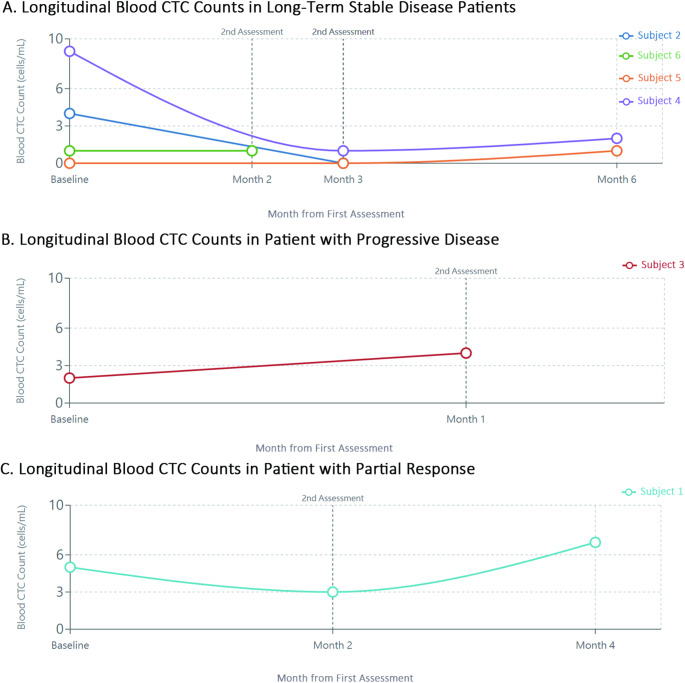
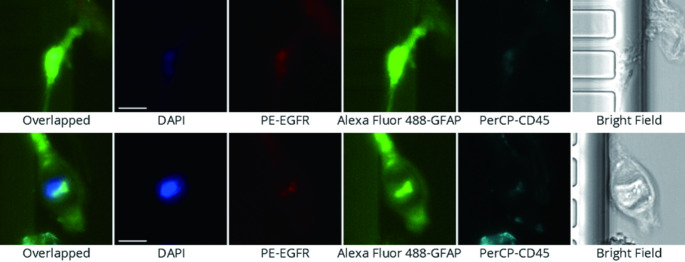
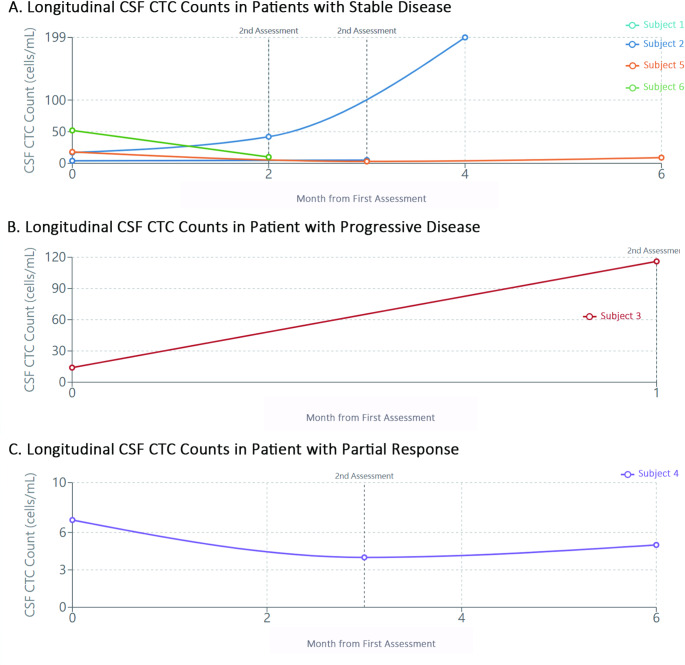
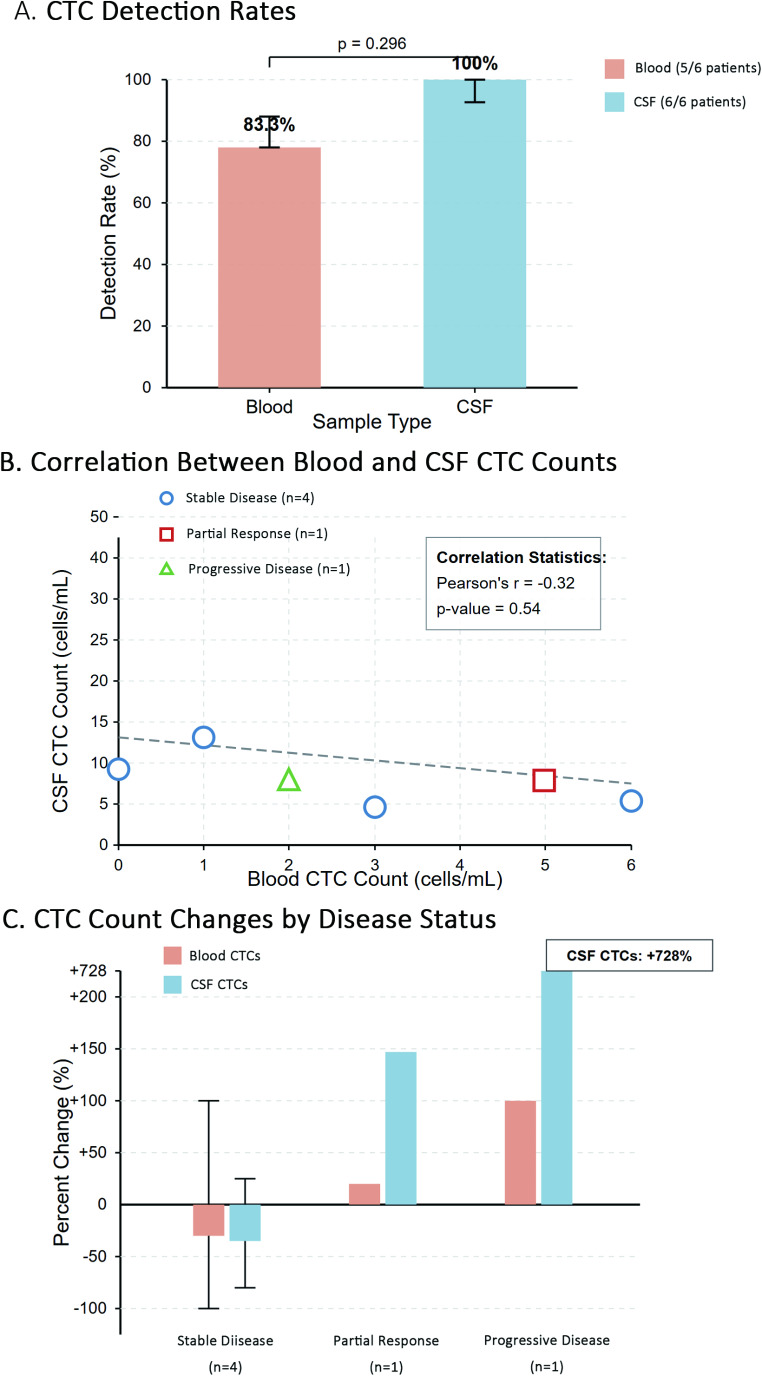
The elusive nature of brain tumor progression, hidden behind the blood-brain barrier, presents significant challenges for treatment monitoring in high-grade gliomas. In this feasibility study, we evaluate a novel approach to tracking glioblastoma through liquid biopsy, assessing whether tumor cells leave detectable molecular footprints in both blood and cerebrospinal fluid (CSF). Using the MiSelect R II System with specialized microfluidic technology, we analyzed paired blood and CSF samples from six glioblastoma patients, revealing a striking presence of circulating tumor cells (CTCs)- with higher abundance in CSF, where detection rates reached 100% compared to 83.3% in blood. Our technical validation demonstrates the system's capability to identify CTCs through multi-marker analysis (EGFR+/GFAP+/CD45-). Preliminary observations revealed higher CTC counts in CSF (median 15.5 cells/mL) compared to blood (median 3.0 cells/mL), with notable differences between compartments suggesting they may reflect distinct aspects of disease biology. In a patient who developed progressive disease, we observed a substantial increase in CSF CTCs from 14 to 116 cells/mL, warranting further investigation in larger cohorts. Additionally, we detected CTC clusters in both compartments, an intriguing finding with potential biological significance. While our interim analysis provides technical proof-of-concept for CTC detection in glioblastoma patients, the limited sample size precludes definitive conclusions regarding clinical utility. These findings establish a methodological foundation for future comprehensive studies exploring the relationship between CTC dynamics and clinical outcomes in high-grade gliomas.
脑肿瘤进展具有难以捉摸的特性,隐藏在血脑屏障之后,这给高级别胶质瘤的治疗监测带来了重大挑战。在这项可行性研究中,我们评估了一种通过液体活检追踪胶质母细胞瘤的新方法,以评估肿瘤细胞是否会在血液和脑脊液(CSF)中留下可检测的分子痕迹。使用配备专门微流控技术的MiSelect R II系统,我们分析了6例胶质母细胞瘤患者的配对血液和脑脊液样本,发现循环肿瘤细胞(CTC)显著存在——在脑脊液中的丰度更高,其检测率达到100%,而血液中的检测率为83.3%。我们的技术验证证明了该系统通过多标记分析(EGFR+/GFAP+/CD45-)识别CTC的能力。初步观察结果显示,脑脊液中的CTC计数(中位数为15.5个细胞/毫升)高于血液(中位数为3.0个细胞/毫升),不同腔室之间存在显著差异,这表明它们可能反映了疾病生物学的不同方面。在一名病情进展的患者中,我们观察到脑脊液中的CTC从14个细胞/毫升大幅增加到116个细胞/毫升,这值得在更大的队列中进一步研究。此外,我们在两个腔室中都检测到了CTC簇这一具有潜在生物学意义的有趣发现。虽然我们的中期分析为胶质母细胞瘤患者CTC检测提供了技术概念验证,但样本量有限,无法就临床效用得出明确结论。这些发现为未来全面研究高级别胶质瘤中CTC动态与临床结果之间的关系奠定了方法学基础。