Cui Wenjie, Liu Yibai, Zhao Yang, Lei Lang, Li Houxuan
Nanjing Stomatological Hospital, Affiliated Hospital of Medical School, Institute of Stomatology, Nanjing University, Nanjing, China.
Department of Orthodontics, Nanjing Stomatological Hospital, Affiliated Hospital of Medical School, Institute of Stomatology, Nanjing University, No. 30, Zhongyang Road, Xuanwu District, Nanjing, 210018, Jiangsu, China.
BMC Oral Health. 2025 Apr 11;25(1):547. doi: 10.1186/s12903-025-05915-5.
To explore the incidence and risk factors of open gingival embrasures (OGEs) in the front region of adult none-extraction cases with clear aligner treatment (CAT).
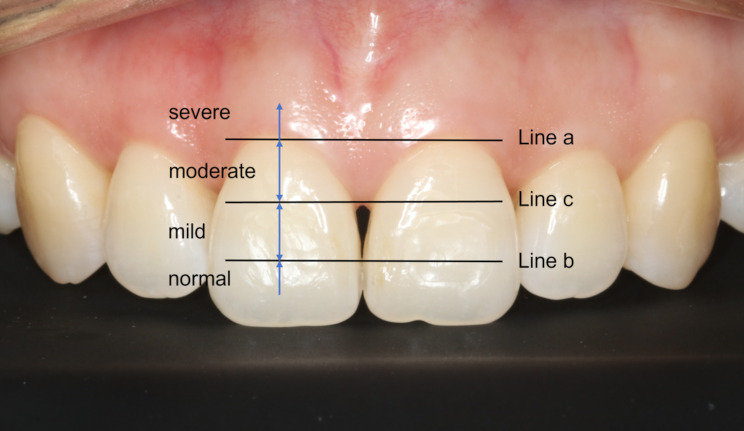
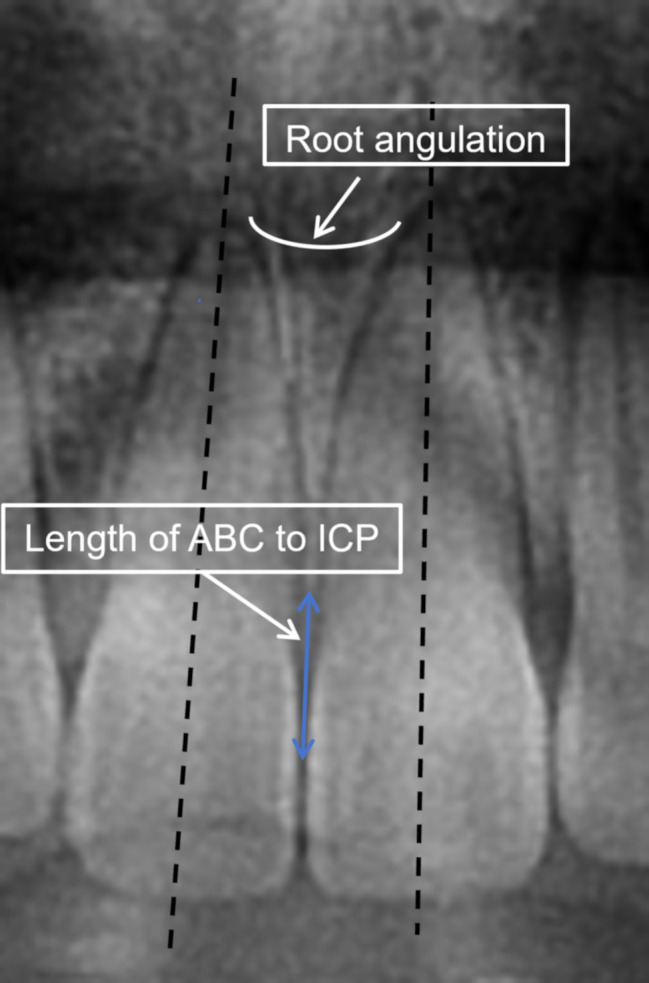
This retrospective study included eighty-two adult patients with non-extraction and CAT treatment, all of which were provided by Invisalign. A total of 820 tooth sites were assessed for OGEs in intraoral photographs. These sites were categorized into nonoccurrence group and occurrence group. The parameters- including crown shape, root angulation (parallel root recorded as zero and divergent root as positive), distance between cementoenamel junction, and distance from interproximal contact point (ICP) to alveolar bone crest (ABC)- were compared between occurrence group and nonoccurrence group using independent t-test and were further analyzed based on the severity. Logistic regression analysis was used to determine the significant risk factors of OGEs.
The overall incidence of OGEs was 13.4% in the maxilla and 30.7% in the mandible. The highest incidence was found between the mandibular central incisors, reaching 39.02%. Age (Maxilla: OR = 1.119, 95%CI (1.048-1.195); Mandible: OR = 1.068, 95%CI (1.018-1.121), mandibular crowding (OR = 0.846, 95%CI (0.729-0.981), distance between adjacent maxillary teeth at the cementoenamel junction (Maxilla: OR = 2.400, 95%CI (1.146-5.027) and distance from ICP to ABC (Maxilla: OR = 8.046, 95%CI (4.016-16.122); Mandible: OR = 3.475, 95%CI (2.390-5.052) in the maxilla and mandible have significant correlation with the occurrence of OGEs (P<0.05).
OGE is a common complication after CAT, adversely affecting the smiling aesthetics. Clinicians should be well aware of risk factors, such as age, degree of dental crowding, and the distance from the ICP to ABC.
探讨成人非拔牙病例采用隐形矫治器治疗(CAT)后前牙区开放性龈外展隙(OGEs)的发生率及危险因素。
这项回顾性研究纳入了82例接受非拔牙及CAT治疗的成年患者,所有病例均来自隐适美公司。通过口腔内照片对总共820个牙位进行OGEs评估。这些牙位被分为未发生组和发生组。采用独立样本t检验比较发生组和未发生组之间的参数,包括牙冠形态、牙根角度(平行牙根记为0,发散牙根记为正值)、牙骨质釉质界间距以及从邻面接触点(ICP)到牙槽嵴顶(ABC)的距离,并根据严重程度进行进一步分析。采用逻辑回归分析确定OGEs的显著危险因素。
上颌OGEs的总体发生率为13.4%,下颌为30.7%。下颌中切牙之间的发生率最高,达到39.02%。年龄(上颌:OR = 1.119,95%CI(1.048 - 1.195);下颌:OR = 1.068,95%CI(1.018 - 1.121))、下颌拥挤程度(OR = 0.846,95%CI(0.729 - 0.981))、上颌相邻牙齿在牙骨质釉质界的间距(上颌:OR = 2.400,95%CI(1.146 - 5.027))以及上颌和下颌从ICP到ABC的距离(上颌:OR = 8.046,95%CI(4.016 - 16.122);下颌:OR = 3.475,95%CI(2.390 - 5.052))与OGEs的发生有显著相关性(P<0.05)。
OGE是CAT后的常见并发症,对微笑美学有不利影响。临床医生应充分了解年龄、牙列拥挤程度以及从ICP到ABC的距离等危险因素。