Eun So Young, Lee Chang Hoon, Cheon Yoon-Hee, Chung Chong Hyuk, Lee Myeung Su, Kim Ju-Young
Musculoskeletal and Immune Disease Research Institute, School of Medicine, Wonkwang University, 460 Iksandae-ro, Iksan 54538, Republic of Korea.
Department of Pharmacology, School of Medicine, Wonkwang University, 460 Iksandae-ro, Iksan 54538, Republic of Korea.
Nutrients. 2025 Mar 30;17(7):1217. doi: 10.3390/nu17071217.
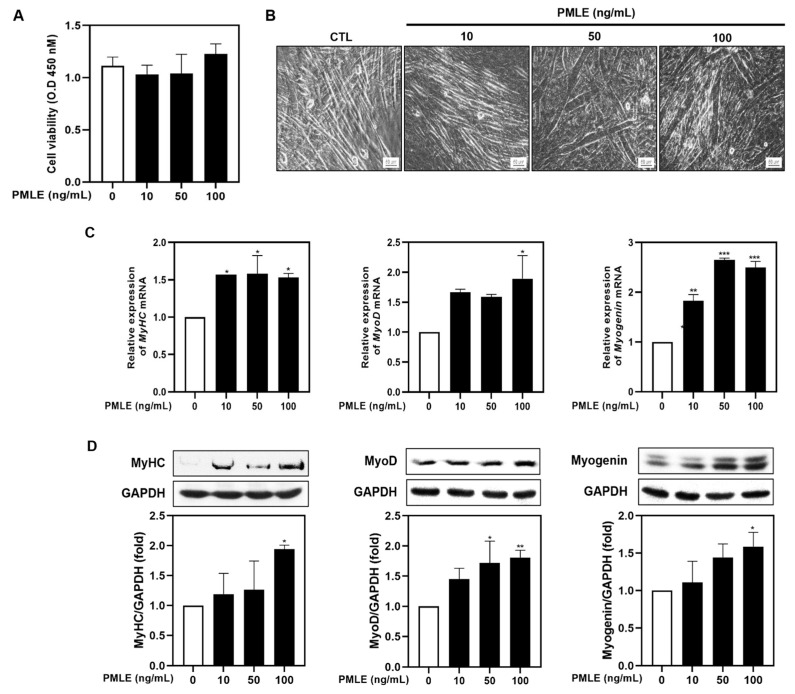
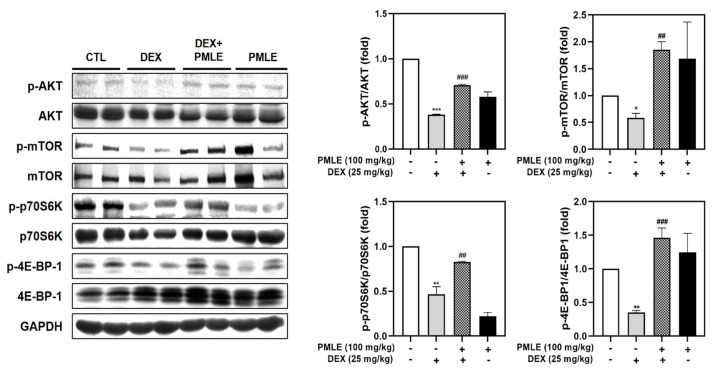
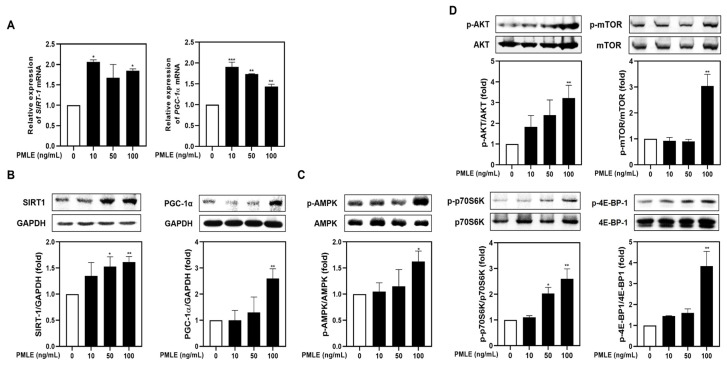
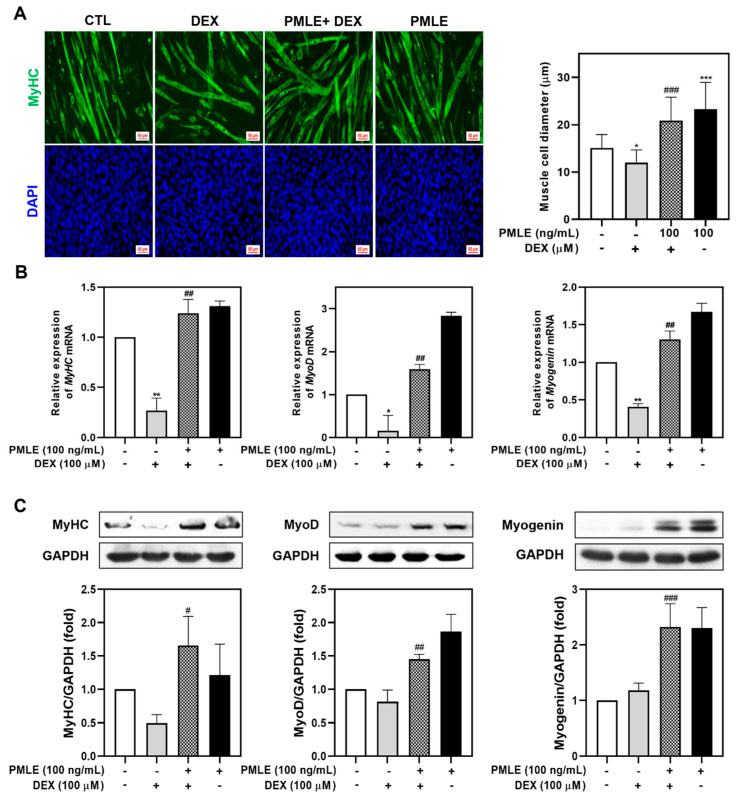
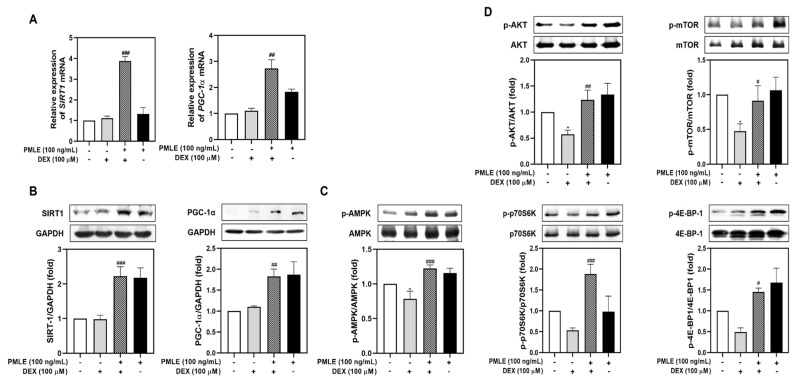
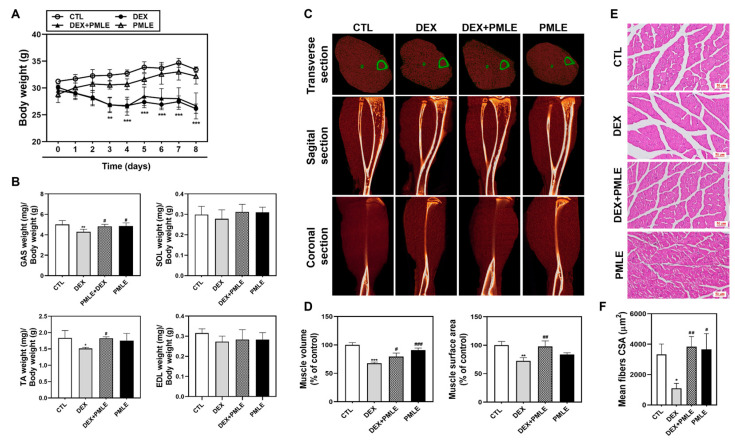
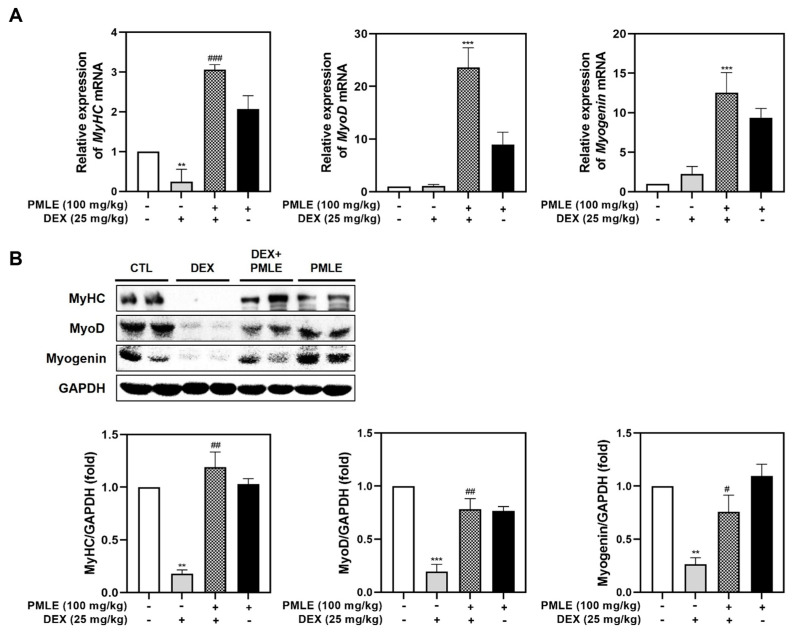
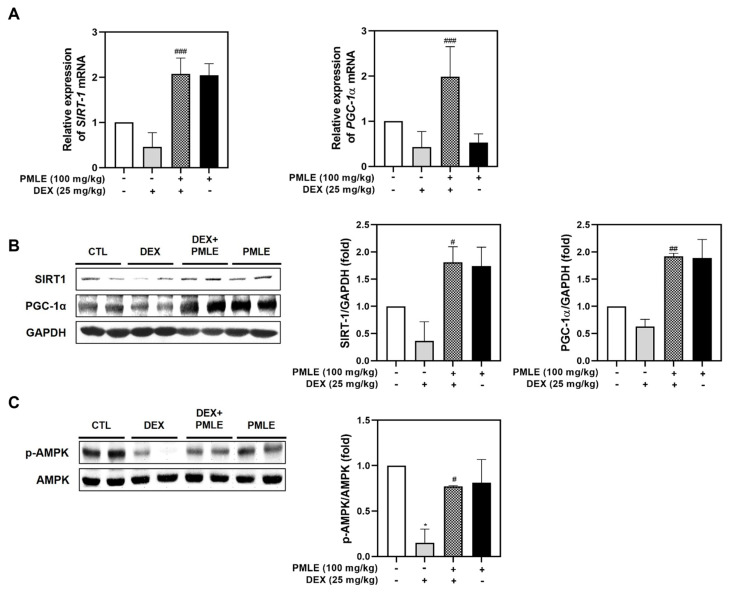
: Muscle atrophy, defined by diminished muscle mass and function, is a notable concern associated with aging, disease, and glucocorticoid treatment. var. extract (PMLE) demonstrates multiple bioactive properties, such as antioxidant, anti-inflammatory, and metabolic regulatory activities; however, its role in muscle atrophy has not been extensively investigated to date. This study examined how PMLE influences both muscle cell differentiation and dexamethasone (DEX)-induced muscle degeneration by focusing on the underlying molecular mechanisms. : This study examined the effects of PMLE on myogenic differentiation and DEX-induced muscle atrophy. C2C12 myoblasts were treated with PMLE (10-100 ng/mL) and assessed for changes in the expression of myogenesis-related genes and activation of Akt/mTOR and AMPK/SIRT1/PGC-1α signaling cascades. In vivo, a DEX-induced muscle atrophy model was used to assess muscle mass, fiber morphology, and molecular changes. : PMLE PMLE promoted muscle cell development by increasing the expression of MyHC, MyoD, and myogenin while activating protein synthesis and mitochondrial biogenesis pathways. PMLE counteracted DEX-induced myotube atrophy, restoring myotube diameter and promoting cellular fusion in vitro. In vivo, PMLE mitigated muscle degradation in fast-twitch muscle groups and reversed DEX-induced suppression of key anabolic and mitochondrial pathways. : These findings suggest that PMLE promotes myogenic differentiation and protects against muscle atrophy by regulating critical molecular pathways, indicating its promise as a treatment candidate for conditions involving muscle wasting. Further studies are required to assess its clinical application and long-term safety efficacy.
肌肉萎缩由肌肉质量和功能减退所定义,是与衰老、疾病及糖皮质激素治疗相关的一个显著问题。马齿苋提取物(PMLE)具有多种生物活性特性,如抗氧化、抗炎和代谢调节活性;然而,其在肌肉萎缩中的作用迄今尚未得到广泛研究。本研究通过聚焦潜在分子机制,考察了PMLE如何影响肌肉细胞分化和地塞米松(DEX)诱导的肌肉退化。:本研究考察了PMLE对成肌分化和DEX诱导的肌肉萎缩的影响。用PMLE(10 - 100 ng/mL)处理C2C12成肌细胞,并评估成肌相关基因表达的变化以及Akt/mTOR和AMPK/SIRT1/PGC - 1α信号级联的激活情况。在体内,使用DEX诱导的肌肉萎缩模型来评估肌肉质量、纤维形态和分子变化。:PMLE通过增加肌球蛋白重链(MyHC)、肌分化抗原(MyoD)和生肌调节因子(myogenin)的表达,同时激活蛋白质合成和线粒体生物发生途径,促进了肌肉细胞发育。PMLE抵消了DEX诱导的肌管萎缩,恢复了肌管直径并促进了体外细胞融合。在体内,PMLE减轻了快肌肌群中的肌肉退化,并逆转了DEX诱导的关键合成代谢和线粒体途径的抑制。:这些发现表明,PMLE通过调节关键分子途径促进成肌分化并预防肌肉萎缩,这表明它有望成为治疗涉及肌肉消瘦病症的候选药物。需要进一步研究以评估其临床应用及长期安全性疗效。