Wiarda Jayne E, Davila Kaitlyn M Sarlo, Trachsel Julian M, Loving Crystal L, Boggiatto Paola, Lippolis John D, Putz Ellie J
Virus and Prion Research Unit, National Animal Disease Center, Agricultural Research Service, United States Department of Agriculture, Ames, IA, USA.
Ruminant Diseases and Immunology Research Unit, National Animal Disease Center, Agricultural Research Service, United States Department of Agriculture, Ames, IA, USA.
Sci Rep. 2025 Apr 12;15(1):12689. doi: 10.1038/s41598-025-96657-5.
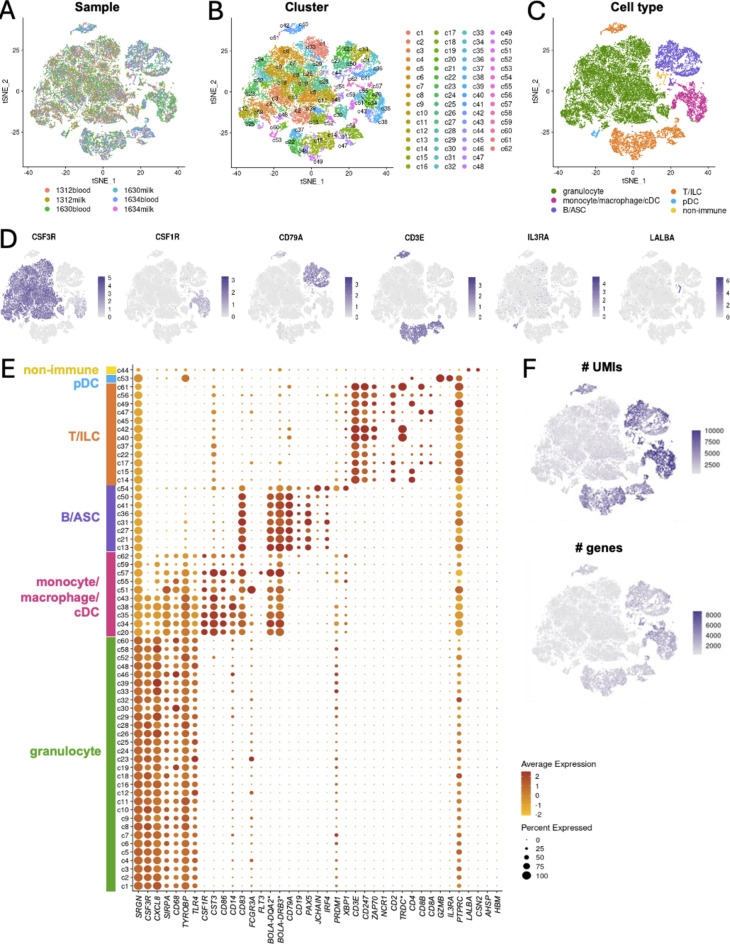
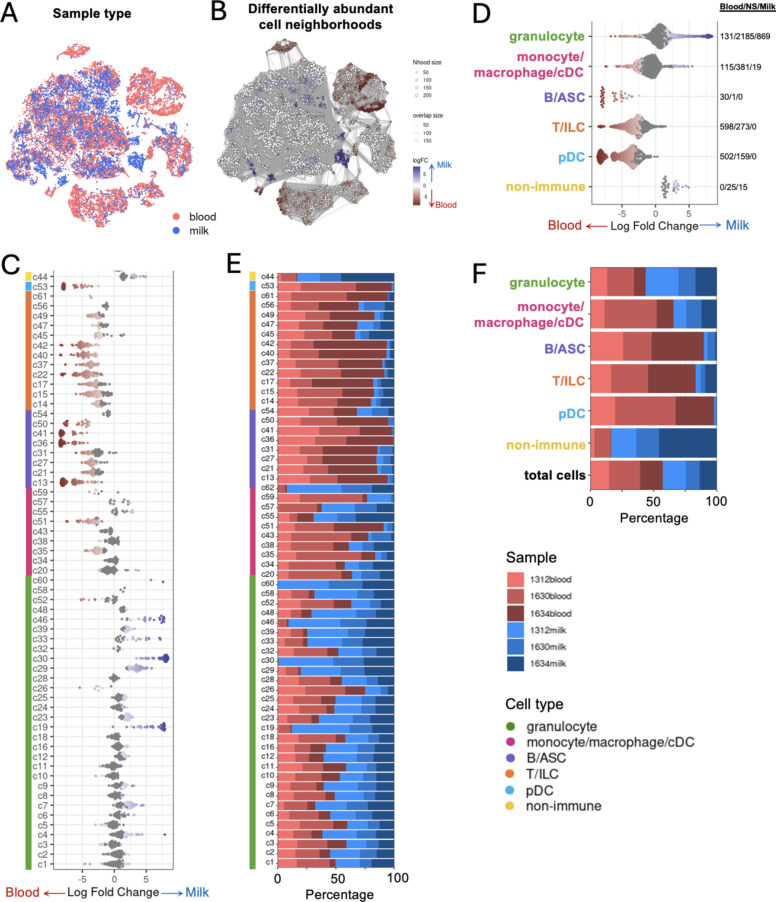
Mastitis remains the most prevalent and costly disease to dairy producers. Granulocytes are the primary host innate immune cell responders during infectious mastitis. Here we examine three mid-lactation Holsteins challenged with ~ 150 CFU of Staphylococcus aureus (Newbould) that developed chronic mastitis as assessed by bacteria and somatic cell counts in a single quarter. Single-cell RNA-sequencing (scRNA-seq) of blood and milk cells identified immune cell populations of interest from both tissues, and the proportion of cell types recovered via scRNA-seq were highly similar to those recovered via flow cytometry. Granulocytes were the predominating cell type in both blood and milk samples; however granulocytes identified via scRNA-seq revealed several clusters comprised primarily of milk-derived cells. Milk-enriched granulocyte clusters were further investigated to identify gene signatures indicative of the granulocyte-specific localized immune responses in the mammary gland during chronic mastitis infection. Biological process enrichment analysis of gene signatures further revealed relevant networks such as granulocyte migration, myeloid cell differentiation, and inflammatory responses. In total, the work describes the immune landscape occurring at both peripheral and local sites of cattle with mastitis and identified important granulocyte-specific features of the localized immune response occurring during chronic infection.
乳腺炎仍然是奶农面临的最普遍且成本最高的疾病。粒细胞是传染性乳腺炎期间主要的宿主固有免疫细胞应答者。在此,我们检测了三头处于泌乳中期的荷斯坦奶牛,它们受到约150 CFU金黄色葡萄球菌(纽博尔德菌株)的攻击,通过对单个乳腺象限中的细菌和体细胞计数评估,这些奶牛患上了慢性乳腺炎。对血液和乳腺细胞进行单细胞RNA测序(scRNA-seq),确定了来自这两种组织的感兴趣的免疫细胞群体,并且通过scRNA-seq回收的细胞类型比例与通过流式细胞术回收的细胞类型比例高度相似。粒细胞是血液和乳腺样本中的主要细胞类型;然而,通过scRNA-seq鉴定的粒细胞显示出几个主要由乳腺来源细胞组成的簇。对富含乳腺细胞的粒细胞簇进行了进一步研究,以确定在慢性乳腺炎感染期间指示乳腺中粒细胞特异性局部免疫反应的基因特征。基因特征的生物学过程富集分析进一步揭示了相关网络,如粒细胞迁移、髓样细胞分化和炎症反应。总的来说,这项工作描述了患有乳腺炎的奶牛外周和局部部位发生的免疫情况,并确定了慢性感染期间发生的局部免疫反应中重要的粒细胞特异性特征。