
从黎巴嫩贝鲁特生肉样本中分离出的耐黏菌素O157:H7中鉴定出 和 基因。
Identification of and Genes in Colistin-Resistant O157:H7 Isolated From Raw Meat Samples in Beirut, Lebanon.
作者信息
Fneish Fatima H, Domiati Souraya A, Abd El Galil Khaled H
机构信息
Department of Pharmaceutical Sciences, Faculty of Pharmacy, Beirut Arab University, Beirut, Lebanon.
Department of Pharmacology and Therapeutics, Faculty of Pharmacy, Beirut Arab University, Beirut, Lebanon.
出版信息
Int J Microbiol. 2025 Feb 27;2025:8079270. doi: 10.1155/ijm/8079270. eCollection 2025.
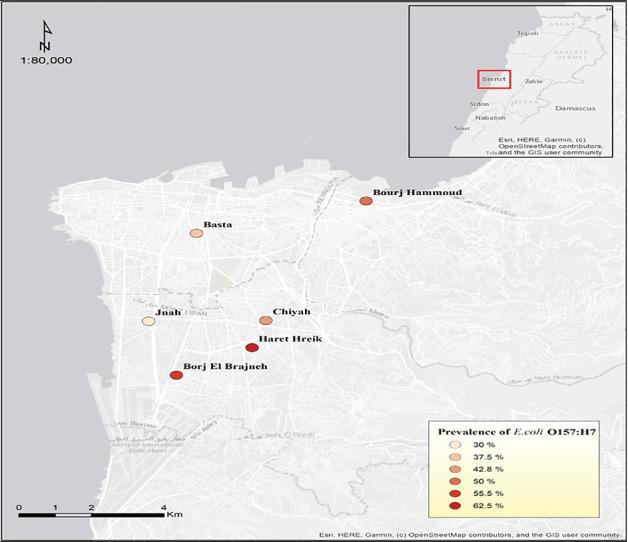
Colistin is a last-resort antibiotic used to treat multidrug-resistant Gram-negative bacterial infections. The global emergence of colistin resistance has been attributed to plasmid-mediated mobile colistin resistance () genes. In Lebanon, bacteria carrying the gene have increasingly been identified in food animal sources. This study is aimed at detecting colistin-resistant Shiga toxigenic O157:H7 in raw meat samples from local markets in the suburbs of Beirut and evaluating their antimicrobial resistance profiles. A total of 50 meat samples, including 25 minced beef and 25 burger samples, were collected and analyzed. Antimicrobial resistance patterns were determined using the Kirby-Bauer method, while colistin resistance and the presence of and genes were assessed using broth microdilution and PCR amplification techniques. Among these samples, 23 (46%) tested positive for O157:H7. Resistance to ampicillin and amoxicillin/clavulanic acid was observed in 96% of the samples, while 61% were resistant to trimethoprim/sulfamethoxazole, and 43% to chloramphenicol. Notably, 87% of the samples displayed colistin resistance, with a minimum inhibitory concentration (MIC) of ≥ 4 g/mL. The gene was present in four isolates (17.4%), and the gene was identified in 10 isolates (43.4%). This study is the first to document the presence of plasmid-mediated colistin resistance genes, and , in O157:H7 strains in Lebanon. These findings highlight a serious public health concern for the Lebanese community. Therefore, the responsible use of antibiotics across all healthcare sectors, combined with strict hygiene measures in food handling, is essential to control the spread of colistin-resistant genes.
黏菌素是一种用于治疗多重耐药革兰氏阴性菌感染的最后手段抗生素。全球黏菌素耐药性的出现归因于质粒介导的可移动黏菌素耐药(mcr)基因。在黎巴嫩,携带mcr基因的细菌在食用动物来源中越来越多地被发现。本研究旨在检测贝鲁特郊区当地市场生肉样品中对黏菌素耐药的产志贺毒素大肠杆菌O157:H7,并评估它们的抗菌耐药谱。总共收集并分析了50份肉类样品,包括25份碎牛肉和25份汉堡样品。使用 Kirby-Bauer 方法确定抗菌耐药模式,同时使用肉汤微量稀释法和 PCR 扩增技术评估黏菌素耐药性以及mcr-1和mcr-2基因的存在情况。在这些样品中,23份(46%)O157:H7检测呈阳性。96%的样品对氨苄西林和阿莫西林/克拉维酸耐药,而61%对甲氧苄啶/磺胺甲恶唑耐药,43%对氯霉素耐药。值得注意的是,87%的样品表现出黏菌素耐药性,最低抑菌浓度(MIC)≥4 μg/mL。mcr-1基因存在于4株分离菌中(17.4%),mcr-2基因在10株分离菌中被鉴定出来(43.4%)。本研究首次记录了黎巴嫩O157:H7菌株中质粒介导的黏菌素耐药基因mcr-1和mcr-2的存在情况。这些发现凸显了对黎巴嫩社区严重的公共卫生问题。因此,所有医疗保健部门负责任地使用抗生素,再加上食品处理过程中严格的卫生措施,对于控制黏菌素耐药基因的传播至关重要。



 Zotero 插件