• 文献检索
  • 文档翻译
  • 深度研究
  • 学术资讯
  • Suppr Zotero 插件Zotero 插件
  • 邀请有礼
  • 套餐&价格
  • 历史记录
应用&插件
Suppr Zotero 插件Zotero 插件浏览器插件Mac 客户端Windows 客户端微信小程序
定价
高级版会员购买积分包购买API积分包
服务
文献检索文档翻译深度研究API 文档MCP 服务
关于我们
关于 Suppr公司介绍联系我们用户协议隐私条款
关注我们

Suppr 超能文献

核心技术专利:CN118964589B侵权必究
粤ICP备2023148730 号-1Suppr @ 2026

文献检索

告别复杂PubMed语法,用中文像聊天一样搜索,搜遍4000万医学文献。AI智能推荐,让科研检索更轻松。

立即免费搜索

文件翻译

保留排版,准确专业,支持PDF/Word/PPT等文件格式,支持 12+语言互译。

免费翻译文档

深度研究

AI帮你快速写综述,25分钟生成高质量综述,智能提取关键信息,辅助科研写作。

立即免费体验

沙特阿拉伯公众对食物中毒、风险认知及食品安全行为的调查:一起食源性肉毒中毒暴发后的横断面调查

Public knowledge of food poisoning, risk perception and food safety practices in Saudi Arabia: A cross-sectional survey following foodborne botulism outbreak.

作者信息

Alhuzaimi Abdullah, Aljamaan Fadi, Al-Ajwad Fatema H, Alabdulkareem Wejdan, Alshahrani Fatimah S, Altamimi Ibraheem, Al-Eyadhy Lama, Bukhari Abdullah, BinOmair Alanoud, Al-Subaie Sarah, Shayah Yamen, Alhaboob Ali, Alanteet Alaa A, Alanteet Abeer, Alharbi Mohammad, Jamal Amr, Barry Mazin, Assiri Rasha Assad, Alhasan Khalid, Al-Tawfiq Jaffar A, Temsah Mohamad-Hani

机构信息

College of Medicine, King Saud University, Riyadh, Saudi Arabia.

Pediatric Cardiology Department, Cardiac Science Department, King Saud University Medical City, King Saud University, Riyadh, Saudi Arabia.

出版信息

Medicine (Baltimore). 2025 Apr 11;104(15):e41593. doi: 10.1097/MD.0000000000041593.

DOI:10.1097/MD.0000000000041593
PMID:40228247
原文链接:https://pmc.ncbi.nlm.nih.gov/articles/PMC11999408/
Abstract

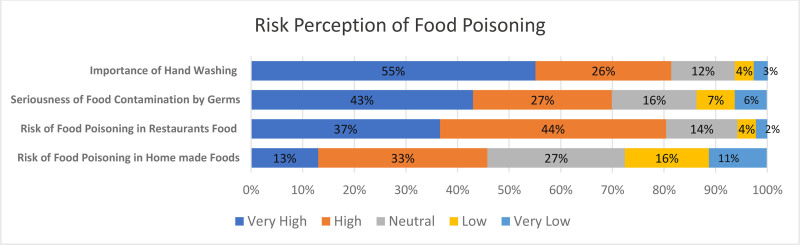
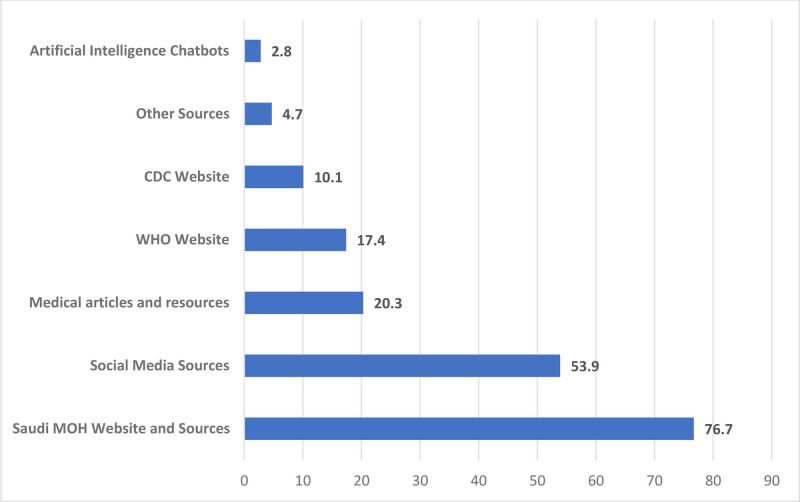
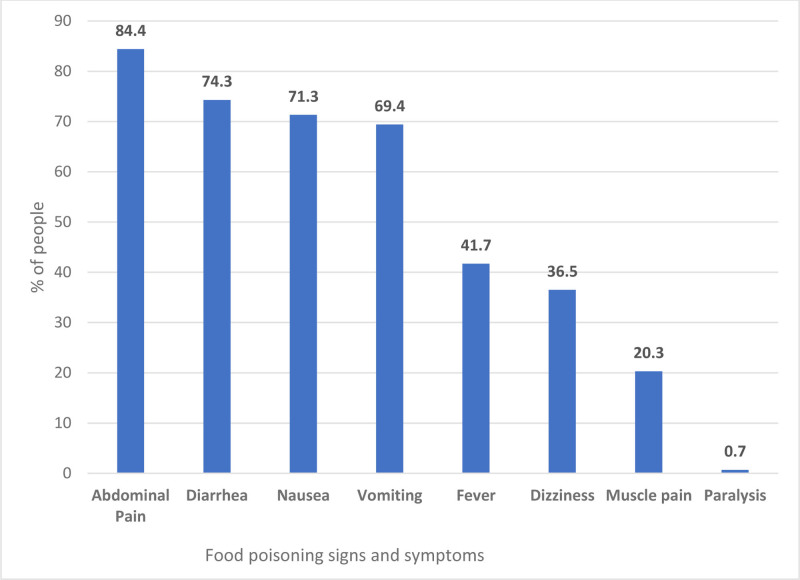
To investigate food poisoning knowledge, risk perception and safe food handling practices among Saudi Arabian public following foodborne botulism outbreak. A cross-sectional survey targeting the Saudi Arabian public between May 6 to 20, 2024, following the first foodborne botulism outbreak. Infectious disease and public health experts developed survey questions according to Saudi Public Health Authority and Ministry of Health (MOH) guidelines, and distributed surveys through social media. Of 3779 participants, 73.1% were female and 50.1% were aged 18 to 24 years. Almost one-third (30.2%) reported a previous food poisoning experience, with an incidence of 71.7 cases per 1000 person years. The most common perceived source of FP was restaurants foods (80.3%). The overall knowledge score of the participants regarding food poisoning was 3.42 ± 1.57 out of 7. The mean food safety practice score was 3.70 ± 1.42 out of 9. Multivariable regression analysis showed individuals aged 35 years or older (β = 0.205, P < .001), those who were married (β = 0.204, P = .003), participants with previous (FP) experience (β = 0.089, P = .009), and those who relied on information from the Ministry of Health or medical publications regarding FP (P < .001) exhibited significantly higher practice scores than other groups. The least adherence to safe practices were noted among the following: routine use of thermometer during cooking (2.7%), avoidance of washing raw chicken (13.7%) and washing hands after using cellphone during cooking (26.1%). The FP knowledge score did not correlate significantly with practice score (P = .065). This study highlights the significant knowledge gaps and inadequate food safety practices among the public in Saudi Arabia. Although certain groups, including adults (>35 years), married individuals, and those with previous food poisoning experience, showed greater adherence to safe food handling practices, adherence to specific preventive measures remained generally low. These findings highlight the need for targeted educational initiatives and interventions to improve food safety awareness and practices across diverse demographic groups in Saudi Arabia. The integration of generative AI tools, such as ChatGPT, as a public resource for food poisoning information, presents a new opportunity, but it requires further research and development to ensure accuracy and reliability.

摘要

为调查沙特阿拉伯公众在食源性肉毒中毒疫情后对食物中毒的认知、风险感知及安全食品处理行为。在2024年5月6日至20日对沙特阿拉伯公众开展了一项横断面调查,此次调查是在首次食源性肉毒中毒疫情之后进行的。传染病和公共卫生专家根据沙特公共卫生管理局和卫生部(MOH)的指南制定了调查问卷,并通过社交媒体进行发放。在3779名参与者中,73.1%为女性,50.1%年龄在18至24岁之间。近三分之一(30.2%)的人报告有过食物中毒经历,发病率为每1000人年71.7例。最常被认为是食物中毒来源的是餐馆食物(80.3%)。参与者关于食物中毒的总体知识得分在7分制中为3.42±1.57分。食品安全行为平均得分在9分制中为3.70±1.42分。多变量回归分析显示,35岁及以上的个体(β=0.205,P<0.001)、已婚者(β=
https://cdn.ncbi.nlm.nih.gov/pmc/blobs/d863/11999408/0de0d6f488ea/medi-104-e41593-g003.jpg
https://cdn.ncbi.nlm.nih.gov/pmc/blobs/d863/11999408/49e53a4b7669/medi-104-e41593-g001.jpg
https://cdn.ncbi.nlm.nih.gov/pmc/blobs/d863/11999408/285b1c314ea8/medi-104-e41593-g002.jpg
https://cdn.ncbi.nlm.nih.gov/pmc/blobs/d863/11999408/0de0d6f488ea/medi-104-e41593-g003.jpg
https://cdn.ncbi.nlm.nih.gov/pmc/blobs/d863/11999408/49e53a4b7669/medi-104-e41593-g001.jpg
https://cdn.ncbi.nlm.nih.gov/pmc/blobs/d863/11999408/285b1c314ea8/medi-104-e41593-g002.jpg
https://cdn.ncbi.nlm.nih.gov/pmc/blobs/d863/11999408/0de0d6f488ea/medi-104-e41593-g003.jpg

相似文献

1
Public knowledge of food poisoning, risk perception and food safety practices in Saudi Arabia: A cross-sectional survey following foodborne botulism outbreak.沙特阿拉伯公众对食物中毒、风险认知及食品安全行为的调查:一起食源性肉毒中毒暴发后的横断面调查
Medicine (Baltimore). 2025 Apr 11;104(15):e41593. doi: 10.1097/MD.0000000000041593.
2
Healthcare workers' knowledge and preparedness for unprecedented foodborne botulism outbreak in Saudi Arabia.沙特阿拉伯前所未有的食源性肉毒杆菌病爆发,医护人员的知识和准备情况。
J Infect Public Health. 2024 Dec;17(12):102584. doi: 10.1016/j.jiph.2024.102584. Epub 2024 Nov 5.
3
The First Reported Foodborne Botulism Outbreak in Riyadh, Saudi Arabia: Lessons Learned.沙特利雅得首次报告的食源性肉毒杆菌中毒暴发:经验教训。
J Epidemiol Glob Health. 2024 Sep;14(3):1071-1076. doi: 10.1007/s44197-024-00255-z. Epub 2024 Jun 5.
4
The Influence of COVID-19 Information Sources on the Attitudes and Practices Toward COVID-19 Among the General Public of Saudi Arabia: Cross-sectional Online Survey Study.《沙特阿拉伯普通公众对 COVID-19 的态度和实践受 COVID-19 信息源影响的研究:横断面在线调查》
JMIR Public Health Surveill. 2021 Jul 30;7(7):e28888. doi: 10.2196/28888.
5
Perceptions and perspectives towards safe food handling and its practices: a case study at Jahangirnagar University.对安全食品处理及其做法的认知与看法:以贾汗吉尔纳加尔大学为例的研究
J Health Popul Nutr. 2024 Dec 24;43(1):225. doi: 10.1186/s41043-024-00692-3.
6
Consumer-reported handling of raw poultry products at home: results from a national survey.消费者报告的在家中处理生禽产品的情况:一项全国性调查的结果
J Food Prot. 2015 Jan;78(1):180-6. doi: 10.4315/0362-028X.JFP-14-231.
7
Food Safety Knowledge and Attitudes: A Cross-Sectional Study among Saudi Consumers from Food Trucks Owned by Productive Families.食品安全知识和态度:一项针对沙特消费者的横断面研究,这些消费者来自拥有生产性家庭的食品车。
Int J Environ Res Public Health. 2022 Apr 4;19(7):4322. doi: 10.3390/ijerph19074322.
8
Comprehensive field investigation of a large botulism outbreak, Saudi Arabia, 2024.2024年沙特阿拉伯大规模肉毒中毒疫情的综合现场调查。
J Infect Public Health. 2025 May;18(5):102702. doi: 10.1016/j.jiph.2025.102702. Epub 2025 Feb 12.
9
Knowledge and practice of personal protective measures during the COVID-19 pandemic: A cross-sectional study in Saudi Arabia.《COVID-19 大流行期间个人防护措施的知识和实践:沙特阿拉伯的一项横断面研究》
PLoS One. 2020 Dec 11;15(12):e0243695. doi: 10.1371/journal.pone.0243695. eCollection 2020.
10
Baseline knowledge survey of restaurant food handlers in suburban Chicago: do restaurant food handlers know what they need to know to keep consumers safe?芝加哥郊区餐厅食品处理人员的基线知识调查:餐厅食品处理人员是否知道为保障消费者安全他们需要了解的知识?
J Environ Health. 2013 Jul-Aug;76(1):18-26; quiz 67.

本文引用的文献

1
Healthcare workers' knowledge and preparedness for unprecedented foodborne botulism outbreak in Saudi Arabia.沙特阿拉伯前所未有的食源性肉毒杆菌病爆发,医护人员的知识和准备情况。
J Infect Public Health. 2024 Dec;17(12):102584. doi: 10.1016/j.jiph.2024.102584. Epub 2024 Nov 5.
2
Reference Hallucination Score for Medical Artificial Intelligence Chatbots: Development and Usability Study.医学人工智能聊天机器人的参考幻觉评分:开发与可用性研究。
JMIR Med Inform. 2024 Jul 31;12:e54345. doi: 10.2196/54345.
3
The First Reported Foodborne Botulism Outbreak in Riyadh, Saudi Arabia: Lessons Learned.
沙特利雅得首次报告的食源性肉毒杆菌中毒暴发:经验教训。
J Epidemiol Glob Health. 2024 Sep;14(3):1071-1076. doi: 10.1007/s44197-024-00255-z. Epub 2024 Jun 5.
4
Transforming Virtual Healthcare: The Potentials of ChatGPT-4omni in Telemedicine.变革虚拟医疗:ChatGPT-4omni在远程医疗中的潜力
Cureus. 2024 May 30;16(5):e61377. doi: 10.7759/cureus.61377. eCollection 2024 May.
5
ChatGPT-3.5 System Usability Scale early assessment among Healthcare Workers: Horizons of adoption in medical practice.医疗工作者对ChatGPT-3.5系统可用性量表的早期评估:在医疗实践中的应用前景
Heliyon. 2024 Apr 7;10(7):e28962. doi: 10.1016/j.heliyon.2024.e28962. eCollection 2024 Apr 15.
6
Healthcare's New Horizon With ChatGPT's Voice and Vision Capabilities: A Leap Beyond Text.借助ChatGPT的语音和视觉功能开启医疗保健新视野:超越文本的飞跃。
Cureus. 2023 Oct 22;15(10):e47469. doi: 10.7759/cureus.47469. eCollection 2023 Oct.
7
Examining Safe Food-Handling Knowledge, Behaviour, and Related Psychological Constructs among Individuals at Higher Risk of Food Poisoning and the General Population.调查食物中毒高风险人群和普通人群的安全食品处理知识、行为及相关心理因素。
Foods. 2023 Sep 2;12(17):3297. doi: 10.3390/foods12173297.
8
ChatGPT-4 and the Global Burden of Disease Study: Advancing Personalized Healthcare Through Artificial Intelligence in Clinical and Translational Medicine.ChatGPT-4与全球疾病负担研究:通过临床与转化医学中的人工智能推动个性化医疗
Cureus. 2023 May 23;15(5):e39384. doi: 10.7759/cureus.39384. eCollection 2023 May.
9
Anisakiasis Annual Incidence and Causative Species, Japan, 2018-2019.2018-2019 年日本异尖线虫病年发病率和病原体种属。
Emerg Infect Dis. 2022 Oct;28(10):2105-2108. doi: 10.3201/eid2810.220627.
10
What Motivates Consumer Food Safety Perceptions and Beliefs? A Scoping Review in BRICS Countries.是什么影响了消费者对食品安全的认知和信念?金砖国家的一项范围综述。
Foods. 2022 Feb 1;11(3):432. doi: 10.3390/foods11030432.