Peng Tzu-Rong, Lin Hung-Hong, Yang Li-Jou, Huang Yu-Ying, Wu Ta-Wei, Chao You-Chen
Department of Pharmacy, Taipei Tzu Chi Hospital, Buddhist Tzu Chi Medical Foundation, No. 289, Jianguo Road, Xindian Dist., New Taipei City, 23142, Taiwan, ROC.
Department of Pharmacy, Chia-Nan University of Pharmacy and Science, Tainan, Taiwan, ROC.
Sci Rep. 2025 Apr 14;15(1):12852. doi: 10.1038/s41598-025-96331-w.
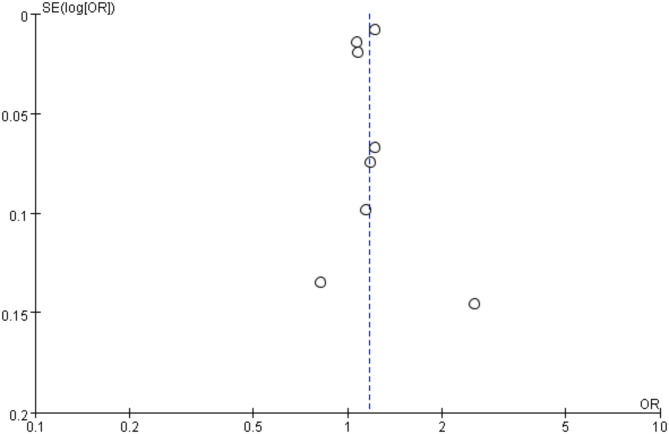
Emerging evidence indicates that inflammatory bowel disease (IBD) and dementia may share underlying pathological mechanisms and risk factors. However, the association between a prior IBD diagnosis and the subsequent risk of dementia remains largely unexplored. We conducted a comprehensive search of PubMed, Embase, and the Cochrane Library up to February 4, 2025, without language restrictions. Two reviewers independently extracted data and evaluated methodological quality and risk of bias. Observational studies comparing dementia risk in IBD and non-IBD populations were included. Pooled effect estimates for odds ratios (OR) were calculated using random-effects models. A total of 10 population-based studies, involving 7,895,339 participants (269,387 with IBD), were included. Meta-analysis of eight studies showed a significant association between IBD and dementia risk (OR 1.17, 95% CI: 1.08-1.27, P = 0.0001). However, IBD was not associated with an increased risk of Alzheimer's disease (AD) (OR 1.15, 95% CI: 0.98-1.36, P = 0.09). Stratified analysis by IBD type revealed a positive association between both ulcerative colitis (UC) and Crohn's disease (CD) and dementia risk (UC: OR 1.15, 95% CI: 1.05-1.25, P = 0.002, I² = 81%; CD: OR 1.26, 95% CI: 1.11-1.43, P = 0.0003, I² = 53%). This study identifies a significant correlation between IBD and dementia, suggesting that IBD patients have an elevated risk of developing dementia. However, current evidence is insufficient to establish a causal relationship. Further research should explore whether effective IBD treatments can mitigate this risk and elucidate the underlying pathophysiological mechanisms connecting these conditions.
新出现的证据表明,炎症性肠病(IBD)和痴呆症可能有共同的潜在病理机制和风险因素。然而,先前诊断为IBD与随后患痴呆症风险之间的关联在很大程度上仍未得到探索。我们对截至2025年2月4日的PubMed、Embase和Cochrane图书馆进行了全面检索,无语言限制。两名审稿人独立提取数据并评估方法学质量和偏倚风险。纳入了比较IBD人群和非IBD人群痴呆风险的观察性研究。使用随机效应模型计算比值比(OR)的合并效应估计值。总共纳入了10项基于人群的研究,涉及7895339名参与者(269387名患有IBD)。对八项研究的荟萃分析表明,IBD与痴呆风险之间存在显著关联(OR 1.17,95%CI:1.08-1.27,P = 0.0001)。然而,IBD与阿尔茨海默病(AD)风险增加无关(OR 1.15,95%CI:0.98-1.36,P = 0.