Liu Mengsi, Li Dongxiu, Hong Xia, Sun Zhen
Hengyang Medical School, University of South China, Hengyang, China.
Department of Nursing, Fujian Health College, Fuzhou, China.
Front Neurol. 2022 May 13;13:813266. doi: 10.3389/fneur.2022.813266. eCollection 2022.
Mounting evidence suggests that there may be a causal relationship or common pathogenic pathway between inflammatory bowel disease (IBD) and dementia. However, inconsistent results have emerged from epidemiological studies. We therefore conducted this review to clarify the relationship between IBD and dementia.
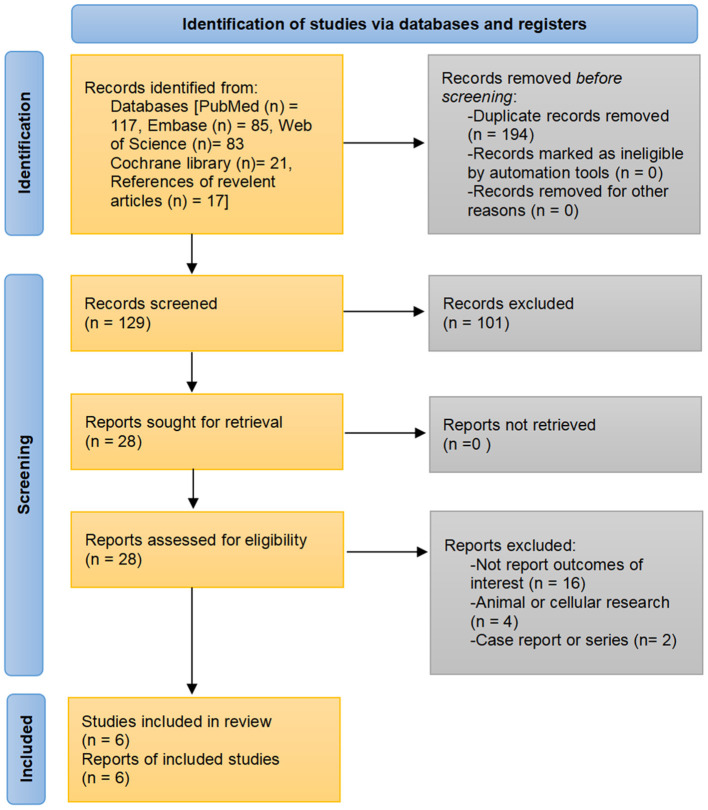
We systematically searched PubMed, Web of Science, Embase, and Cochrane library to identify all studies exploring the relationship between IBD and dementia published as of September 2021. Risk estimates were pooled using both fixed and random-effects models.
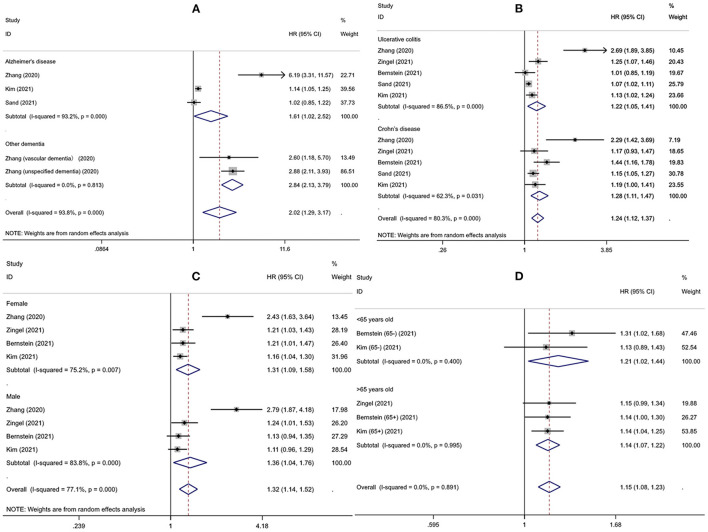
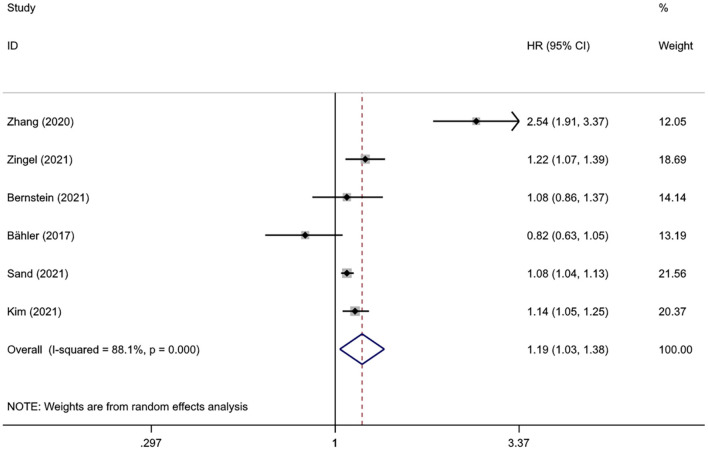
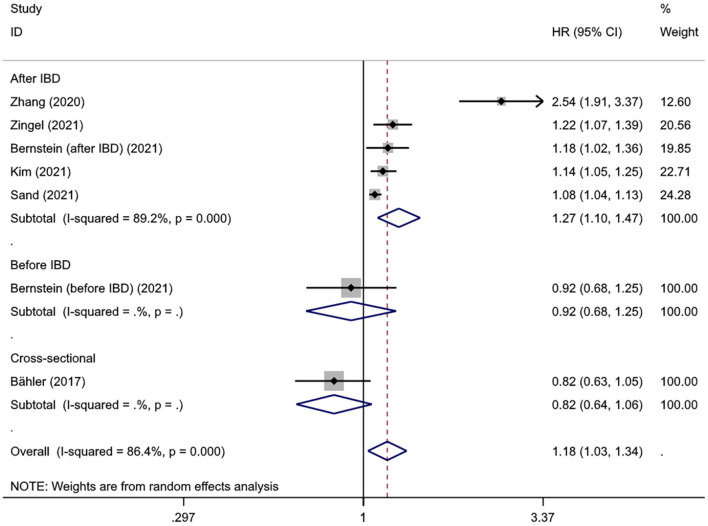
Six studies involving 2,334,472 subjects were included. Pooled results suggested that the risk of developing dementia significantly increased after IBD diagnosis (HR = 1.27, 95% CI: 1.10-1.47, = 0.001), which did not vary by age, gender, dementia subtype, or IBD subtype. Whereas, the dementia incidence before IBD diagnosis and the comorbidity rate of dementia in IBD patients were similar to those without IBD (HR = 0.92, 95% CI: 0.68-1.25; 0.82, 95% CI: 0.64-1.06, respectively). However, current evidence was insufficient to establish a causal relationship.
This study shows an unidirectional association between IBD and dementia; patients with IBD have an increased risk of dementia, and it may be beneficial to develop individualized dementia screening strategies for this population. Future research needs to further investigate whether effective therapies of IBD can reduce this risk and pathophysiological mechanisms of the association.
越来越多的证据表明,炎症性肠病(IBD)与痴呆症之间可能存在因果关系或共同的致病途径。然而,流行病学研究得出了不一致的结果。因此,我们进行了这项综述,以阐明IBD与痴呆症之间的关系。
我们系统检索了PubMed、Web of Science、Embase和Cochrane图书馆,以识别截至2021年9月发表的所有探讨IBD与痴呆症关系的研究。使用固定效应模型和随机效应模型汇总风险估计值。
纳入了六项涉及2334472名受试者的研究。汇总结果表明,IBD诊断后患痴呆症的风险显著增加(HR = 1.27,95%CI:1.10 - 1.47,P = 0.001),且不受年龄、性别、痴呆症亚型或IBD亚型的影响。然而,IBD诊断前的痴呆症发病率以及IBD患者中痴呆症的合并率与无IBD者相似(HR分别为0.92,95%CI:0.68 - 1.25;0.82,95%CI:0.64 - 1.06)。然而,目前的证据不足以确立因果关系。
本研究显示了IBD与痴呆症之间的单向关联;IBD患者患痴呆症的风险增加,为该人群制定个性化的痴呆症筛查策略可能有益。未来的研究需要进一步调查IBD的有效治疗方法是否能降低这种风险以及这种关联的病理生理机制。