Hong Yun, He Jun, Deng Dan, Liu Qinyue, Zu Xuyu, Shen Yingying
Cancer Research Institute, The First Affiliated Hospital, Hengyang Medical School, University of South China, Hengyang, Hunan, 421001, PR China.
Department of Clinical Laboratory Medicine, Institution of Microbiology and Infectious Diseases, Hunan Province Clinical Research Center for Accurate Diagnosis and Treatment of High-Incidence Sexually Transmitted Diseases, The First Affiliated Hospital, Hengyang Medical School, University of South China, Hengyang, Hunan, China.
J Transl Med. 2025 Apr 14;23(1):439. doi: 10.1186/s12967-025-06367-9.
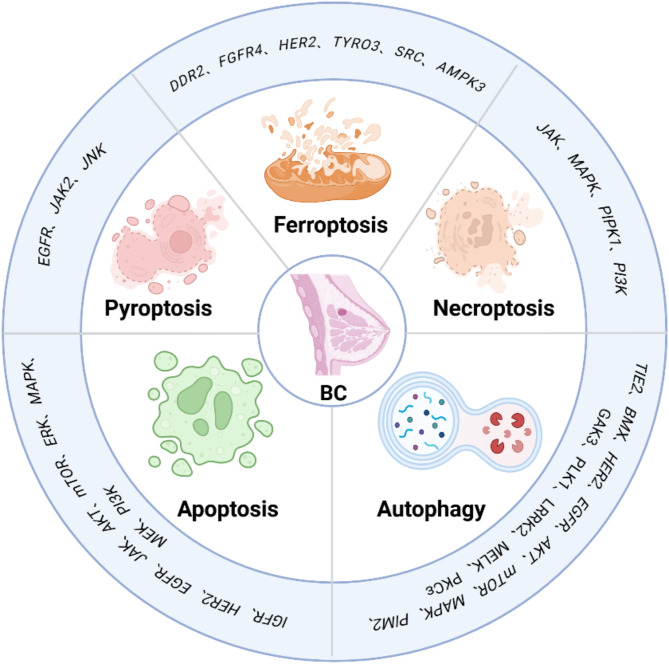
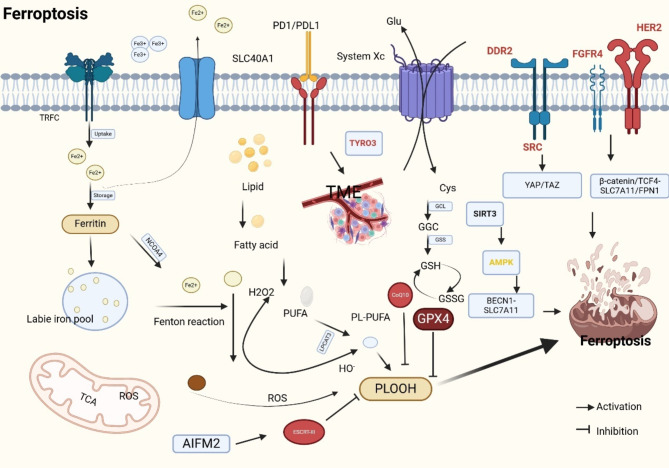
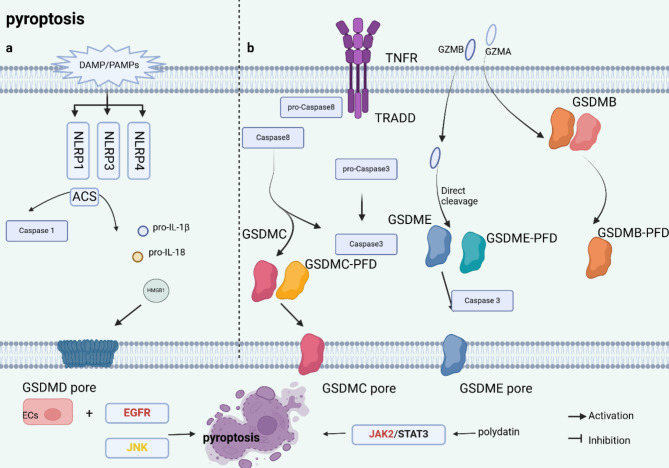
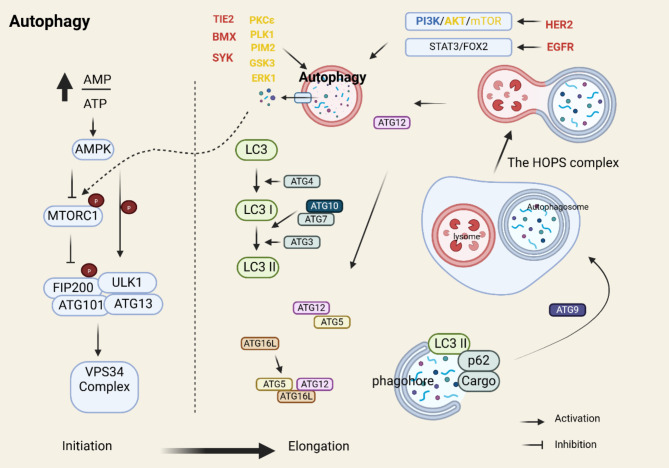
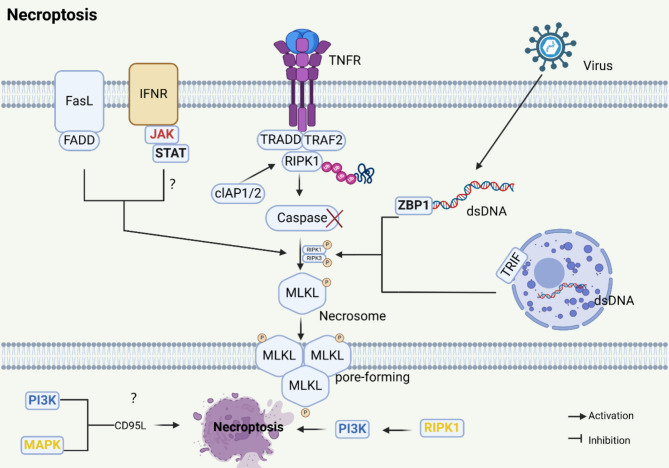
Breast cancer is one of the most prevalent malignant tumors among women and ranks as the second leading cause of cancer-related deaths in females, primarily due to delays in diagnosis and shortcomings in treatment strategies. Consequently, there is a pressing need to identify reliable therapeutic targets and strategies. In recent years, the identification of effective biomarkers-particularly novel molecular therapeutic targets-has become a focal point in breast cancer research, aimed at predicting disease aggressiveness and monitoring treatment responses. Simultaneously, advancements in understanding the molecular mechanisms underlying cellular programmed death have opened new avenues for targeting kinase-regulated programmed cell death as a viable therapeutic strategy. This review summarizes the latest research progress regarding kinase-regulated programmed death (including apoptosis, pyroptosis, autophagy, necroptosis, and ferroptosis) in breast cancer treatment. It covers the key kinases involved in this mechanism, their roles in the onset and progression of breast cancer, and strategies for modulating these kinases through pharmacological interventions.
乳腺癌是女性中最常见的恶性肿瘤之一,是女性癌症相关死亡的第二大主要原因,主要是由于诊断延迟和治疗策略的不足。因此,迫切需要确定可靠的治疗靶点和策略。近年来,识别有效的生物标志物,特别是新型分子治疗靶点,已成为乳腺癌研究的重点,旨在预测疾病的侵袭性并监测治疗反应。同时,对细胞程序性死亡潜在分子机制的理解进展,为将激酶调节的程序性细胞死亡作为一种可行的治疗策略开辟了新途径。本综述总结了乳腺癌治疗中激酶调节的程序性死亡(包括细胞凋亡、焦亡、自噬、坏死性凋亡和铁死亡)的最新研究进展。它涵盖了参与这一机制的关键激酶、它们在乳腺癌发生和发展中的作用,以及通过药物干预调节这些激酶的策略。