Kayembe Harry César, Kapour Germain, Ansobi Papy, Jarboui Aymen, Bantu Alexis Kalimba, Elumbu Glodi, Nkutu Nicodème, Mbuyi Eric, Moyo Abraham, Mbatu Vincent, Nto Archilène, Ngondu Marc, Muhindo Benito, Lukunku Serge, Mboyolo Orman, Sory Traoré Ibrahima, Bompangue Didier
One Health Institute for Africa, University of Kinshasa, B.P.: 127, Kinshasa, XI, Democratic Republic of the Congo.
The International Organization for Migration, Kinshasa, Democratic Republic of the Congo.
Trop Dis Travel Med Vaccines. 2025 Apr 15;11(1):10. doi: 10.1186/s40794-024-00240-1.
Vaccination against COVID-19 has been the primary public health measure implemented to limit the spread of the disease. However, there is still considerable scope for improvement in vaccine coverage, particularly in sub-Saharan African countries. The factors influencing the acceptance or reluctance of the COVID-19 vaccine have been widely studied, but there is a gap in the literature with regard to dynamic populations, particularly travelers, who are one of the priority target groups for vaccination. This study assessed the perceptions, attitudes and practices regarding the COVID-19 vaccine, and explored factors associated with vaccination status among travelers.
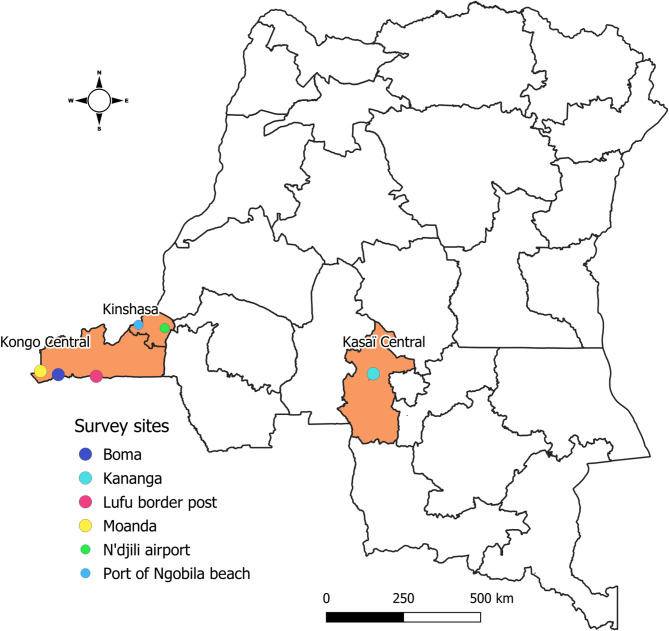
A cross-sectional survey was conducted at several points of entry (PoEs) selected for six survey sites (N'djili airport, Ngobila beach, Lufu, Boma, Moanda, and Kananga), located in three provinces of the Democratic Republic of the Congo (Kinshasa, Kongo Central and Kasaï Central), from February 20 to March 05, 2023. The data were summarized and logistic regression models were performed to assess factors associated with vaccination status.
A total of 2742 travelers were included in this survey. Of these, 54% had received at least one dose of COVID-19 vaccine. Multivariable logistic regression analyses revealed that that several factors were significantly associated with vaccination status. These included age (under 60 years), marital status (single), occupation (other than healthcare worker), mode of travel (other than airplane), and poor perceptions of the vaccine. The most frequently cited reasons for vaccination among respondents who had received the vaccine were the prevention of COVID-19 infection and the ease of travel. In contrast, unvaccinated participants expressed greater concern about the safety and effectiveness of the vaccine, as well as vaccine-related side effects. Furthermore, travel disruption and inappropriate vaccination sites have been identified as significant obstacles to the acceptance of vaccination at the PoEs.
It is essential that awareness initiatives address concerns and misconceptions about vaccine safety and effectiveness. The influence of social media platforms may be harnessed for the dissemination of accurate information from the most trusted information sources, including healthcare professionals, to the target population. In addition, accompanying measures should be considered to facilitate vaccination compliance at different PoEs.
接种新冠疫苗一直是为限制疾病传播而实施的主要公共卫生措施。然而,疫苗接种覆盖率仍有很大提升空间,特别是在撒哈拉以南非洲国家。影响新冠疫苗接受度或抵触情绪的因素已得到广泛研究,但在文献中,关于动态人群,特别是旅行者这一优先接种目标群体,仍存在空白。本研究评估了旅行者对新冠疫苗的认知、态度和行为,并探讨了与疫苗接种状况相关的因素。
于2023年2月20日至3月5日,在刚果民主共和国三个省份(金沙萨、中刚果省和开赛省)选定的六个调查地点(恩吉利机场、恩戈比拉海滩、卢富、博马、莫安达和卡南加)的多个入境点进行了横断面调查。对数据进行汇总,并进行逻辑回归模型分析,以评估与疫苗接种状况相关的因素。
本调查共纳入2742名旅行者。其中,54%的人至少接种了一剂新冠疫苗。多变量逻辑回归分析显示,有几个因素与疫苗接种状况显著相关。这些因素包括年龄(60岁以下)、婚姻状况(单身)、职业(非医护人员)、出行方式(非飞机)以及对疫苗的认知较差。在已接种疫苗的受访者中,最常提及的接种原因是预防新冠感染和出行便利。相比之下,未接种疫苗的参与者对疫苗的安全性和有效性以及疫苗相关副作用更为担忧。此外,旅行中断和接种地点不合适被确定为入境点接受疫苗接种的重大障碍。
提高认识的举措必须解决对疫苗安全性和有效性的担忧及误解。可利用社交媒体平台的影响力,将包括医护人员在内的最可靠信息源的准确信息传播给目标人群。此外,应考虑采取配套措施,以促进在不同入境点的疫苗接种依从性。