Jaiswal Vedant, T Narendiranath Babu, Murugan Pandiyan, D Rama Prabha
School of Mechanical Engineering, Vellore Institute of Technology (VIT), Vellore, 632 014, India.
School of Electrical Engineering, Vellore Institute of Technology (VIT), Vellore, 632 014, India.
Sci Rep. 2025 Apr 15;15(1):12962. doi: 10.1038/s41598-025-97410-8.
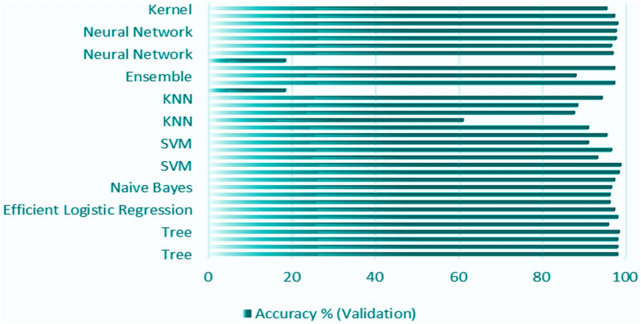
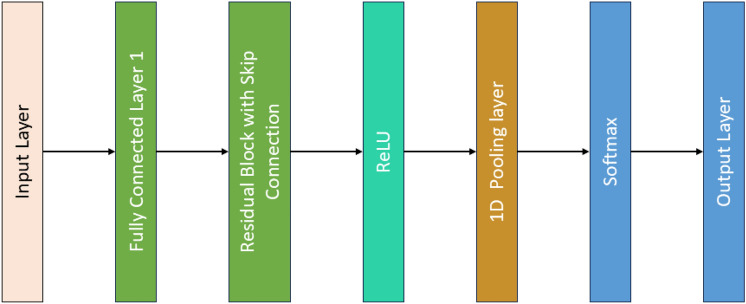
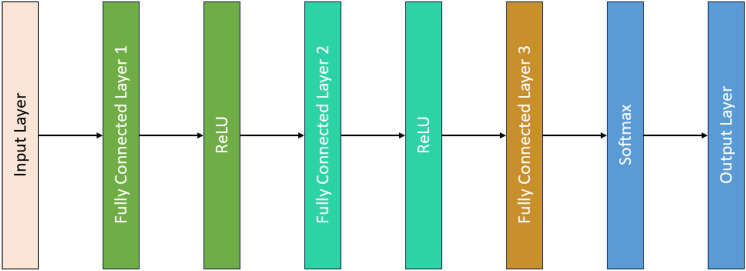
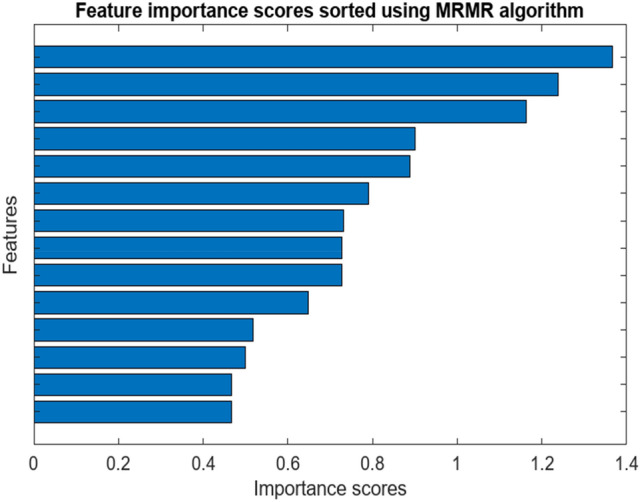
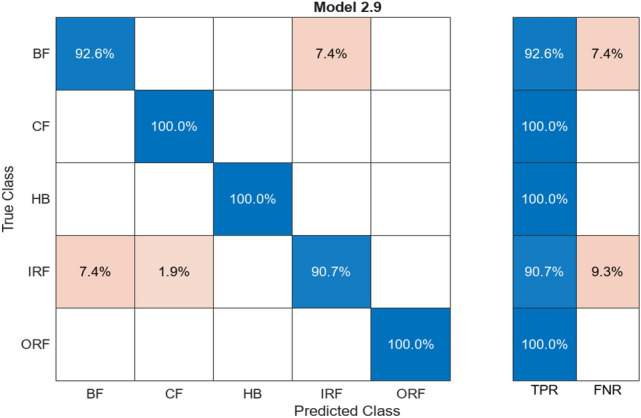
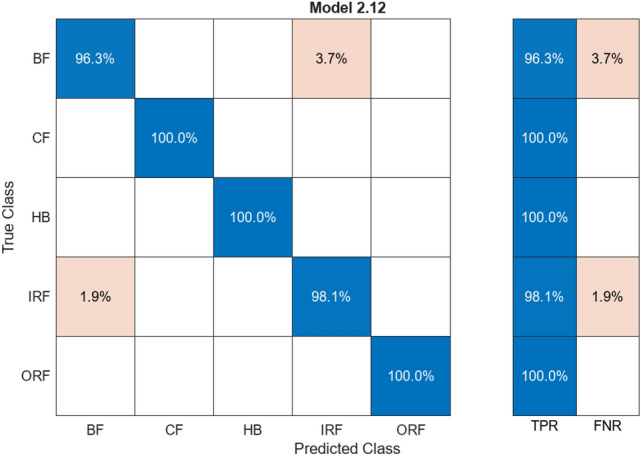
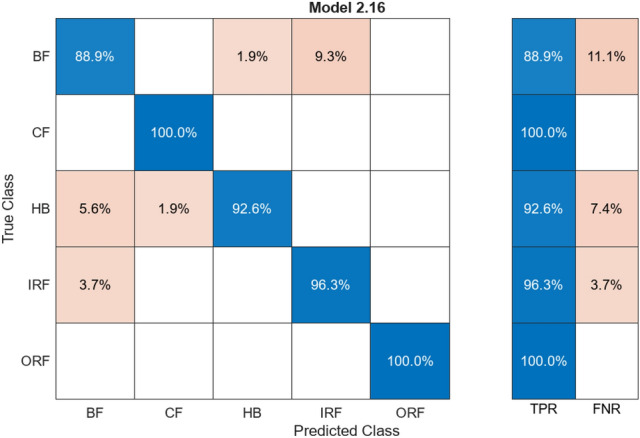
Deep Groove Ball Bearings (DGBBs) serve multipurpose and are used for the propeller shaft movement and applications based on revolving. They have great applications in industry related to axial and radial loads. The major risk factors are faults in bearings. Data analyzed for faults in the DGBBs help us conclude that there are 4 types of bearing faults. For instance, Excluding HB- Healthy Bearing, there are CF- Case Fault, BF- Ball Fault, IRF- Inner Ring Fault, and ORF- Outer Ring Fault. The input parameters are represented by using 14 features in the evaluation. Next, a feature ranking method is established to classify the bearing fault and contribution of each of the features is used as input conditions. It displays the involvement value for each of the 14 parameters. Automatic fault classification has been done by Artificial Neural Networks (ANN). Training on various algorithms is performed, noting and storing the probability of correct prediction for comparison. The probability of correct predictions decreases as the number of samples representing faults increases. A high efficiency of around 97.9% has been achieved for the Resnet50 algorithm. The classifier learner achieved an accuracy of 97% using the neural network, followed by the decision tree and discriminant analysis.
深沟球轴承(DGBBs)用途广泛,用于传动轴运动及基于旋转的应用。它们在承受轴向和径向载荷的工业领域有大量应用。主要风险因素是轴承故障。对深沟球轴承故障进行分析的数据帮助我们得出有4种轴承故障类型。例如,除了HB - 健康轴承外,还有CF - 套圈故障、BF - 滚珠故障、IRF - 内圈故障和ORF - 外圈故障。在评估中,输入参数由14个特征表示。接下来,建立一种特征排序方法来对轴承故障进行分类,并将每个特征的贡献用作输入条件。它显示了14个参数中每个参数的参与值。已通过人工神经网络(ANN)进行自动故障分类。对各种算法进行训练,记录并存储正确预测的概率以供比较。随着表示故障的样本数量增加,正确预测的概率会降低。Resnet50算法实现了约97.9%的高效率。分类器学习者使用神经网络实现了97%的准确率,其次是决策树和判别分析。