Li Hongmei, Huang Jinying, Ji Shuwei
School of Computer and Engineering Control, North University of China, Taiyuan 030051, China.
School of Mechanical Engineering, North University of China, Taiyuan 030051, China.
Sensors (Basel). 2019 Apr 30;19(9):2034. doi: 10.3390/s19092034.
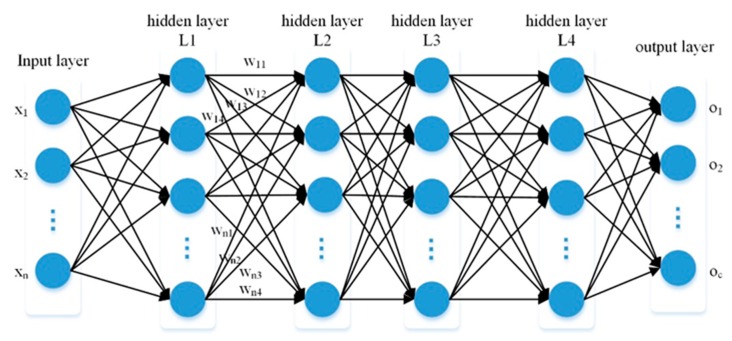
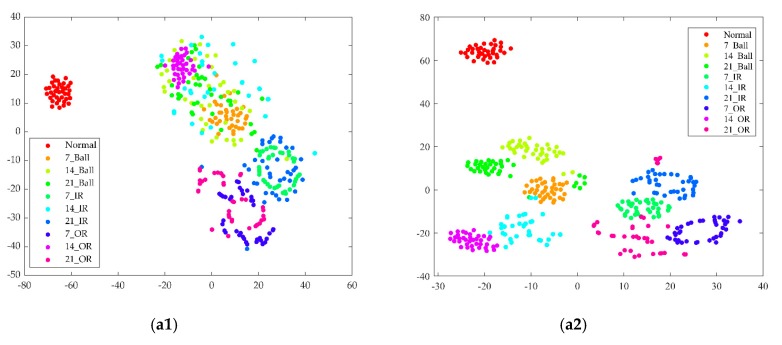
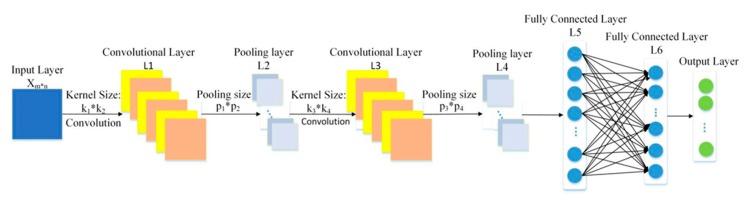
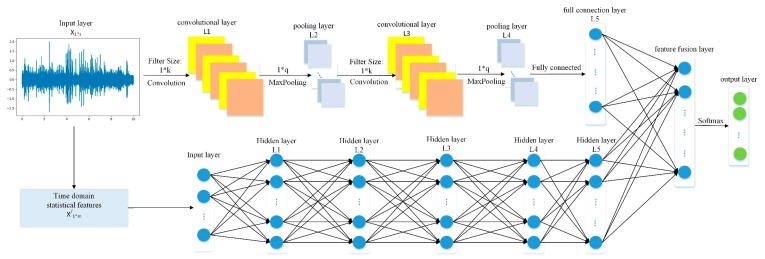
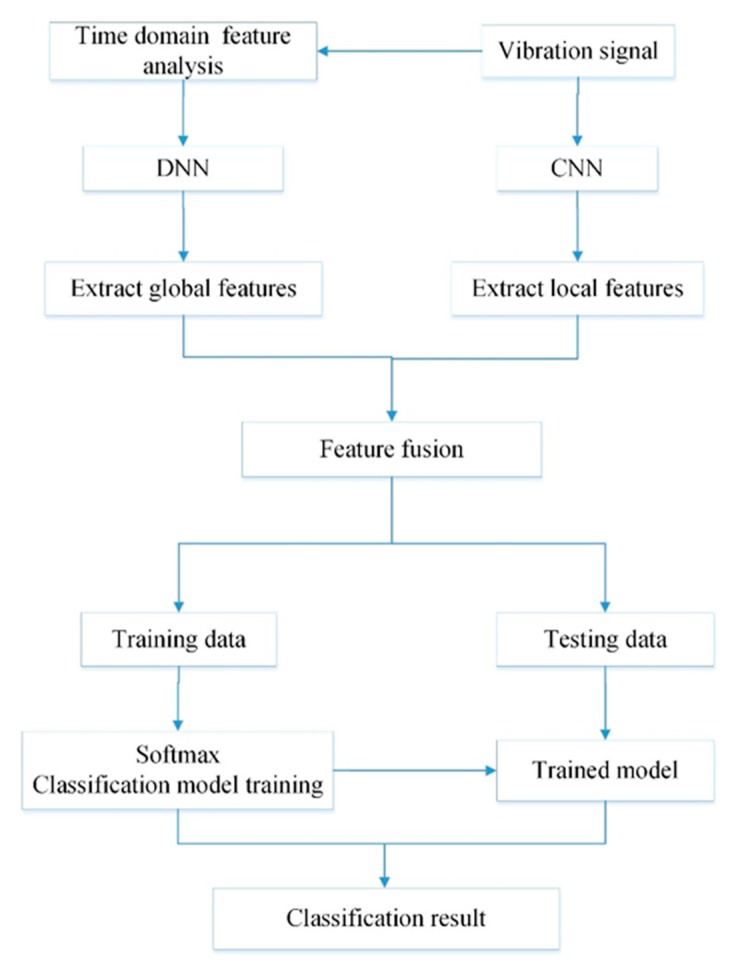
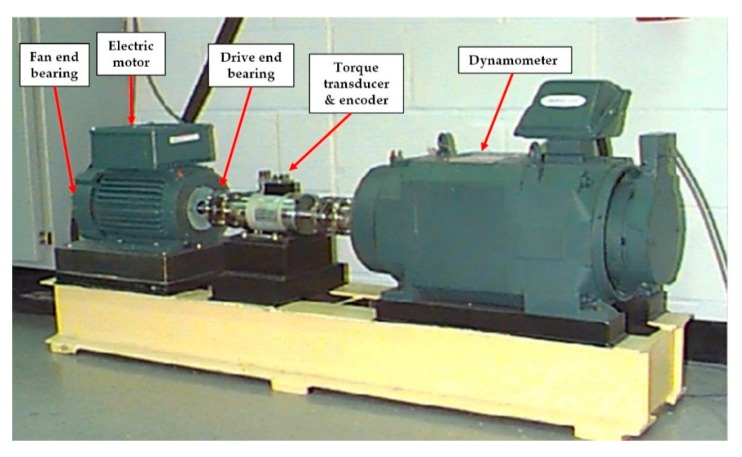
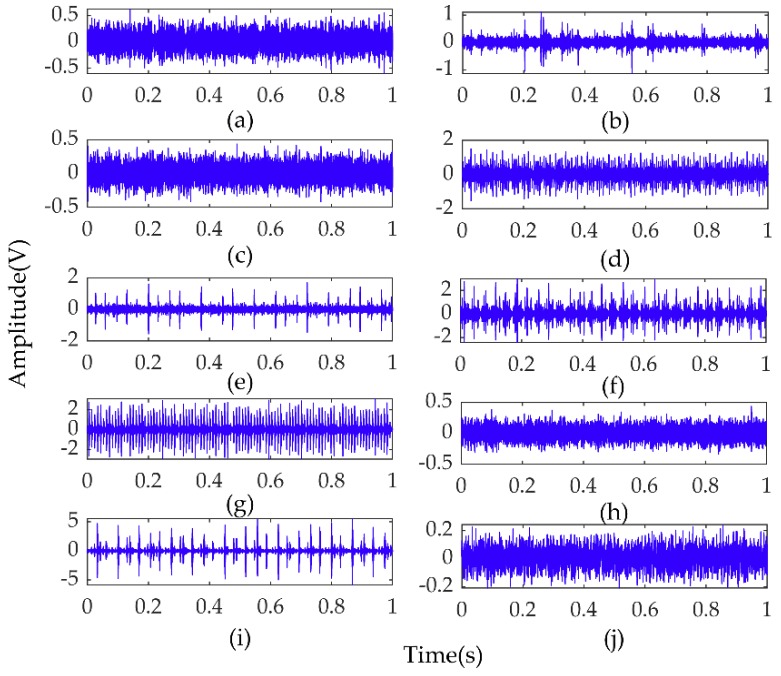
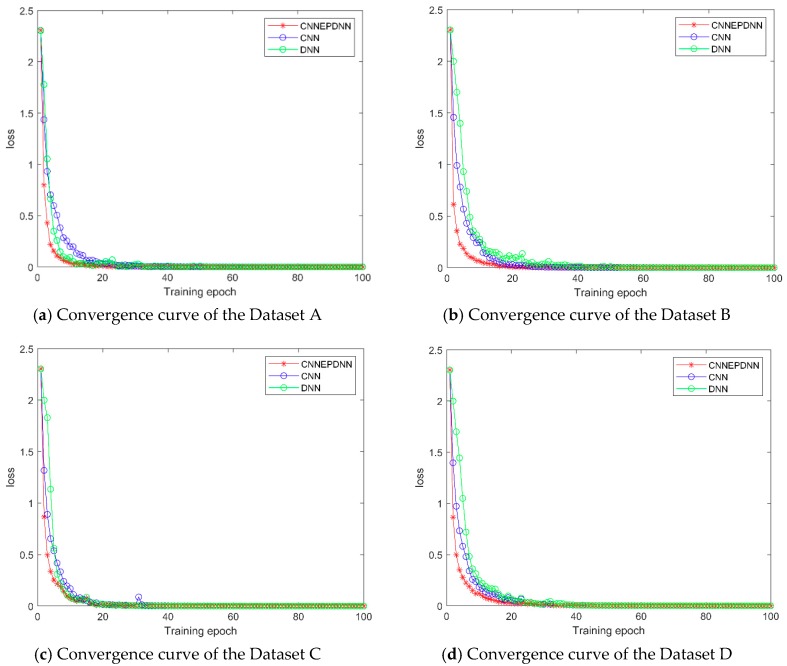
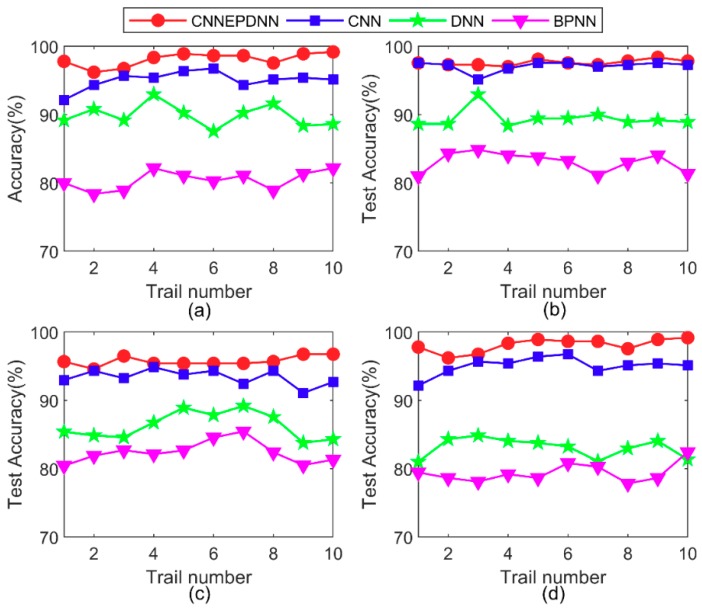
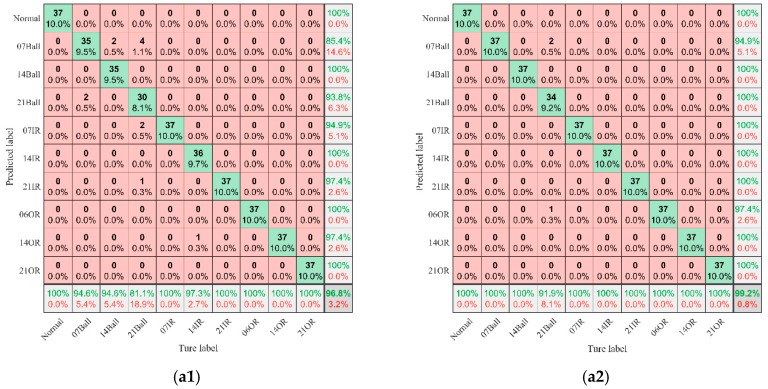
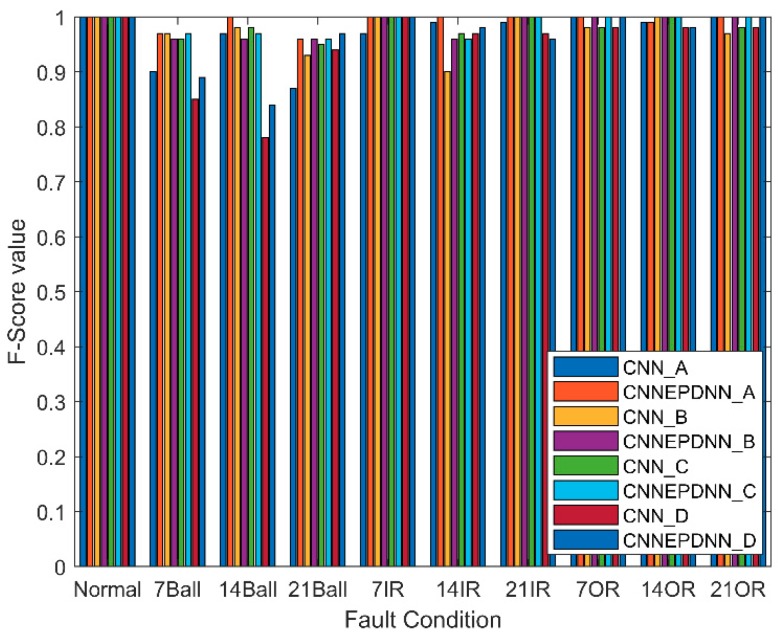
Rolling bearings are the core components of rotating machinery. Their health directly affects the performance, stability and life of rotating machinery. To prevent possible damage, it is necessary to detect the condition of rolling bearings for fault diagnosis. With the rapid development of intelligent fault diagnosis technology, various deep learning methods have been applied in fault diagnosis in recent years. Convolution neural networks (CNN) have shown high performance in feature extraction. However, the pooling operation of CNN can lead to the loss of much valuable information and the relationship between the whole and the part may be ignored. In this study, we proposed CNNEPDNN, a novel bearing fault diagnosis model based on ensemble deep neural network (DNN) and CNN. We firstly trained CNNEPDNN model. Each of its local networks was trained with different training datasets. The CNN used vibration sensor signals as the input, whereas the DNN used nine time-domain statistical features from bearing vibration sensor signals as the input. Each local network of CNNEPDNN extracted different features from its own trained dataset, thus we fused features with different discrimination for fault recognition. CNNEPDNN was tested under 10 fault conditions based on the bearing data from Bearing Data Center of Case Western Reserve University (CWRU). To evaluate the proposed model, four aspects were analyzed: convergence speed of training loss function, test accuracy, F-Score and the feature clustering result by t-distributed stochastic neighbor embedding (t-SNE) visualization. The training loss function of the proposed model converged more quickly than the local models under different loads. The test accuracy of the proposed model is better than that of CNN, DNN and BPNN. The F-Score value of the model is higher than that of CNN model, and the feature clustering effect of the proposed model was better than that of CNN.
滚动轴承是旋转机械的核心部件。它们的健康状况直接影响旋转机械的性能、稳定性和寿命。为防止可能的损坏,有必要检测滚动轴承的状态以进行故障诊断。随着智能故障诊断技术的快速发展,近年来各种深度学习方法已应用于故障诊断。卷积神经网络(CNN)在特征提取方面表现出高性能。然而,CNN的池化操作可能导致大量有价值信息的丢失,并且整体与部分之间的关系可能被忽略。在本研究中,我们提出了CNNEPDNN,一种基于集成深度神经网络(DNN)和CNN的新型轴承故障诊断模型。我们首先训练了CNNEPDNN模型。其每个局部网络使用不同的训练数据集进行训练。CNN使用振动传感器信号作为输入,而DNN使用来自轴承振动传感器信号的九个时域统计特征作为输入。CNNEPDNN的每个局部网络从其自己训练的数据集提取不同的特征,因此我们融合具有不同判别力的特征以进行故障识别。基于美国凯斯西储大学(CWRU)轴承数据中心的轴承数据,在10种故障条件下对CNNEPDNN进行了测试。为了评估所提出的模型,分析了四个方面:训练损失函数的收敛速度、测试准确率、F值以及通过t分布随机邻域嵌入(t-SNE)可视化的特征聚类结果。所提出模型的训练损失函数在不同负载下比局部模型收敛得更快。所提出模型的测试准确率优于CNN、DNN和BPNN。该模型的F值高于CNN模型,并且所提出模型的特征聚类效果优于CNN。