Li Jia-Nan, Zeng Liu-Hao-Nan, Jin Lu, Liu Ji-Tong
Department of Anesthesiology, Hunan Provincial People's Hospital, The First Affiliated Hospital of Hunan Normal University, Changsha, 410005, Hunan Province, China.
Biochem Biophys Rep. 2025 Apr 3;42:102000. doi: 10.1016/j.bbrep.2025.102000. eCollection 2025 Jun.
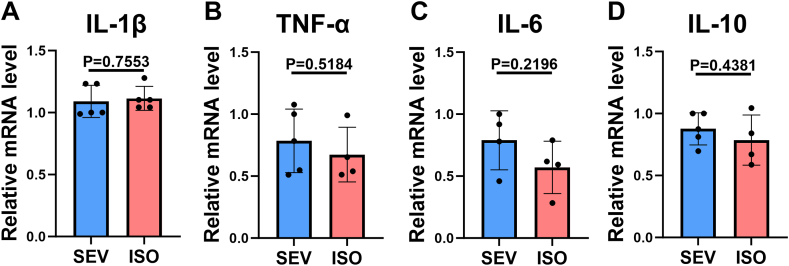
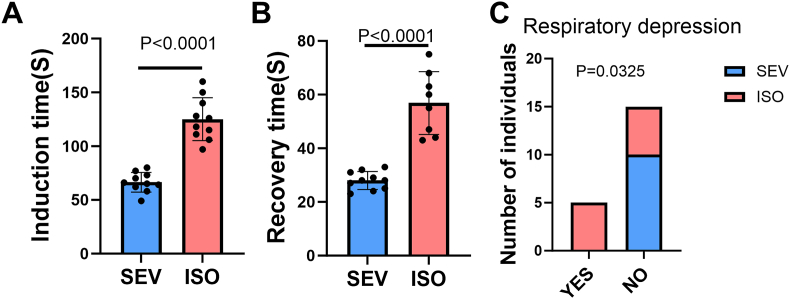
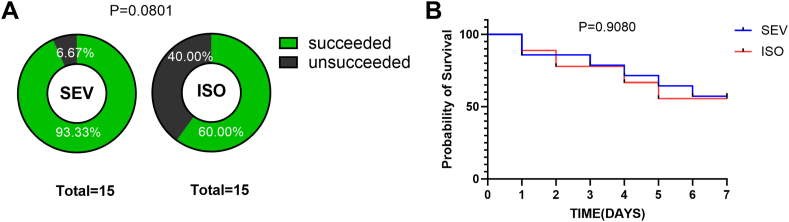
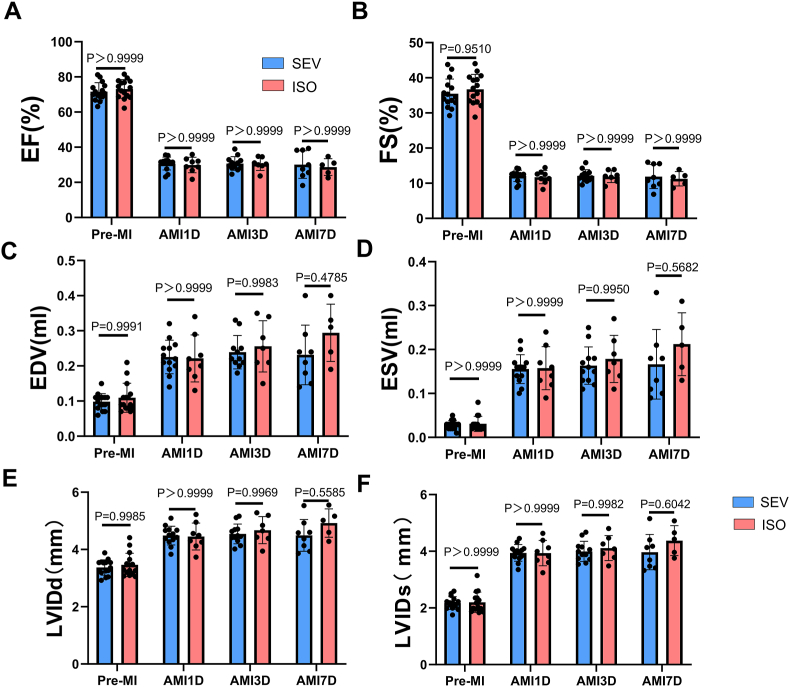
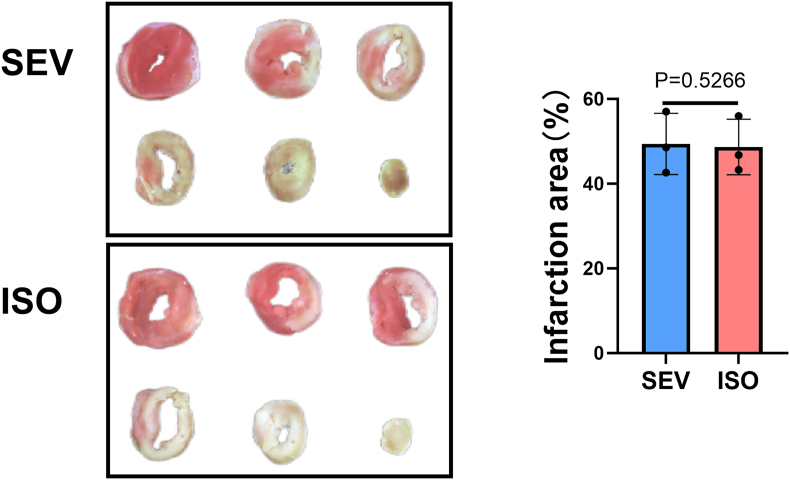
The selection of anesthetic drugs in the preparation of an acute myocardial infarction (AMI) model is very important. We specifically focus on various effects of sevoflurane and isoflurane in a murine AMI model, which have not been previously compared. Furthermore, we evaluated success of our AMI model using following methods: echocardiography, TTC staining, and PCR testing. The results show that compared to the isoflurane group, the sevoflurane group mice had shorter anesthetic induction(66.40 ± 2.90S vs. 125.10 ± 6.30S P < 0.0001) and recovery times(28.00 ± 1.07S vs. 56.88 ± 4.14S, P < 0.0001), lower incidence of respiratory depression (0 % vs. 50.00 %, P = 0.0325), and more successful models (93.33 % vs. 60.00 %, P = 0.0801). There were no significant differences in cardiac function, infarction area(49.41 ± 4.18 % vs. 48.66 ± 3.79 %, P = 0.5266), or inflammatory factors in the myocardial infarction area between the two groups. Sevoflurane may therefore be a better choice for the establishment of AMI models in mice.
在急性心肌梗死(AMI)模型制备中麻醉药物的选择非常重要。我们特别关注七氟醚和异氟醚在小鼠AMI模型中的各种效应,此前尚未对它们进行过比较。此外,我们使用以下方法评估了我们的AMI模型的成功率:超声心动图、TTC染色和PCR检测。结果显示,与异氟醚组相比,七氟醚组小鼠的麻醉诱导时间(66.40 ± 2.90秒对125.10 ± 6.30秒,P < 0.0001)和恢复时间更短(28.00 ± 1.07秒对56.88 ± 4.14秒,P < 0.0001),呼吸抑制发生率更低(0%对50.00%,P = 0.0325),且模型成功率更高(93.33%对60.00%,P = 0.0801)。两组之间的心功能、梗死面积(49.41 ± 4.18%对48.66 ± 3.79%,P = 0.5266)或心肌梗死区域的炎症因子无显著差异。因此,七氟醚可能是建立小鼠AMI模型的更好选择。