Li Ouyang, Zhou Yingshun, Kim Dayoung, Xu Han, Bao Zhijun, Yang Fan
Shanghai Key Laboratory of Clinical Geriatric Medicine, Shanghai, China.
Digestive Endoscopy Center, Huadong Hospital, Fudan University, Shanghai, China.
Microbiol Spectr. 2025 Jun 3;13(6):e0171624. doi: 10.1128/spectrum.01716-24. Epub 2025 Apr 17.
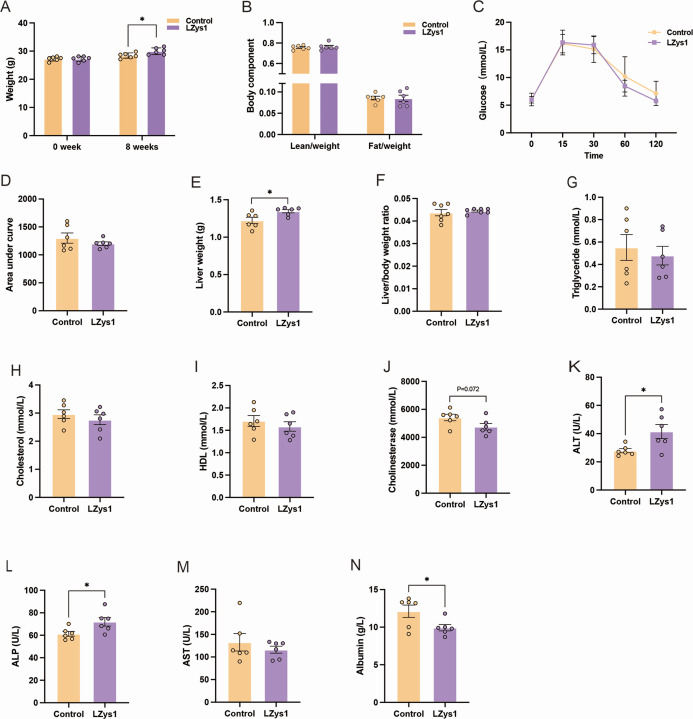
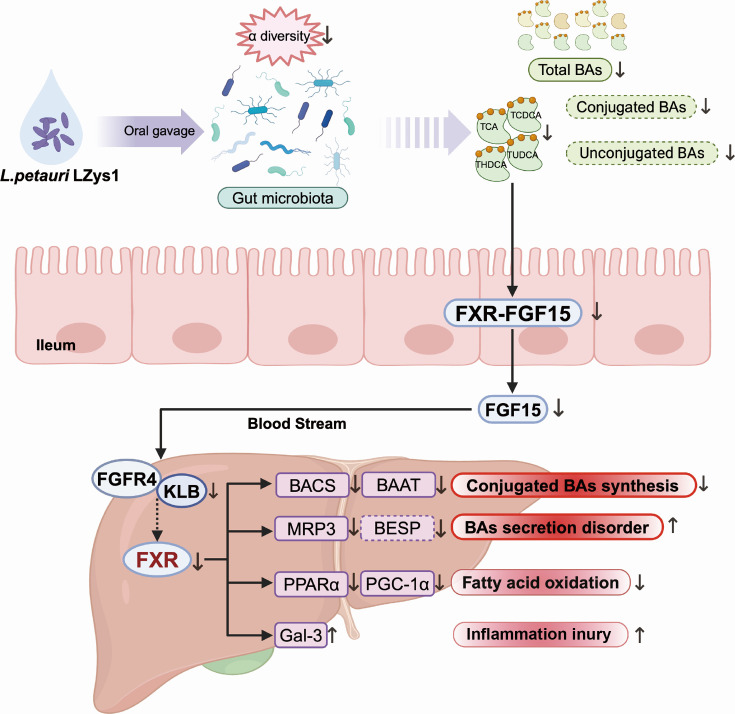
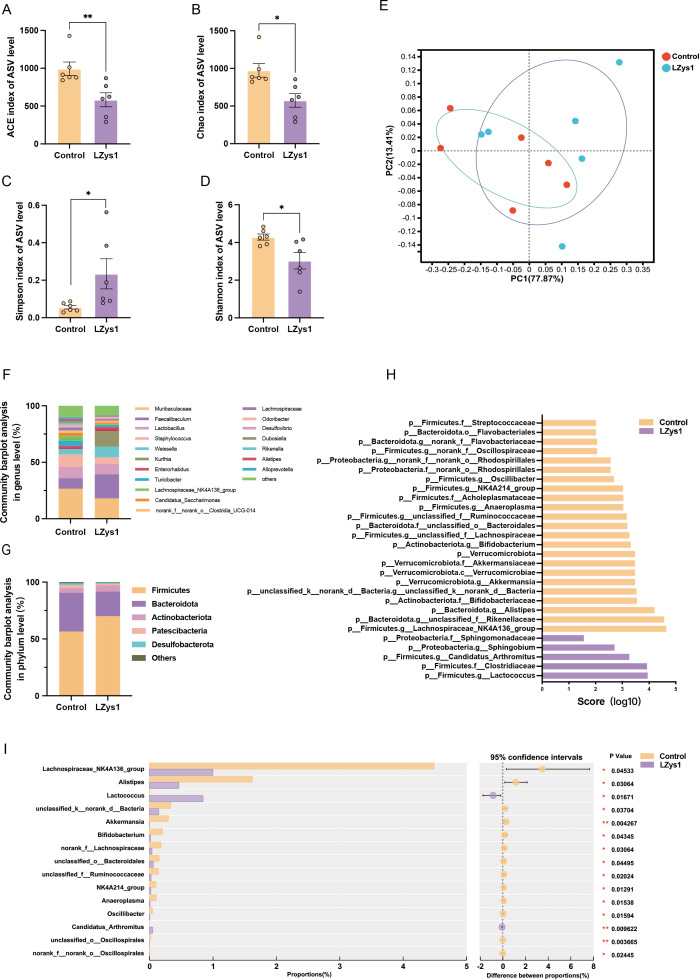
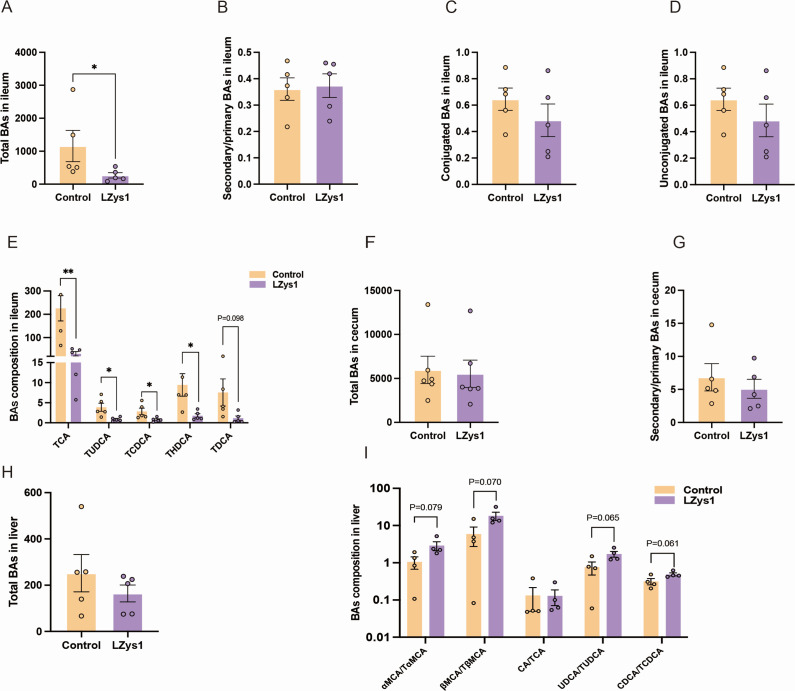
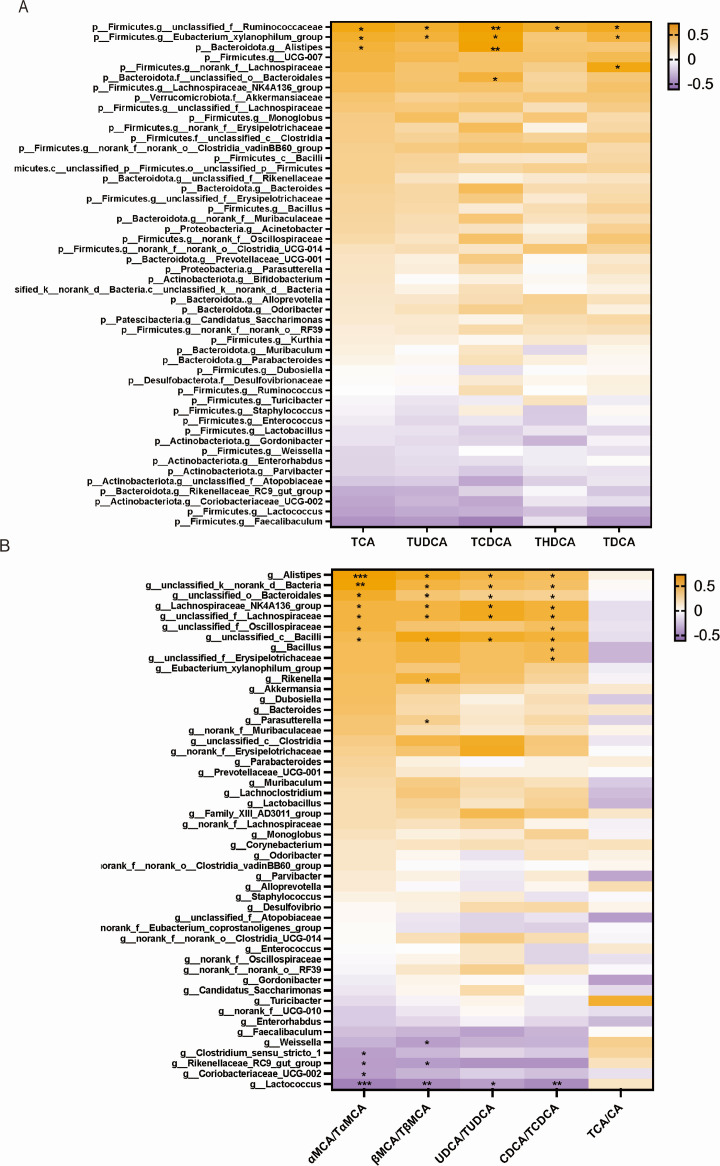
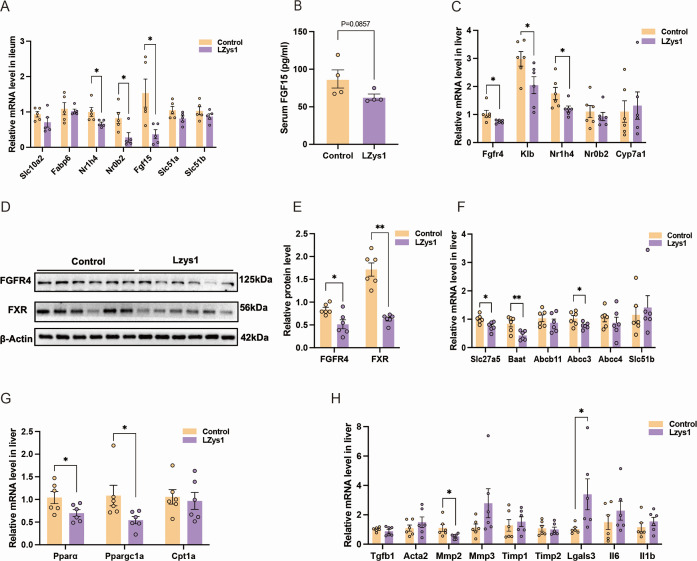
Recent studies have indicated that LZys1 ( LZys1), isolated from healthy human feces, exhibits a promising probiotic profile . However, its impact on the physiological status of the host remains uncertain. The objective of our study was to investigate the effects and mechanisms of orally administering LZys1 on gut microbiota and liver function in mice. We administered LZys1 through daily oral gavage to C57BL/6 male mice. Subsequently, we analyzed changes in gut microbiota composition using 16S rRNA sequencing and quantified alterations in hepatic-intestinal bile acid (BA) profile. Serum biochemical parameters were assessed to evaluate liver function. Our findings revealed that LZys1 led to an increase in body weight, liver mass, and serum aminotransferase levels. Oral administration altered the gut microbiota composition, resulting in reduced diversity and abundance of intestinal bacteria. Additionally, the profiles of BAs were suppressed across organs, associated with the downregulation of the ileum's farnesoid X receptor (FXR)/fibroblast growth factor 15 (FGF15) signaling pathway. The decrease in circulating FGF15 mediated the downregulation of hepatic fibroblast growth factor receptor 4 (FGFR4)/FXR, disrupting BA metabolism and fatty acid oxidation. Our findings suggest that LZys1 may impact liver function by influencing the gut microbiota-mediated ileal FXR-FGF15 axis and inhibiting hepatic bile acid metabolism.
This work elucidated the impact of LZys1 on host gut microbiota metabolism and hepatic physiological metabolism. We observed that LZys1 administration induced liver weight gain and biochemical parameters changes, in addition to a altered gut microbiota and suppressed bile acid (BA) profiles. Furthermore, we propose that changes in liver status are related to the enterohepatic farnesoid X receptor-fibroblast growth factor axis, which alters bile acid metabolism and disrupts liver function. The above findings suggest that attention should be paid to the effect of probiotics on liver function.
最近的研究表明,从健康人粪便中分离出的LZys1表现出有前景的益生菌特性。然而,其对宿主生理状态的影响仍不确定。我们研究的目的是调查口服LZys1对小鼠肠道微生物群和肝功能的影响及机制。我们通过每日口服灌胃的方式将LZys1给予C57BL/6雄性小鼠。随后,我们使用16S rRNA测序分析肠道微生物群组成的变化,并对肝肠胆汁酸(BA)谱的改变进行定量。评估血清生化参数以评价肝功能。我们的研究结果显示,LZys1导致体重、肝脏质量和血清转氨酶水平增加。口服给药改变了肠道微生物群组成,导致肠道细菌的多样性和丰度降低。此外,各器官的BA谱均受到抑制,这与回肠法尼醇X受体(FXR)/成纤维细胞生长因子15(FGF15)信号通路的下调有关。循环FGF15的减少介导了肝成纤维细胞生长因子受体4(FGFR4)/FXR的下调,破坏了BA代谢和脂肪酸氧化。我们的研究结果表明,LZys1可能通过影响肠道微生物群介导的回肠FXR - FGF15轴并抑制肝脏胆汁酸代谢来影响肝功能。
这项工作阐明了LZys1对宿主肠道微生物群代谢和肝脏生理代谢的影响。我们观察到,给予LZys1除了会改变肠道微生物群和抑制胆汁酸(BA)谱外,还会导致肝脏重量增加和生化参数变化。此外,我们提出肝脏状态的变化与肠肝法尼醇X受体 - 成纤维细胞生长因子轴有关,该轴会改变胆汁酸代谢并破坏肝功能。上述研究结果表明,应关注益生菌对肝功能的影响。