
甘氨酰 - tRNA合成酶作为抗流感病毒药物筛选的靶点
Glycyl-tRNA Synthetase as a Target for Antiviral Drug Screening Against Influenza Virus.
作者信息
Zhang Jingjing, Li Xiaorong, Liang Jingxian, Meng Xinru, Zhu Chenchen, Yang Guangpu, Liang Yali, Zhou Qikai, Qin Qianni, Li Zan, Zhang Ting, Liu Gen, Sun Litao
机构信息
School of Public Health (Shenzhen), Shenzhen Campus of Sun Yat-sen University, Sun Yat-sen University, Shenzhen 518107, China.
Shenzhen Key Laboratory of Pathogenic Microbes and Biosafety, Shenzhen 518107, China.
出版信息
Int J Mol Sci. 2025 Mar 23;26(7):2912. doi: 10.3390/ijms26072912.
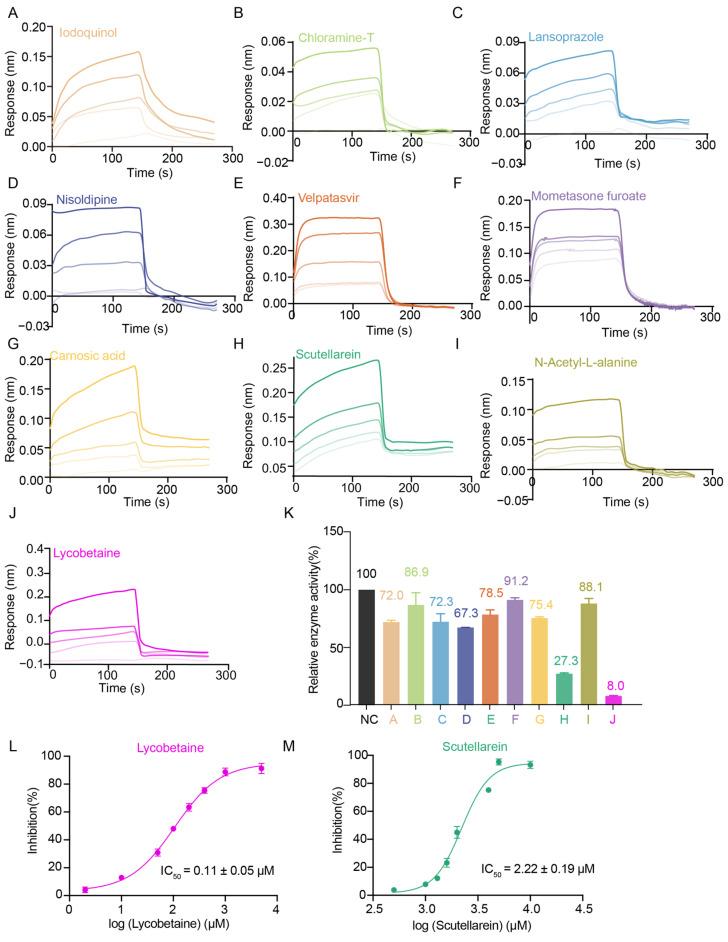
Influenza viruses are characterized by their high variability and pathogenicity, and effective therapeutic options remain limited. Given these challenges, targeting host cell proteins that facilitate viral replication presents a promising strategy for antiviral drug discovery. In the present study, we observed a significant upregulation of Glycyl-tRNA synthetase (GlyRS) within 24 h post-PR8 virus infection. The inhibition of GlyRS expression in A549 cells resulted in a marked reduction in infection rates across multiple influenza virus strains, while the overexpression of GlyRS led to an increase in viral infectivity during the early stages of infection. These findings suggest that GlyRS plays a critical role in the replication of influenza virus. Accordingly, we screened for potential inhibitors targeting GlyRS and identified Lycobetaine and Scutellarein using a multifaceted approach. Through a combination of molecular dynamics simulations, we further elucidated the mechanisms of action and potential binding sites of these compounds. Both inhibitors effectively suppressed the replication of influenza viruses, and their antiviral activity was confirmed to be mediated by GlyRS targeting. Therefore, GlyRS inhibitors, such as Lycobetaine and Scutellarein, represent promising candidates for combating influenza infections and provide novel insights into the treatment of influenza and aaRS-related diseases, opening new avenues for the development of aaRS-targeted therapeutics.
流感病毒具有高度变异性和致病性,有效的治疗选择仍然有限。鉴于这些挑战,靶向促进病毒复制的宿主细胞蛋白为抗病毒药物研发提供了一种有前景的策略。在本研究中,我们观察到PR8病毒感染后24小时内甘氨酰-tRNA合成酶(GlyRS)显著上调。在A549细胞中抑制GlyRS表达导致多种流感病毒株的感染率显著降低,而GlyRS的过表达导致感染早期病毒感染性增加。这些发现表明GlyRS在流感病毒复制中起关键作用。因此,我们筛选了靶向GlyRS的潜在抑制剂,并通过多方面方法鉴定出了枸杞甜菜碱和野黄芩素。通过分子动力学模拟相结合,我们进一步阐明了这些化合物的作用机制和潜在结合位点。两种抑制剂均有效抑制流感病毒复制,其抗病毒活性被证实是由靶向GlyRS介导的。因此,枸杞甜菜碱和野黄芩素等GlyRS抑制剂是对抗流感感染的有前景的候选药物,并为流感和氨酰-tRNA合成酶相关疾病的治疗提供了新见解,为开发靶向氨酰-tRNA合成酶的疗法开辟了新途径。




 Zotero 插件