Eichelberger Maryna C, Hassantoufighi Arash, Wu Meng, Li Min
Center for Biologics Evaluation and Research, Food and Drug Administration, Bethesda, MD, USA.
Virol J. 2008 Sep 26;5:109. doi: 10.1186/1743-422X-5-109.
The emergence of influenza strains that are resistant to commonly used antivirals has highlighted the need to develop new compounds that target viral gene products or host mechanisms that are essential for effective virus replication. Existing assays to identify potential antiviral compounds often use high throughput screening assays that target specific viral replication steps. To broaden the search for antivirals, cell-based replication assays can be performed, but these are often labor intensive and have limited throughput.
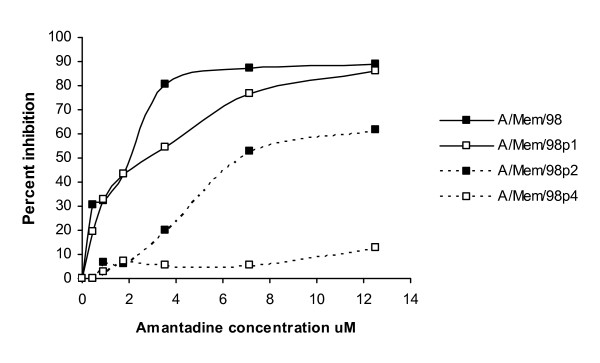
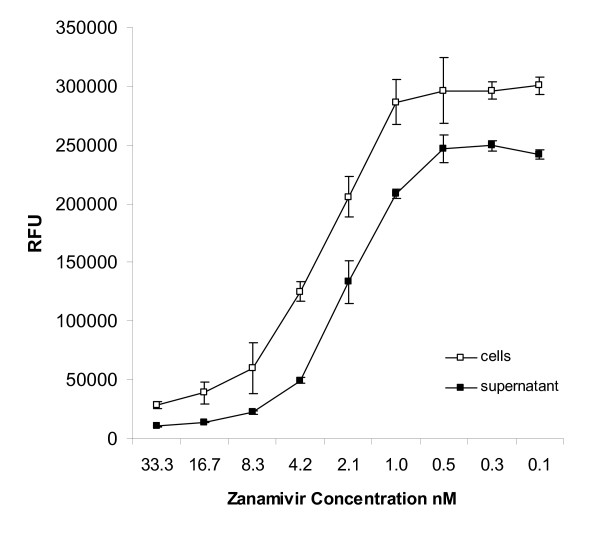
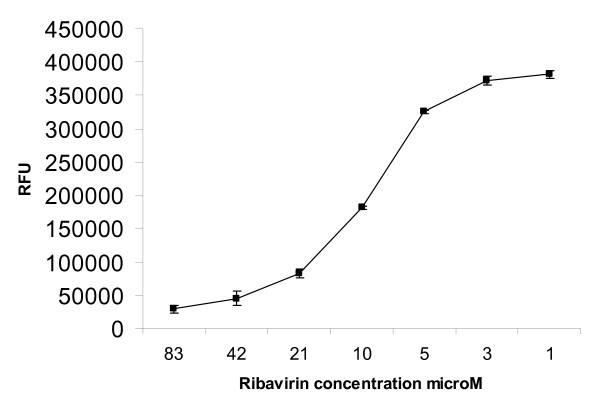
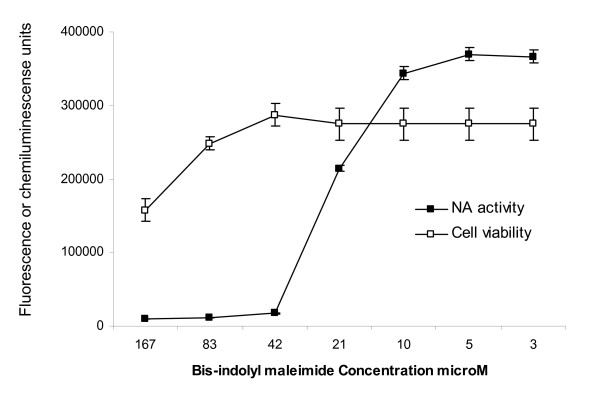
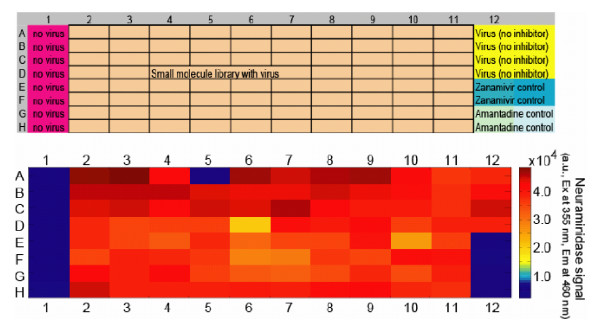
We have adapted a traditional virus neutralization assay to develop a practical, cell-based, high throughput screening assay. This assay uses viral neuraminidase (NA) as a read-out to quantify influenza replication, thereby offering an assay that is both rapid and sensitive. In addition to identification of inhibitors that target either viral or host factors, the assay allows simultaneous evaluation of drug toxicity. Antiviral activity was demonstrated for a number of known influenza inhibitors including amantadine that targets the M2 ion channel, zanamivir that targets NA, ribavirin that targets IMP dehydrogenase, and bis-indolyl maleimide that targets protein kinase A/C. Amantadine-resistant strains were identified by comparing IC50 with that of the wild-type virus.
Antivirals with specificity for a broad range of targets are easily identified in an accelerated viral inhibition assay that uses NA as a read-out of replication. This assay is suitable for high throughput screening to identify potential antivirals or can be used to identify drug-resistant influenza strains.
对常用抗病毒药物产生耐药性的流感毒株的出现凸显了开发新化合物的必要性,这些新化合物靶向对有效病毒复制至关重要的病毒基因产物或宿主机制。现有的鉴定潜在抗病毒化合物的检测方法通常使用针对特定病毒复制步骤的高通量筛选检测。为了扩大对抗病毒药物的搜索范围,可以进行基于细胞的复制检测,但这些检测通常劳动强度大且通量有限。
我们改进了传统的病毒中和检测方法,开发出一种实用的、基于细胞的高通量筛选检测方法。该检测方法使用病毒神经氨酸酶(NA)作为读数来量化流感病毒的复制,从而提供一种快速且灵敏的检测方法。除了鉴定靶向病毒或宿主因子的抑制剂外,该检测还允许同时评估药物毒性。对多种已知的流感抑制剂展示了抗病毒活性,包括靶向M2离子通道的金刚烷胺、靶向NA的扎那米韦、靶向肌苷酸脱氢酶的利巴韦林以及靶向蛋白激酶A/C的双吲哚马来酰胺。通过比较IC50与野生型病毒的IC50来鉴定金刚烷胺耐药毒株。
在一种以NA作为复制读数的加速病毒抑制检测中,能够轻松鉴定出对广泛靶点具有特异性的抗病毒药物。该检测适用于高通量筛选以鉴定潜在的抗病毒药物,或可用于鉴定耐药流感毒株。