Yang Shengping, Manna Chayan, Manna Pulak R
Pennington Biomedical Research Center, 6400 Perkins Rd., Baton Rouge, LA 70808, USA.
Baylor College of Medicine, Ben Taub Research Center, 1 Baylor Plaza, Houston, TX 77030, USA.
Int J Mol Sci. 2025 Mar 27;26(7):3101. doi: 10.3390/ijms26073101.
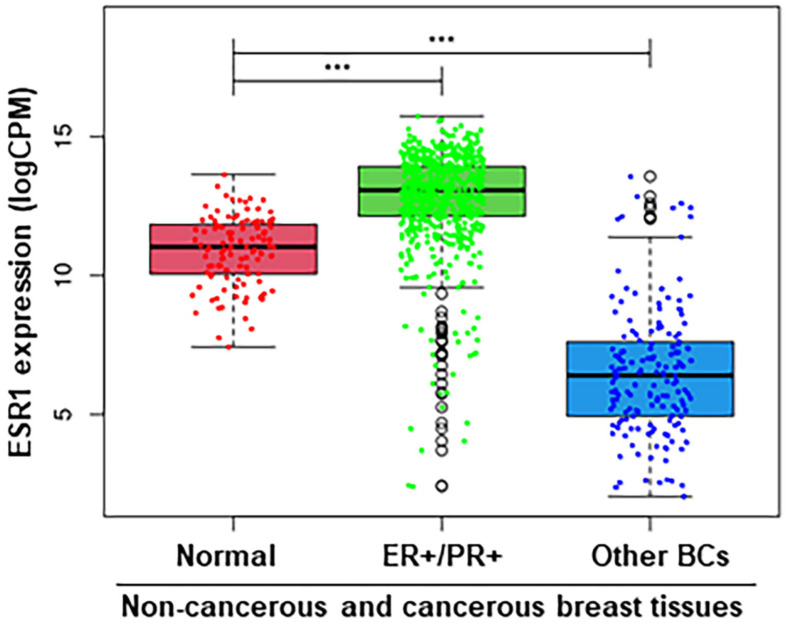
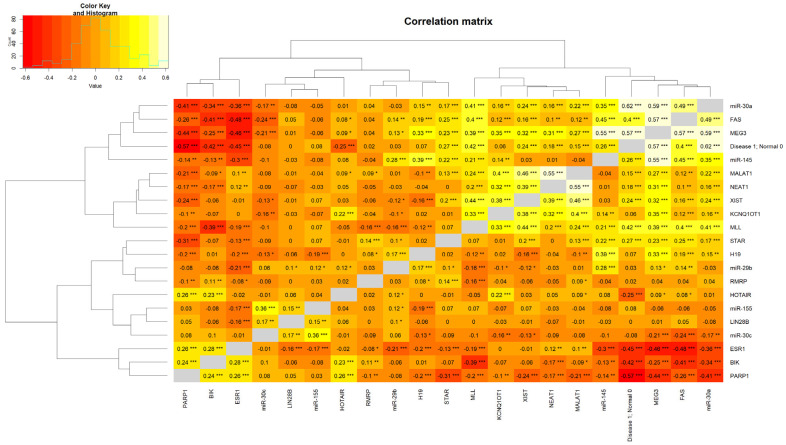
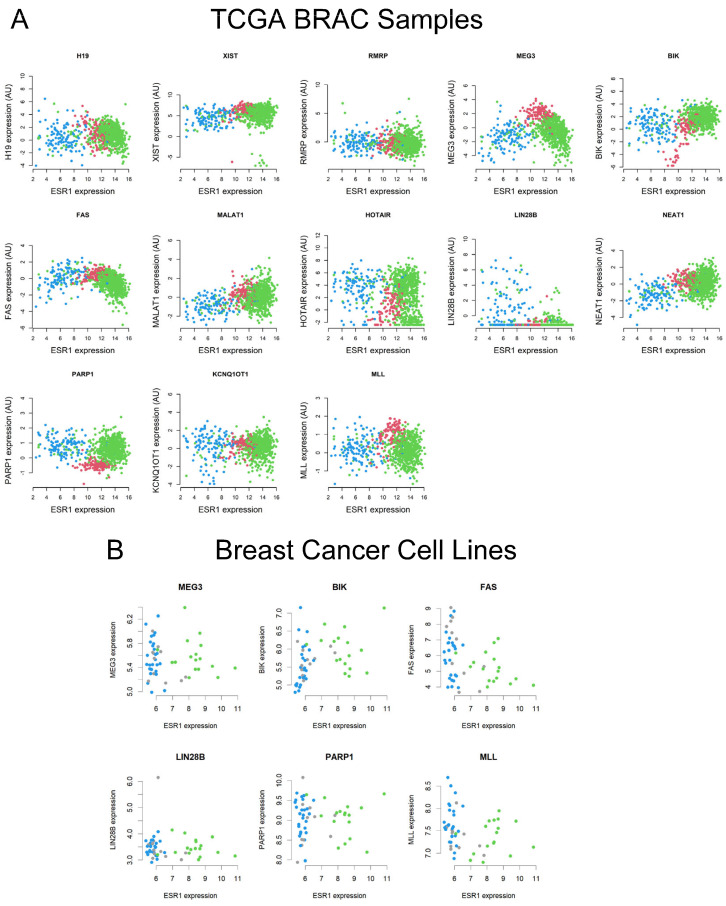
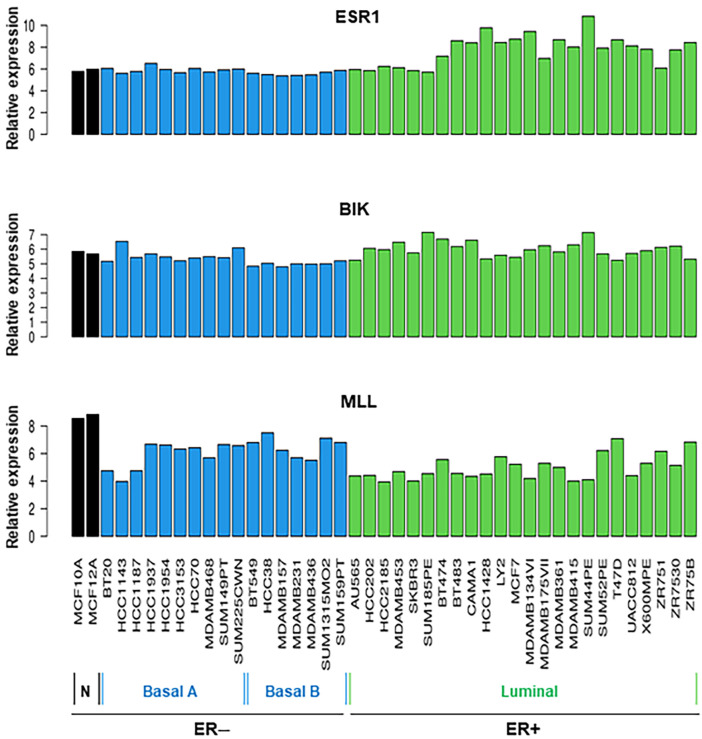
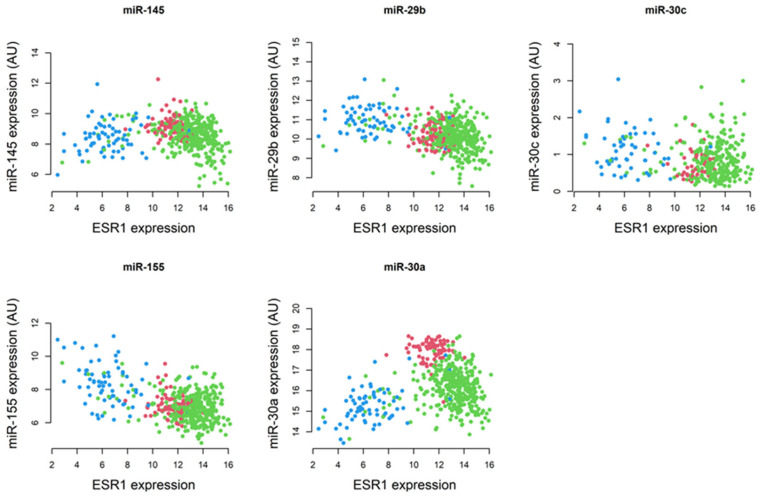
Breast cancer (BC) is a multifactorial condition and it primarily expresses the estrogen receptor α (ERα) that is encoded by the gene estrogen receptor 1 (), which modulates estrogen signaling. , by facilitating estrogen overproduction, plays an indispensable role in the progression and survival of the majority of BCs. To obtain molecular insights into these phenomena, we analyzed The Cancer Genome Atlas (TCGA) breast invasive carcinoma (BRCA) RNA-Seq datasets for the expression of and its correlation to microRNAs (miRNAs) and long non-coding RNAs (lncRNAs), along with its methylation patterns. Regulation of was also assessed with a total of 43 cancerous and non-cancerous breast cell lines. Analyses of both TCGA BRCA and breast cell line RNA-Seq data revealed that specific lncRNAs, i.e., MEG3, BIK, MLL, and FAS are negatively correlated with the , in which PARP1 demonstrates a positive association. Additionally, both miR-30a and miR-145 showed negative correlations with the expression. Of the 54 methylation loci analyzed, the majority of them exhibited a negative correlation with the expression, highlighting a potentially modifiable regulatory mechanism. These findings underscore the complex regulatory events influencing expression and its interaction with diverse signaling pathways, demonstrating novel insights into breast pathogenesis and its potential therapeutics.
乳腺癌(BC)是一种多因素疾病,主要表达由雌激素受体1()基因编码的雌激素受体α(ERα),该受体调节雌激素信号传导。通过促进雌激素过度产生,在大多数乳腺癌的进展和存活中发挥不可或缺的作用。为了深入了解这些现象的分子机制,我们分析了癌症基因组图谱(TCGA)乳腺浸润性癌(BRCA)RNA测序数据集,以研究的表达及其与微小RNA(miRNA)和长链非编码RNA(lncRNA)的相关性,以及其甲基化模式。还使用总共43种癌性和非癌性乳腺细胞系评估了的调控情况。对TCGA BRCA和乳腺细胞系RNA测序数据的分析表明,特定的lncRNA,即MEG3、BIK、MLL和FAS与呈负相关,其中PARP1呈正相关。此外,miR-30a和miR-145均与表达呈负相关。在所分析的54个甲基化位点中,大多数与表达呈负相关,突出了一种潜在的可调节调控机制。这些发现强调了影响表达及其与多种信号通路相互作用的复杂调控事件,为乳腺发病机制及其潜在治疗方法提供了新的见解。