Ferrari Paola, Schiavone Maria Luisa, Scatena Cristian, Nicolini Andrea
Department of Oncology, Pisa University Hospital, Via Roma 57, 56126 Pisa, Italy.
Division of Pathology, Department of Translational Research and New Technologies in Medicine and Surgery, University of Pisa, 56126 Pisa, Italy.
Int J Mol Sci. 2025 Apr 7;26(7):3438. doi: 10.3390/ijms26073438.
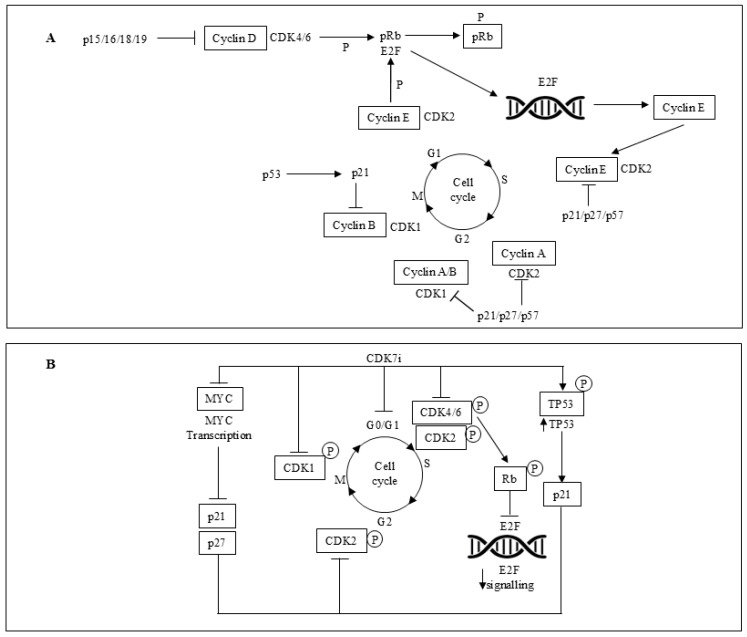
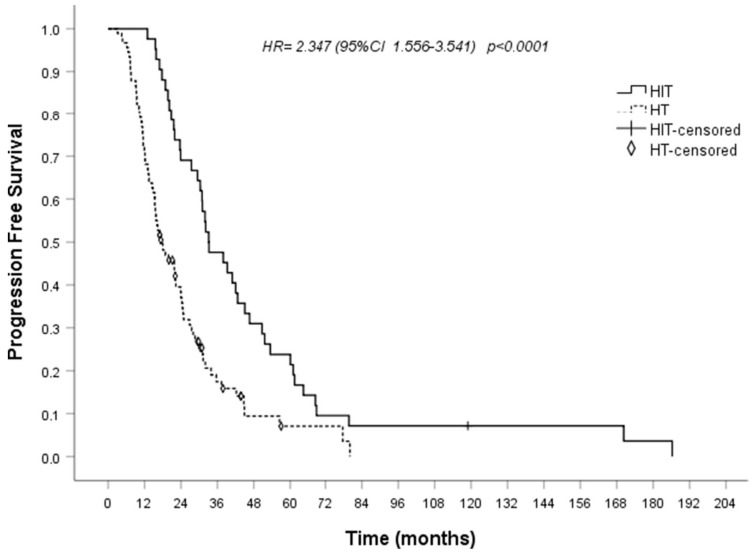
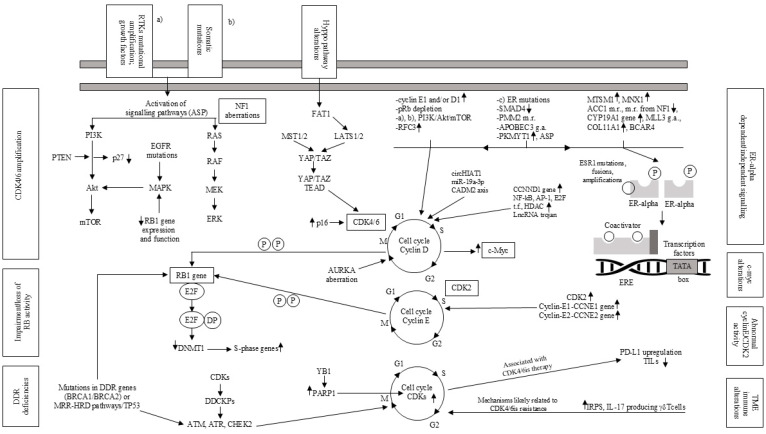
Approximately 70-80% of breast cancers are estrogen receptor-positive (ER+), with 65% of these cases also being progesterone receptor-positive (ER+PR+). In most cases of ER+ advanced breast cancer, endocrine therapy (ET) serves as the first-line treatment, utilizing various drugs that inhibit ER signaling. These include tamoxifen, a selective estrogen receptor modulator (SERM); fulvestrant, a selective estrogen receptor degrader (SERD); and aromatase inhibitors (AIs), which block estrogen synthesis. However, intrinsic or acquired hormone resistance eventually develops, leading to disease progression. The combination of ET with cyclin-dependent kinase 4 and 6 inhibitors (CDK4/6is) has been shown to significantly increase progression-free survival (PFS) and, in some cases, overall survival (OS). CDK4/6is works by arresting the cell cycle in the G1 phase, preventing DNA synthesis, and enhancing the efficacy of ET. This review highlights the key mechanisms of resistance to ET, whether used alone or in combination with biological agents, as well as emerging therapeutic strategies aimed at overcoming resistance. Addressing ET resistance remains a work in progress, and in the near future, better patient selection for different therapeutic approaches is expected through the identification of more precise biological and genetic markers. In particular, liquid biopsy may provide a real-time portrait of the disease, offering insights into mechanisms driving ET resistance and cancer progression.
大约70-80%的乳腺癌是雌激素受体阳性(ER+),其中65%的病例同时也是孕激素受体阳性(ER+PR+)。在大多数ER+晚期乳腺癌病例中,内分泌治疗(ET)作为一线治疗,使用各种抑制ER信号传导的药物。这些药物包括他莫昔芬,一种选择性雌激素受体调节剂(SERM);氟维司群,一种选择性雌激素受体降解剂(SERD);以及芳香化酶抑制剂(AI),它们可阻断雌激素合成。然而,内在或获得性激素耐药最终会出现,导致疾病进展。ET与细胞周期蛋白依赖性激酶4和6抑制剂(CDK4/6i)联合使用已被证明可显著提高无进展生存期(PFS),在某些情况下还可提高总生存期(OS)。CDK4/6i的作用机制是将细胞周期阻滞在G1期,阻止DNA合成,并增强ET的疗效。本综述重点介绍了对ET耐药的关键机制,无论ET是单独使用还是与生物制剂联合使用,以及旨在克服耐药的新兴治疗策略。解决ET耐药问题仍在进行中,在不久的将来,通过识别更精确的生物学和基因标志物,有望为不同治疗方法更好地选择患者。特别是,液体活检可以提供疾病的实时情况,深入了解驱动ET耐药和癌症进展的机制。