Ma Mingyu, Wang Yuqing, Liu Yanting, Guo Shasha, Liu Zheng
School of Materials Science and Engineering, Nanyang Technological University, Singapore, 639798, Singapore.
School of Chemistry, Chemical Engineering and Biotechnology, Nanyang Technological University, Singapore, 637616, Singapore.
Nano Converg. 2025 Apr 18;12(1):19. doi: 10.1186/s40580-025-00484-3.
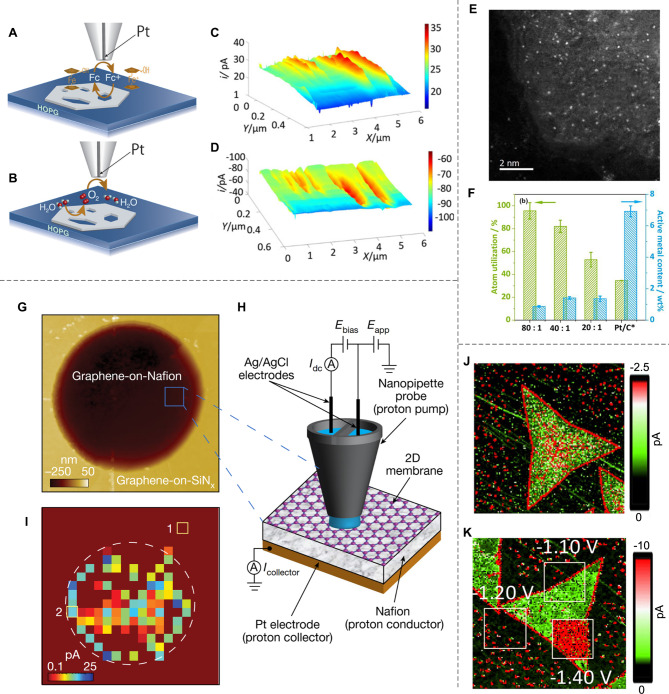
Intuitive design strategies, primarily based on literature research and trial-and-error efforts, have significantly contributed to advancements in the electrocatalyst field. However, the inherently time-consuming and inconsistent nature of these methods presents substantial challenges in accelerating the discovery of high-performance electrocatalysts. To this end, guided design approaches, including in-situ experimental techniques and data mining, have emerged as powerful catalyst design and optimization tools. The former offers valuable insights into the reaction mechanisms, while the latter identifies patterns within large catalyst databases. In this review, we first present the examples using in-situ experimental techniques, emphasizing a detailed analysis of their strengths and limitations. Then, we explore advancements in data-mining-driven catalyst development, highlighting how data-driven approaches complement experimental methods to accelerate the discovery and optimization of high-performance catalysts. Finally, we discuss the current challenges and possible solutions for guided catalyst design. This review aims to provide a comprehensive understanding of current methodologies and inspire future innovations in electrocatalytic research.
直观的设计策略主要基于文献研究和反复试验,对电催化剂领域的进展做出了重大贡献。然而,这些方法固有的耗时性和不一致性在加速高性能电催化剂的发现方面带来了巨大挑战。为此,包括原位实验技术和数据挖掘在内的导向设计方法已成为强大的催化剂设计和优化工具。前者提供了对反应机制的宝贵见解,而后者则在大型催化剂数据库中识别模式。在本综述中,我们首先展示使用原位实验技术的实例,强调对其优缺点的详细分析。然后,我们探讨数据挖掘驱动的催化剂开发进展,突出数据驱动方法如何补充实验方法以加速高性能催化剂的发现和优化。最后,我们讨论导向催化剂设计的当前挑战和可能的解决方案。本综述旨在全面理解当前方法,并激发电催化研究的未来创新。