
左心房应变在急慢性心力衰竭中的预后价值:一项荟萃分析。
Prognostic value of left atrial strain in acute and chronic heart failure: A meta-analysis.
作者信息
Pastore Maria Concetta, Vigna Mariangela, Saglietto Andrea, Iuliano Maria Alma, Mandoli Giulia Elena, Stefanini Andrea, Carrucola Chiara, Fusini Laura, Cavigli Luna, D'ascenzi Flavio, Focardi Marta, Valente Serafina, Cameli Matteo
机构信息
Department of Medical Biotechnologies, Division of Cardiology, University of Siena, Siena, Italy.
Cardiovascular and Thoracic Department, Division of Cardiology, Hospital Citta Della Salute e della Scienza di Torino, Turin, Italy.
出版信息
ESC Heart Fail. 2025 Aug;12(4):2921-2931. doi: 10.1002/ehf2.15302. Epub 2025 Apr 20.
AIMS
Heart failure (HF) is a global health burden which prognostic assessment is currently challenging. Speckle tracking left atrial strain is widely recognized as a predictor of HF outcome. Our aim was to systematically investigate the prognostic value of peak atrial longitudinal strain (PALS) in acute and chronic HF and according to left ventricular (LV) function, age and gender.
METHODS AND RESULTS
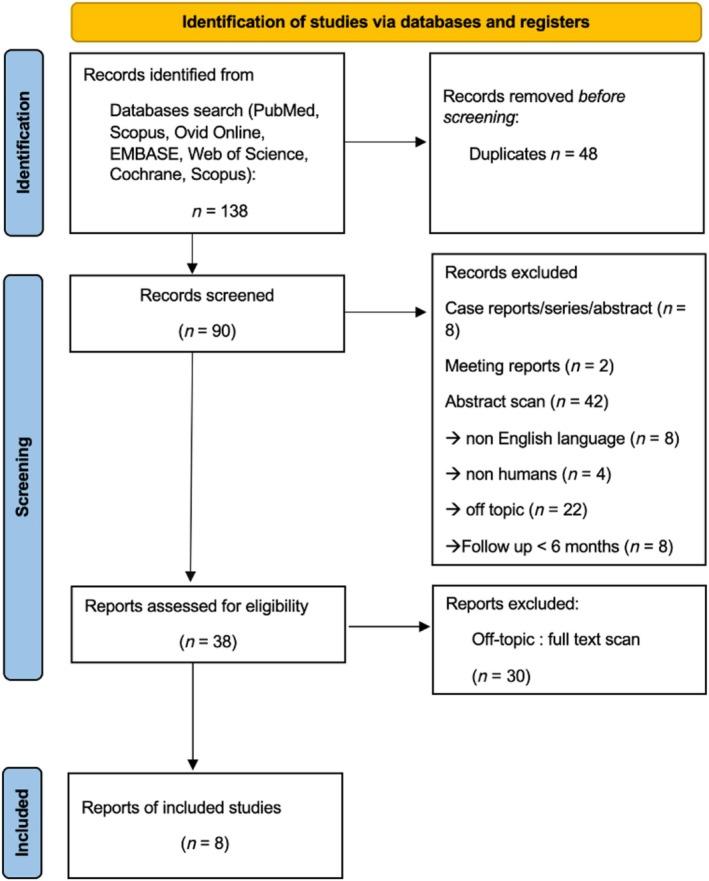
A systematic literature search of medical databases was performed using PRISMA principles. All relevant studies reporting the prognostic value of LA strain in HF with reduced, mildly reduced and preserved ejection fraction (EF) with ≥6 months follow-up were included. All-cause mortality and HF hospitalization were considered as primary endpoint. Random-effect meta-analysis was performed to evaluate the pooled hazard ratios (HR) of the primary outcome. Eight studies (n = 5767 patients, median [interquartile range] age = 66.3 [65; 68.6]) satisfied the inclusion criteria (five chronic HF, two acute HF and one both). Median global PALS was 17.6 [14.9; 26.8]%, median LVEF was 36 [30; 56]%, median left ventricular global longitudinal strain (GLS) was -9% [-7; -16.9]. Over a median follow-up of 903 [321; 1062] days, 2688 patients reached the primary endpoint (944 all-cause mortality and 1963 hospitalizations). Each unit decrease in global PALS was independently associated with 5% increase for the primary endpoint (meta-analytic HR = 1.05; 95% CI [1.02-1.07]; P < 0.01). Subgroup analysis showed no differences in acute and chronic HF (P = 0.18). Meta-regression analysis showed a higher prognostic value of global PALS for lower values of LVEF (beta = -0.0023).
CONCLUSIONS
Global PALS may be used as prognostic tool in acute and chronic HF and especially in patients with reduced EF, providing an additional independent value for risk stratification in clinical practice.
目的
心力衰竭(HF)是一项全球性的健康负担,目前其预后评估颇具挑战。斑点追踪左心房应变被广泛认为是HF预后的一个预测指标。我们的目的是系统研究急性和慢性HF中以及根据左心室(LV)功能、年龄和性别,峰值心房纵向应变(PALS)的预后价值。
方法和结果
采用PRISMA原则对医学数据库进行系统的文献检索。纳入所有报告了射血分数(EF)降低、轻度降低和保留的HF中LA应变的预后价值且随访时间≥6个月的相关研究。全因死亡率和HF住院被视为主要终点。进行随机效应荟萃分析以评估主要结局的合并风险比(HR)。八项研究(n = 5767例患者,年龄中位数[四分位间距]= 66.3[65;68.6])符合纳入标准(五项慢性HF、两项急性HF和一项两者皆有)。全球PALS中位数为17.6[14.9;26.8]%,LVEF中位数为36[30;56]%,左心室整体纵向应变(GLS)中位数为-9%[-7;-16.9]。在903[321;1062]天的中位随访期内,2688例患者达到主要终点(944例全因死亡和1963例住院)。全球PALS每降低一个单位与主要终点增加5%独立相关(荟萃分析HR = 1.05;95%CI[1.02 - 1.07];P < 0.01)。亚组分析显示急性和慢性HF无差异(P = 0.18)。荟萃回归分析显示,对于较低的LVEF值,全球PALS具有更高的预后价值(β = -0.0023)。
结论
全球PALS可作为急性和慢性HF的预后工具,尤其是在EF降低的患者中,为临床实践中的风险分层提供额外的独立价值。


 Zotero 插件