Schukarucha Gomes Amanda, Ellis Cara E, Spigelman Aliya F, Dos Santos Theodore, Maghera Jasmine, Suzuki Kunimasa, MacDonald Patrick E
Alberta Diabetes Institute, Department of Pharmacology, University of Alberta, Edmonton, Alberta, T6G 2R3, Canada.
Alberta Diabetes Institute, Department of Pharmacology, University of Alberta, Edmonton, Alberta, T6G 2R3, Canada.
Mol Metab. 2025 Jun;96:102156. doi: 10.1016/j.molmet.2025.102156. Epub 2025 Apr 19.
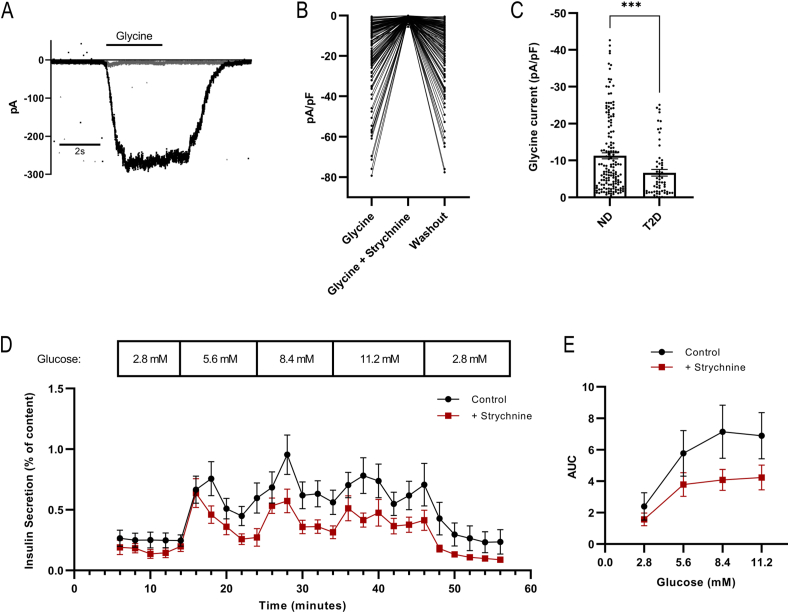
Glycine acts in an autocrine positive feedback loop in human β cells through its ionotropic receptors (GlyRs). In type 2 diabetes (T2D), islet GlyR activity is impaired by unknown mechanisms. We sought to investigate if the GlyR dysfunction in T2D is replicated by hyperglycemia per se, and to further characterize its action in β cells and islets.
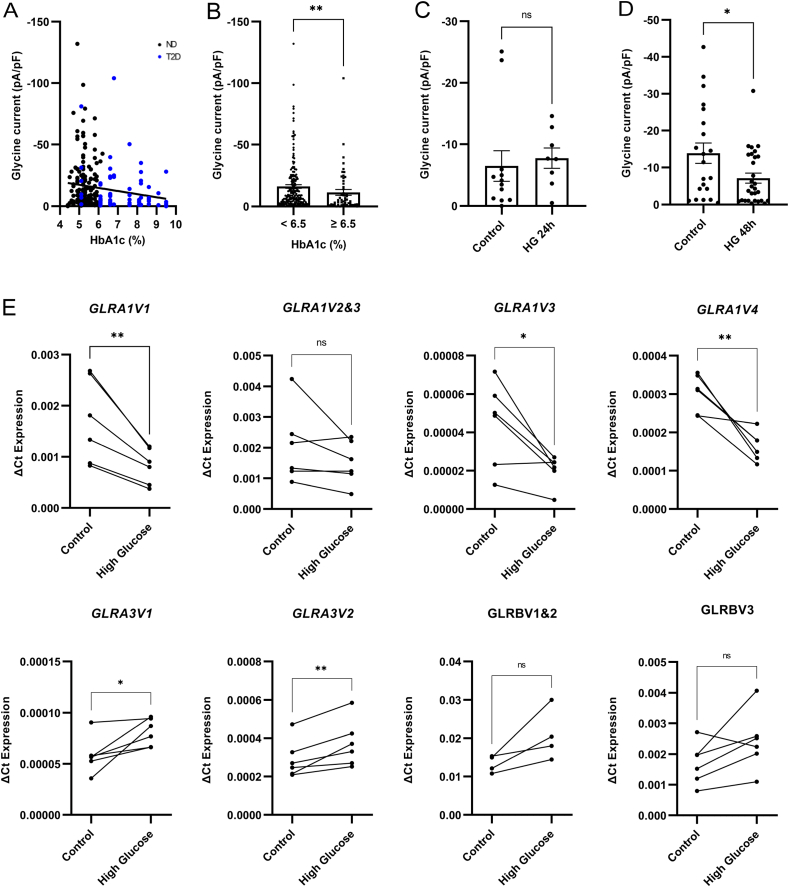
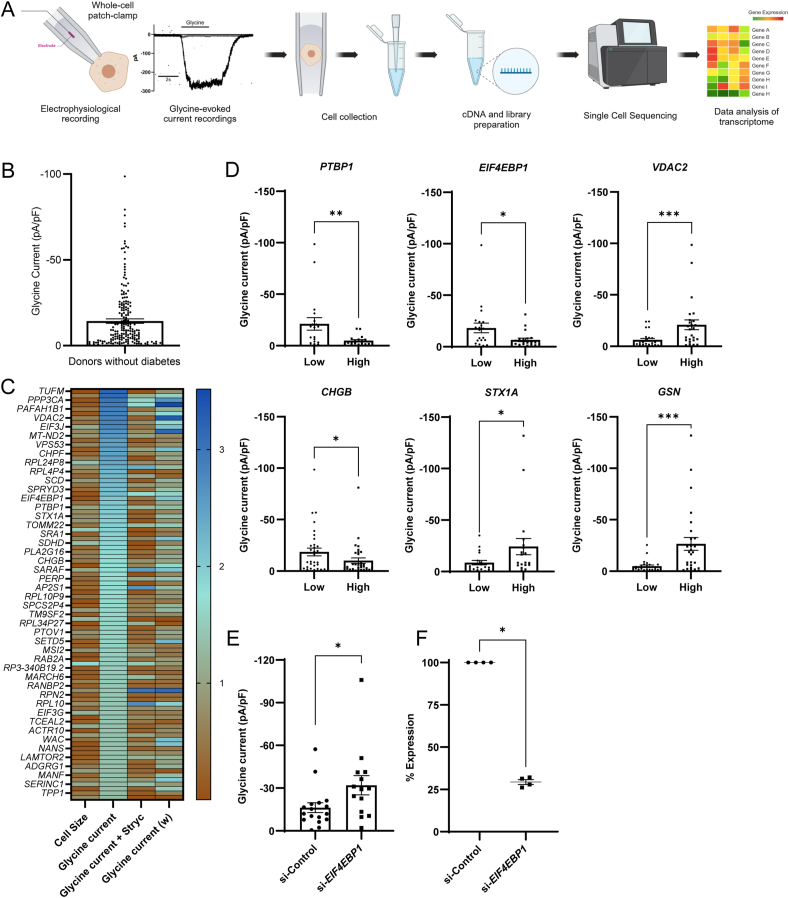
GlyR-mediated currents were measured using whole-cell patch-clamp in human β cells from donors with or without T2D, or after high glucose (15 mM) culture. We also correlated glycine-induced current amplitude with transcript expression levels through patch-seq. The expression of the GlyR α1, α3, and β subunit mRNA splice variants was compared between islets from donors with and without T2D, and after high glucose culture. Insulin secretion from human islets was measured in the presence or absence of the GlyR antagonist strychnine.
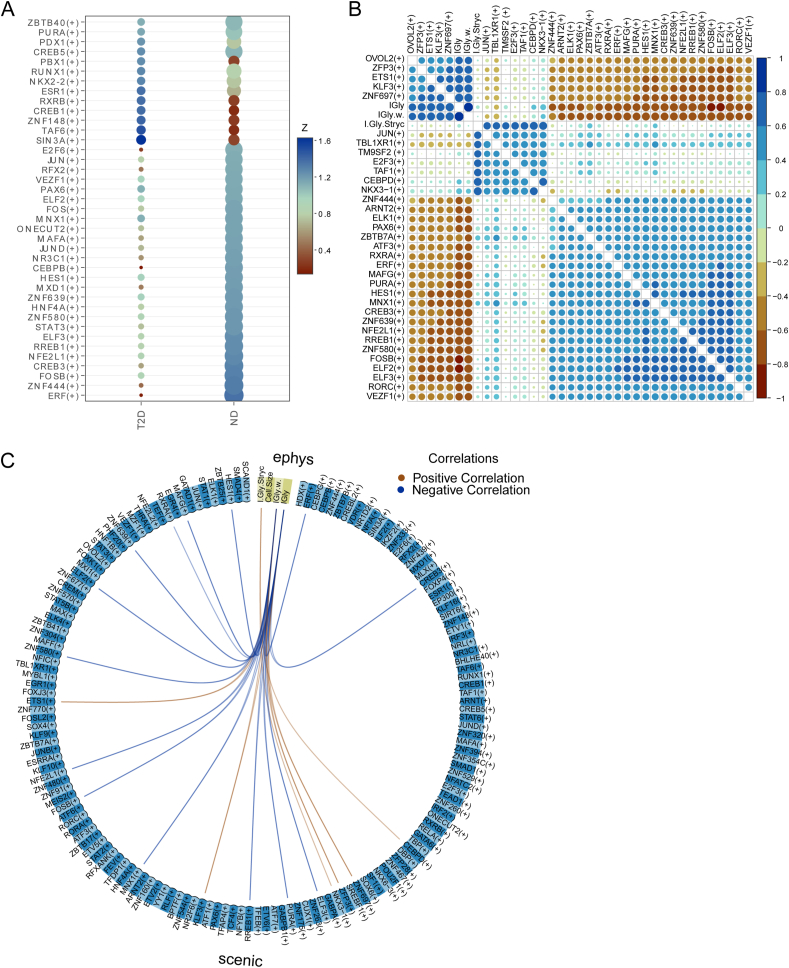
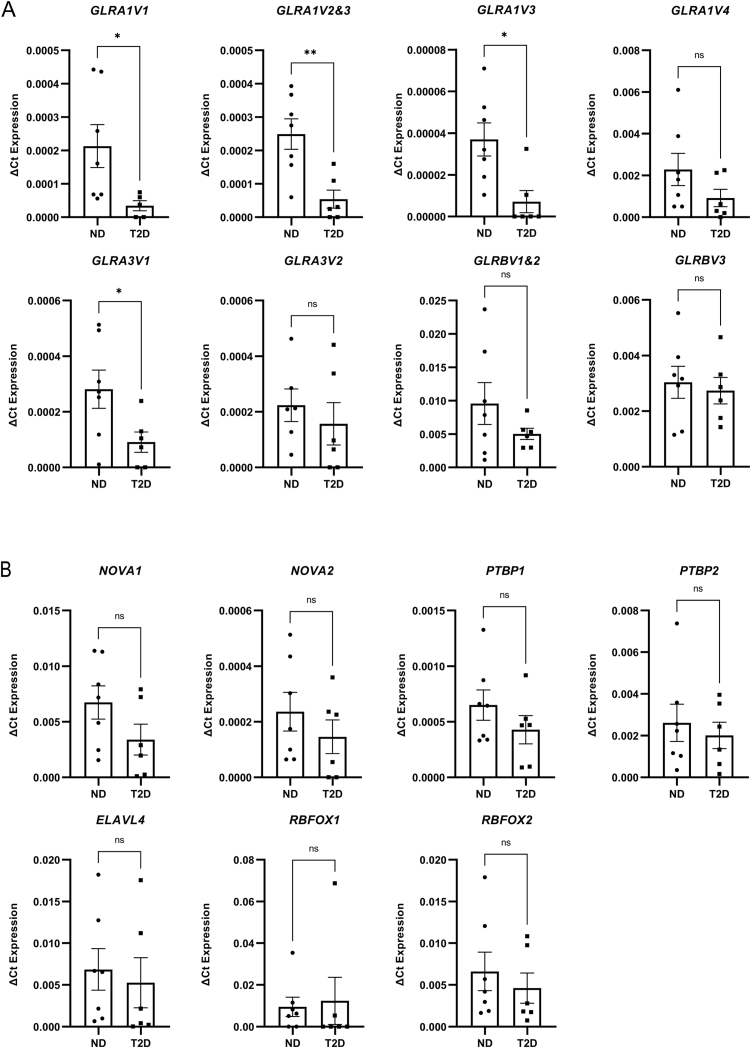
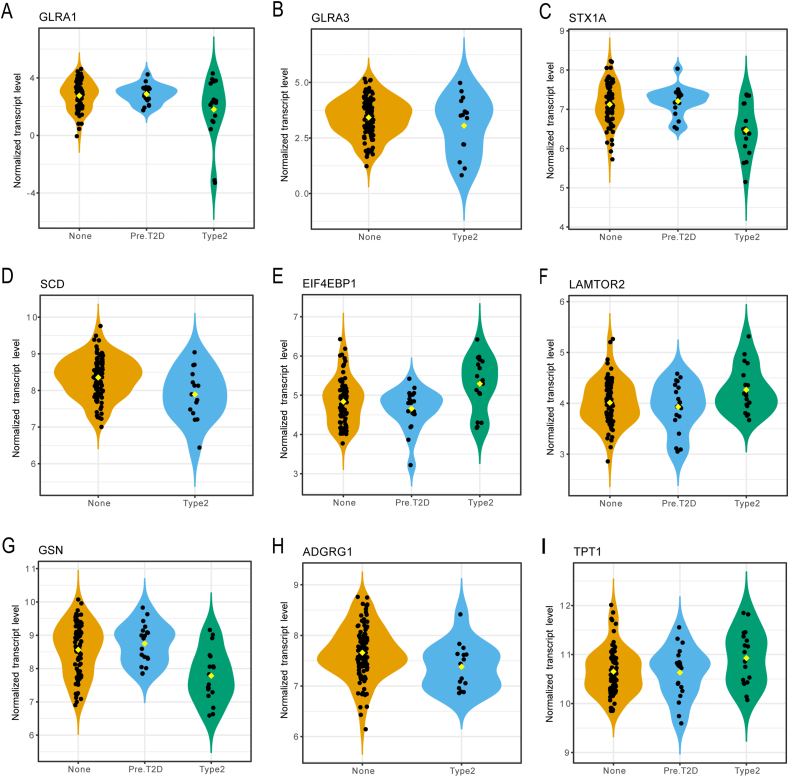
Although gene expression of GlyRs was decreased in T2D islets, and β cell GlyR-mediated currents were smaller, we found no evidence for a shift in GlyR subunit splicing. Glycine-induced currents are also reduced after 48 h culture of islets from donors without diabetes in high glucose, where we also find the reduction of the α1 subunit expression, but an increase in the α3 subunit. We discovered that glycine-evoked currents are highly heterogeneous amongst β cells, inversely correlate with donor HbA1c, and are significantly correlated to the expression of 92 different transcripts and gene regulatory networks (GRNs) that include CREB3(+), RREB1(+) and ZNF697(+). Finally, glucose-stimulated insulin secretion is decreased in the presence of the GlyR antagonist strychnine.
We demonstrate that glucose can modulate GlyR expression, and that the current decrease in T2D is likely due to the receptor gene expression downregulation, and not a change in transcript splicing. Moreover, we define a previously unknown set of genes and regulons that are correlated to GlyR-mediated currents and could be involved in GlyR downregulation in T2D. Among those we validate the negative impact of EIF4EBP1 expression on GlyR activity.
甘氨酸通过其离子型受体(GlyRs)在人β细胞中以自分泌正反馈回路发挥作用。在2型糖尿病(T2D)中,胰岛GlyR活性受未知机制损害。我们试图研究T2D中的GlyR功能障碍是否由高血糖本身复制,并进一步表征其在β细胞和胰岛中的作用。
使用全细胞膜片钳技术测量来自有或无T2D的供体的人β细胞中GlyR介导的电流,或在高糖(15 mM)培养后测量。我们还通过膜片测序将甘氨酸诱导的电流幅度与转录本表达水平相关联。比较有或无T2D的供体的胰岛之间以及高糖培养后的GlyR α1、α3和β亚基mRNA剪接变体的表达。在有或无GlyR拮抗剂士的宁的情况下测量人胰岛的胰岛素分泌。
虽然T2D胰岛中GlyRs的基因表达降低,且β细胞GlyR介导的电流较小,但我们没有发现GlyR亚基剪接发生改变的证据。来自无糖尿病供体的胰岛在高糖中培养48小时后,甘氨酸诱导的电流也降低,我们还发现α1亚基表达降低,但α3亚基增加。我们发现甘氨酸诱发的电流在β细胞中高度异质,与供体糖化血红蛋白(HbA1c)呈负相关,并且与92种不同转录本和基因调控网络(GRNs)的表达显著相关,这些网络包括CREB3(+)、RREB1(+)和ZNF697(+)。最后,在存在GlyR拮抗剂士的宁的情况下,葡萄糖刺激的胰岛素分泌减少。
我们证明葡萄糖可以调节GlyR表达,并且T2D中电流降低可能是由于受体基因表达下调,而非转录本剪接改变。此外,我们定义了一组以前未知的与GlyR介导的电流相关且可能参与T2D中GlyR下调的基因和调控子。在这些基因和调控子中,我们验证了真核翻译起始因子4E结合蛋白1(EIF4EBP1)表达对GlyR活性的负面影响。