Jackson Eleanor F, Riley Timothy B, Overton Paul G
Department of Psychology, University of Sheffield, Western Bank, Sheffield, S10 2TN, UK.
J Neurodev Disord. 2025 Apr 22;17(1):20. doi: 10.1186/s11689-025-09610-y.
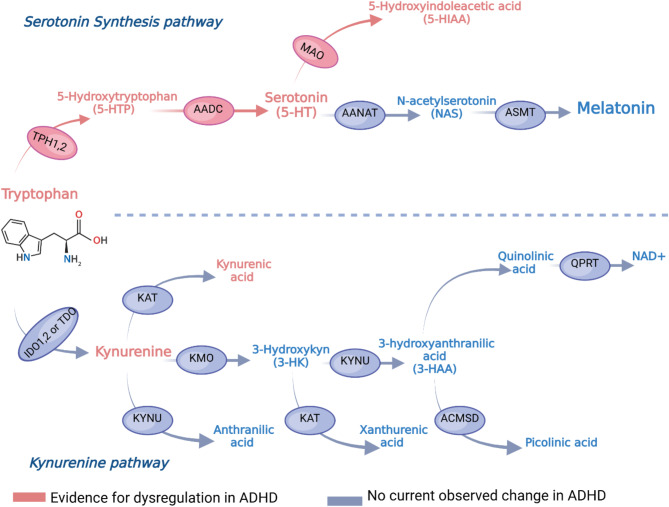
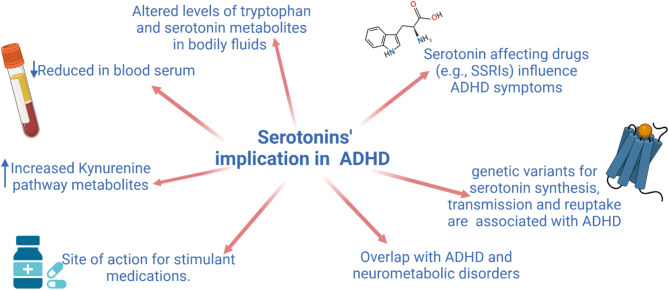
It is well accepted that attention deficit hyperactivity disorder (ADHD) is in part driven by dysfunction in the monoaminergic neurotransmitter system, but both the extent of dysfunction and possible therapeutic avenues presented by serotonergic neurotransmission is frequently overlooked. As such, we present key evidence for dysfunction in serotonergic transmission, as seen from biochemical, genetic and pharmacological perspectives. An overall deficit in serotonin availability is a common theme throughout the literature, thus this review aims to explore possible dysfunctions in the serotonin synthesis pathway which result in this reduced bioavailability, and investigate whether such dysfunctions could be loci of change in ADHD. We have identified several steps in transmission, namely the conversion of tryptophan to 5-hydroxytryptophan and its use of cofactor tetrahydrobiopterin, which could present promising avenues for development of novel clinical interventions for ADHD.
人们普遍认为,注意力缺陷多动障碍(ADHD)部分是由单胺能神经递质系统功能障碍所致,但血清素能神经传递功能障碍的程度以及可能的治疗途径常常被忽视。因此,我们从生化、遗传和药理学角度,呈现血清素能传递功能障碍的关键证据。血清素可用性总体不足是整个文献中的一个共同主题,因此本综述旨在探讨血清素合成途径中可能导致生物利用度降低的功能障碍,并研究此类功能障碍是否可能是ADHD的变化位点。我们已经确定了传递过程中的几个步骤,即色氨酸转化为5-羟色氨酸及其对辅因子四氢生物蝶呤的利用,这可能为开发ADHD新型临床干预措施提供有前景的途径。