Department of Molecular Biology, Massachusetts General Hospital, Boston, MA, USA.
Broad Institute, Cambridge, MA, USA.
Metabolomics. 2024 Mar 6;20(2):36. doi: 10.1007/s11306-024-02089-z.
Sepsis is a highly morbid condition characterized by multi-organ dysfunction resulting from dysregulated inflammation in response to acute infection. Mitochondrial dysfunction may contribute to sepsis pathogenesis, but quantifying mitochondrial dysfunction remains challenging.
To assess the extent to which circulating markers of mitochondrial dysfunction are increased in septic shock, and their relationship to severity and mortality.
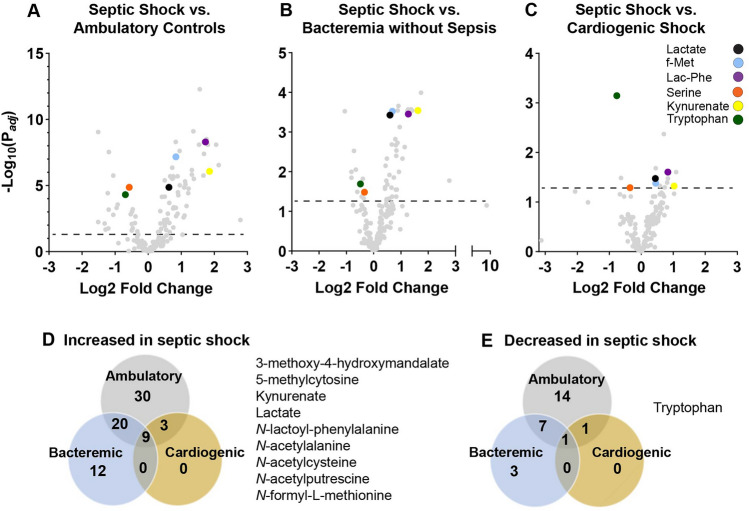
We performed both full-scan and targeted (known markers of genetic mitochondrial disease) metabolomics on plasma to determine markers of mitochondrial dysfunction which distinguish subjects with septic shock (n = 42) from cardiogenic shock without infection (n = 19), bacteremia without sepsis (n = 18), and ambulatory controls (n = 19) - the latter three being conditions in which mitochondrial function, proxied by peripheral oxygen consumption, is presumed intact.
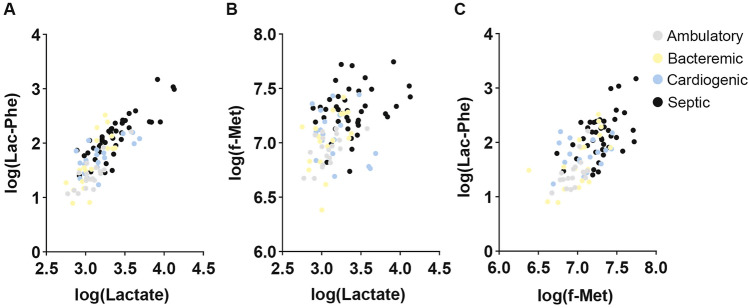
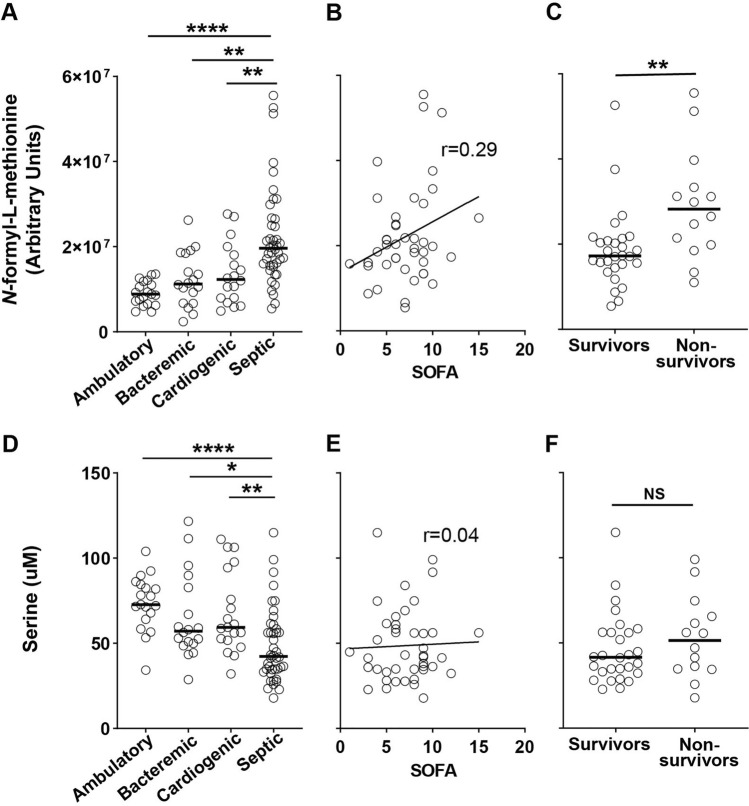
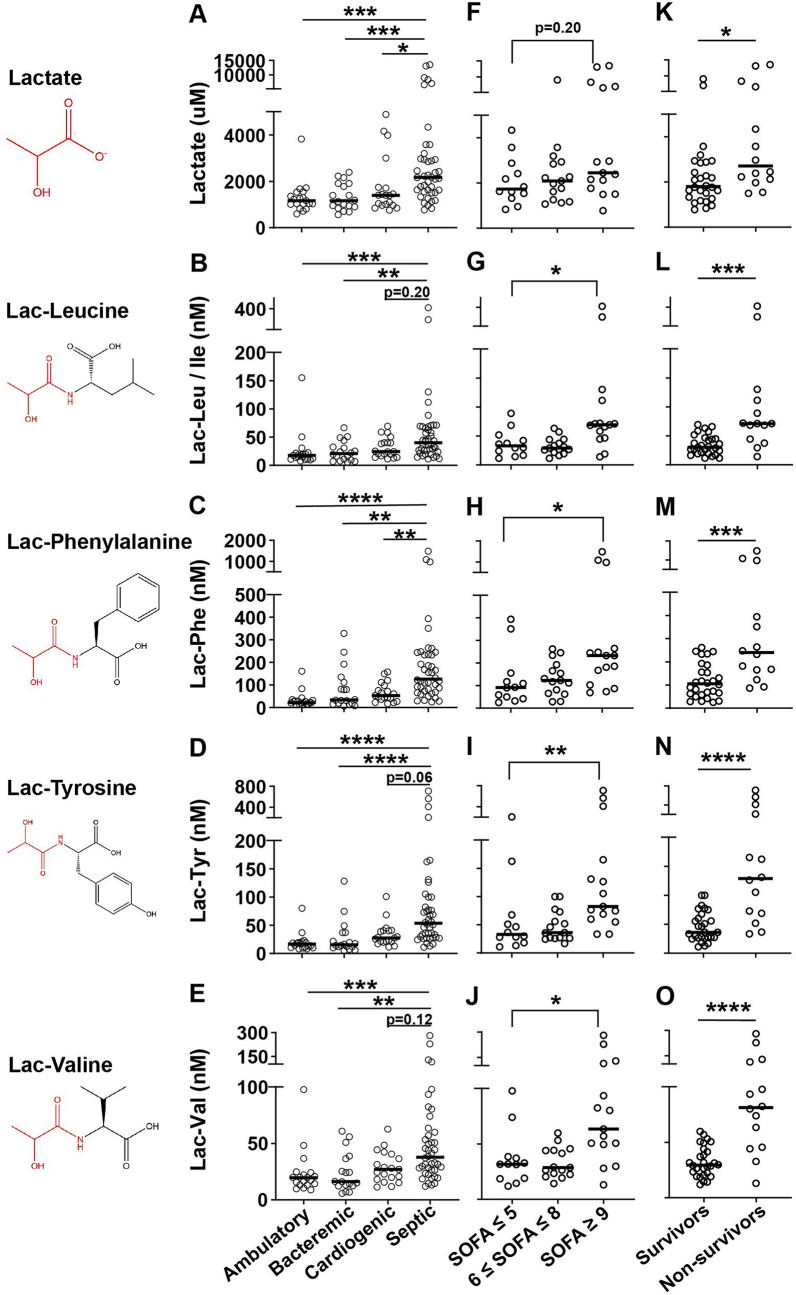
Nine metabolites were significantly increased in septic shock compared to all three comparator groups. This list includes N-formyl-L-methionine (f-Met), a marker of dysregulated mitochondrial protein translation, and N-lactoyl-phenylalanine (lac-Phe), representative of the N-lactoyl-amino acids (lac-AAs), which are elevated in plasma of patients with monogenic mitochondrial disease. Compared to lactate, the clinical biomarker used to define septic shock, there was greater separation between survivors and non-survivors of septic shock for both f-Met and the lac-AAs measured within 24 h of ICU admission. Additionally, tryptophan was the one metabolite significantly decreased in septic shock compared to all other groups, while its breakdown product kynurenate was one of the 9 significantly increased.
Future studies which validate the measurement of lac-AAs and f-Met in conjunction with lactate could define a sepsis subtype characterized by mitochondrial dysfunction.
败血症是一种高度病态的病症,其特征是多器官功能障碍,这是由于急性感染时炎症失调引起的。线粒体功能障碍可能导致败血症的发病机制,但量化线粒体功能障碍仍然具有挑战性。
评估循环中线粒体功能障碍标志物在败血症性休克中的增加程度,以及它们与严重程度和死亡率的关系。
我们对血浆进行了全扫描和靶向(已知的线粒体遗传疾病标志物)代谢组学分析,以确定区分败血症性休克(n=42)与无感染性心源性休克(n=19)、菌血症但无败血症(n=18)和门诊对照(n=19)的线粒体功能障碍标志物,后三者被认为是线粒体功能(通过外周耗氧量来表示)完整的情况。
与所有三个对照组相比,败血症性休克中有 9 种代谢物明显升高。这一列表包括 N-甲酰基-L-甲硫氨酸(f-Met),一种失调的线粒体蛋白翻译标志物,以及 N-乳酰-苯丙氨酸(lac-Phe),代表 N-乳酰-氨基酸(lac-AAs),这在患有单基因线粒体疾病的患者的血浆中升高。与用于定义败血症性休克的临床生物标志物乳酸相比,在 ICU 入院后 24 小时内测量的 f-Met 和 lac-AAs ,在败血症性休克幸存者和非幸存者之间有更大的分离。此外,与所有其他组相比,色氨酸是败血症性休克中唯一显著降低的代谢物,而其分解产物犬尿氨酸是 9 种显著增加的代谢物之一。
未来验证 lac-AAs 和 f-Met 与乳酸一起测量的研究可以定义一种以线粒体功能障碍为特征的败血症亚型。