Lv Shencong, Zhou Yamei, Ji Jimei, Yan Yong, Zhu Guoying
Jiaxing Center for Disease Control and Prevention, Jiaxing, 314050, Zhejiang, China.
Sci Rep. 2025 Apr 25;15(1):14546. doi: 10.1038/s41598-025-99251-x.
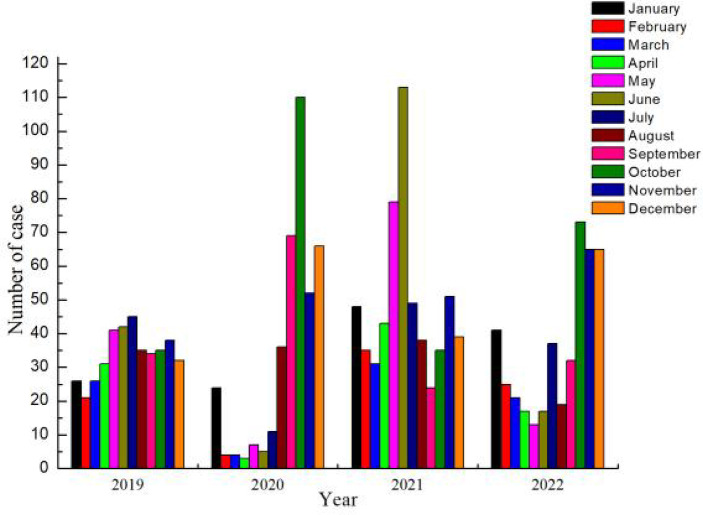
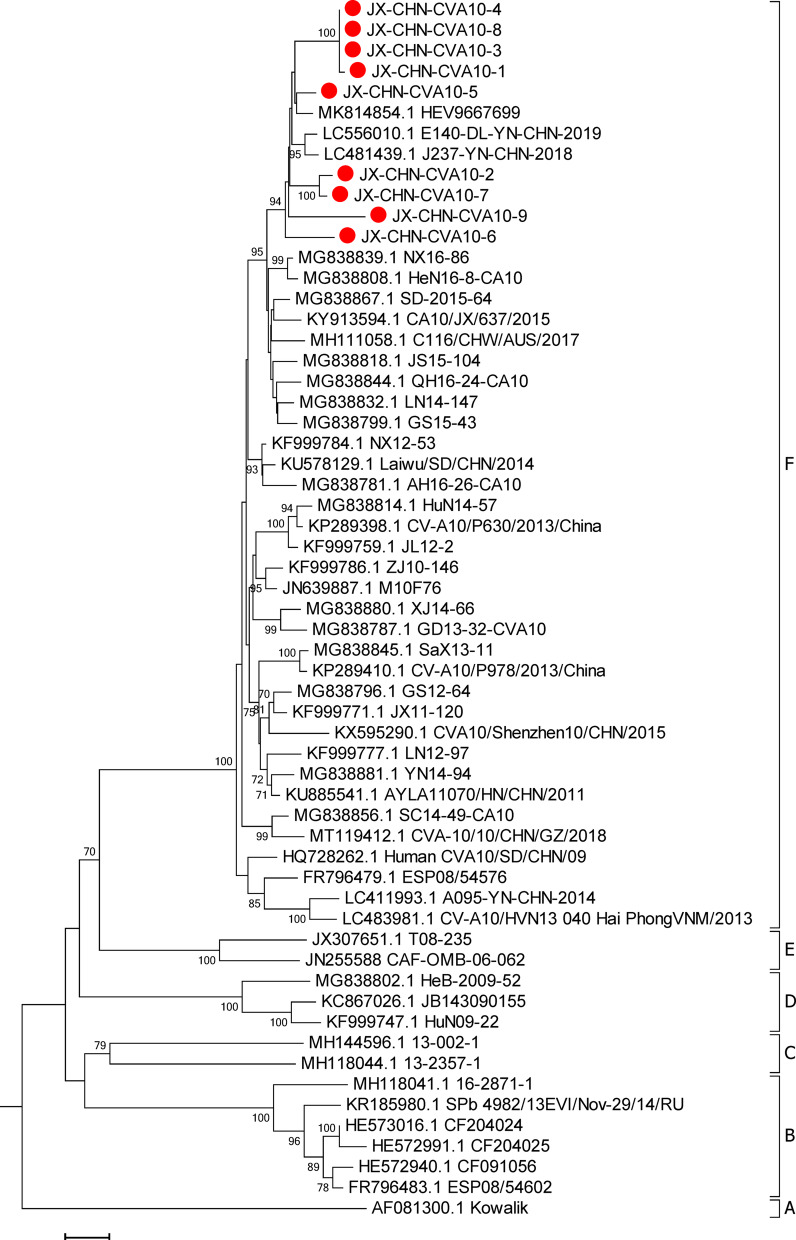
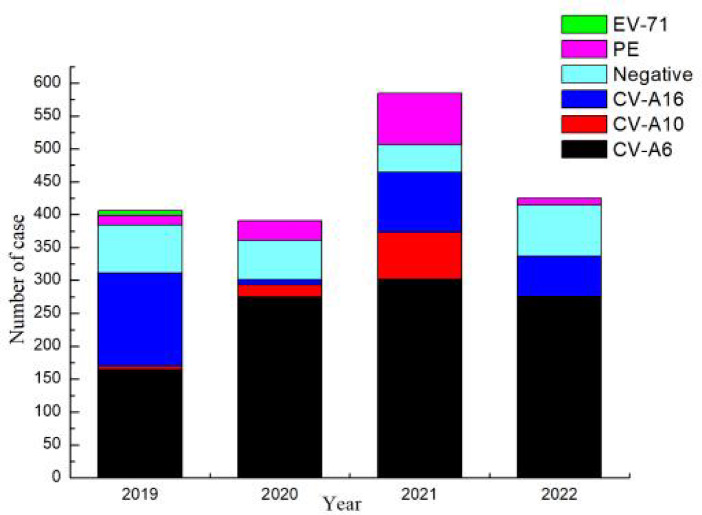
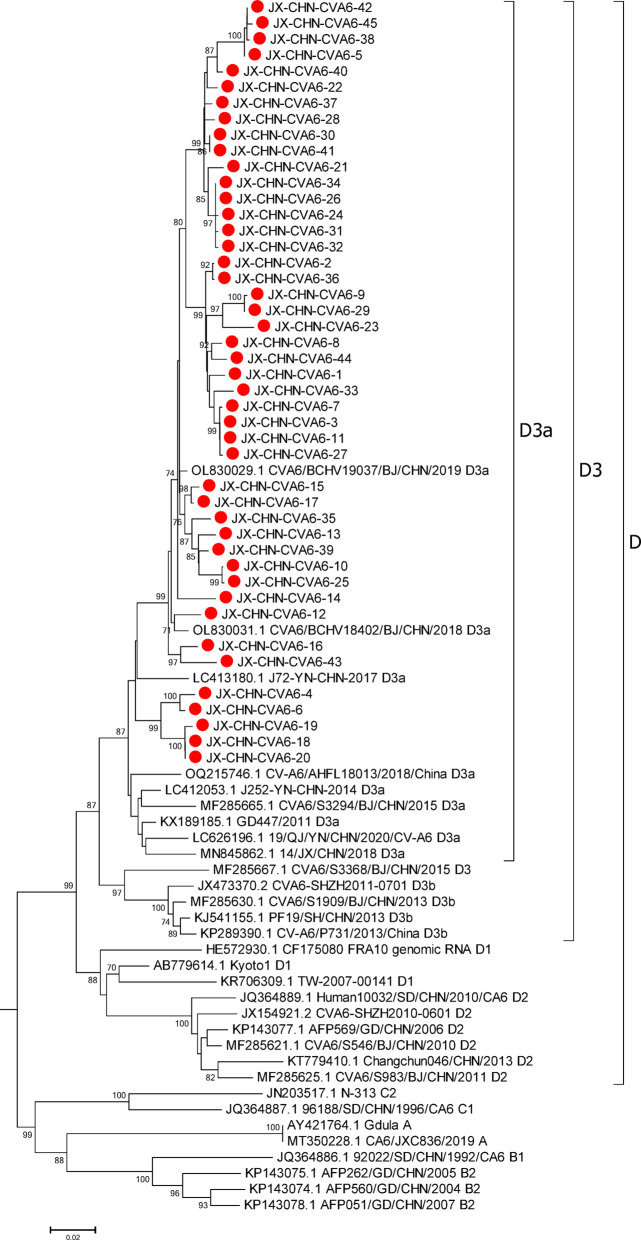
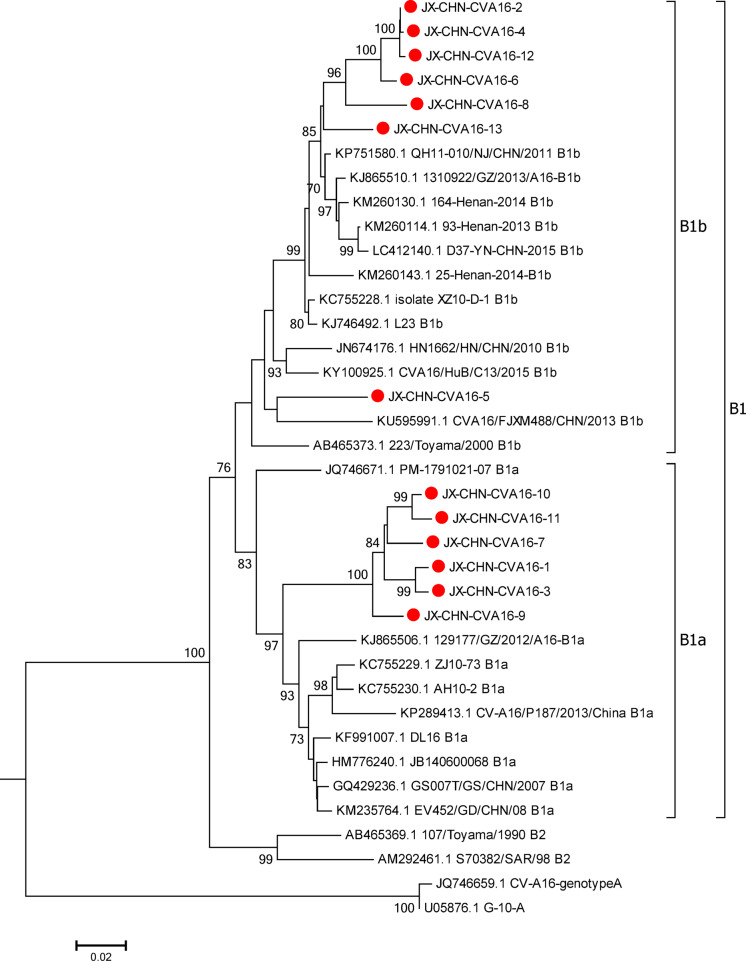
Hand, foot, and mouth disease (HFMD) is mainly caused by enteroviruses (EVs) and represents an important public health problem in China. The aim of this study was to investigate the epidemiological and genetic characteristics of EVs associated with HFMD in Jiaxing City in 2019-2022. In total, 1807 clinical specimens collected from patients with HFMD were evaluated by real-time reverse transcription polymerase chain reaction, and 1553 EV-positive specimens were detected, including 1018 coxsackievirus A6 (CVA6), 301 coxsackievirus A16 (CVA16), 94 coxsackievirus A10 (CVA10), 7 enterovirus A71 (EV-A71), and 133 other EVs. A phylogenetic analysis revealed that the subgenogroups CVA6 D3a, CVA10 F, and CVA16 B1a B1b were predominant in Jiaxing. Compared with VP1 of the prototype strains of CVA6, CVA10, and CVA16, 34, 36, and 31 amino acid substitutions were detected, respectively. Children aged 1-5 years accounted for the majority of cases, and the infection rate was higher in males than in females. EV infection cases were clearly affected by the COVID-19 epidemic, with decreases in 2020 corresponding to the implementation of protective measures. These findings add to the global genetic resources for EVs and demonstrate the epidemiological characteristics and genetic features of HFMD in Jiaxing.
手足口病(HFMD)主要由肠道病毒(EVs)引起,是中国一个重要的公共卫生问题。本研究旨在调查2019 - 2022年嘉兴市与手足口病相关的肠道病毒的流行病学和基因特征。共对1807份手足口病患者的临床标本进行实时逆转录聚合酶链反应检测,检测出1553份EV阳性标本,其中包括1018份柯萨奇病毒A6(CVA6)、301份柯萨奇病毒A16(CVA16)、94份柯萨奇病毒A10(CVA10)、7份肠道病毒A71(EV - A71)和133份其他EVs。系统发育分析显示,CVA6 D3a、CVA10 F和CVA16 B1a B1b亚基因组在嘉兴占主导地位。与CVA6、CVA10和CVA16原型株的VP1相比,分别检测到34、36和31个氨基酸替换。1 - 5岁儿童病例占大多数,男性感染率高于女性。EV感染病例明显受到COVID - 19疫情的影响,2020年对应防护措施实施感染率下降。这些发现增加了全球EVs的基因资源,并展示了嘉兴手足口病的流行病学特征和基因特征。