Yılmaz Tuğba Yulet, Gök Mustafa
Department of Mathematics and Science Education, Faculty of Education, Van Yuzuncu Yil University, 65080 Van, Türkiye.
Behav Sci (Basel). 2025 Apr 13;15(4):517. doi: 10.3390/bs15040517.
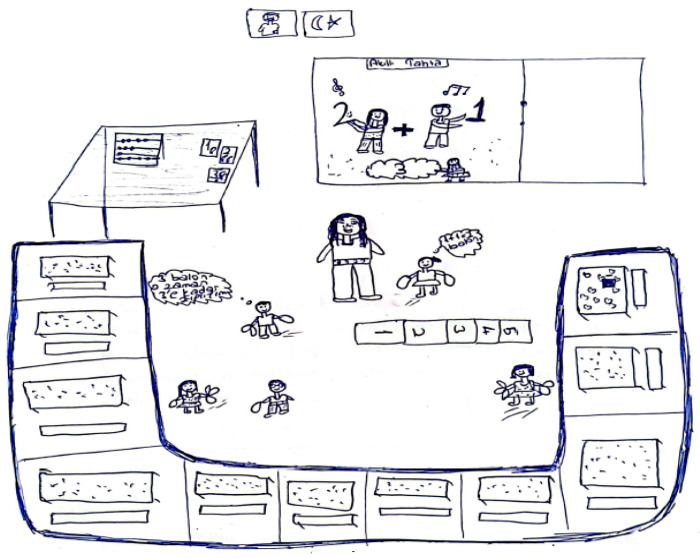
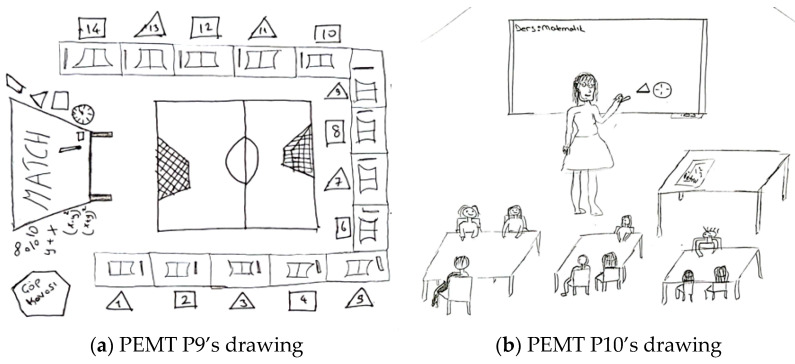
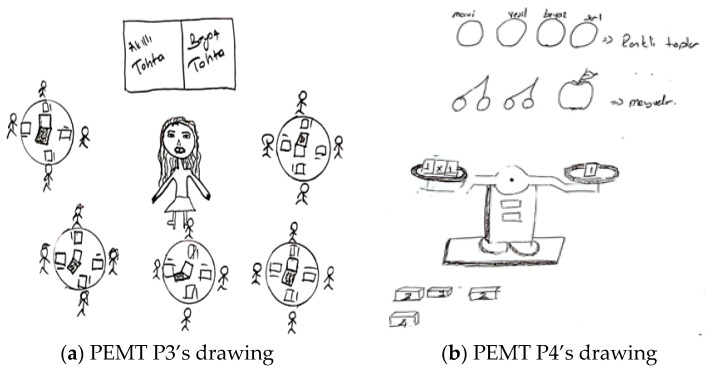
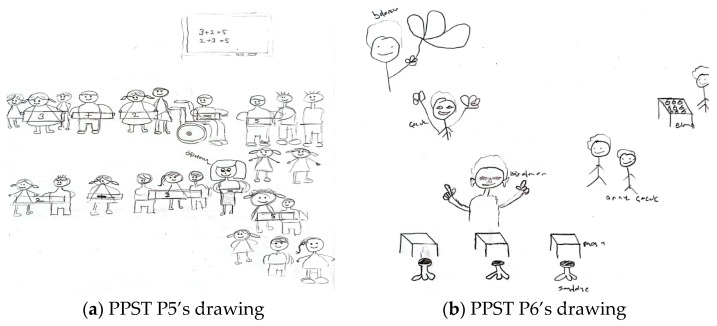
Mathematical activities, which have the potential to engage students cognitively, are an essential component of modern educational approaches. The design of learning environments that facilitate the full realization of the potential of mathematical activities is as crucial as the activities themselves. Well-designed physical, social, and emotional learning environments significantly contribute to students' holistic development. Pre-service teachers' perceptions regarding the ideal learning environment for mathematical activities can shape the quality of learning environments they will create professionally. This study explores the perceptions of pre-service primary school teachers and pre-service elementary mathematics teachers regarding the ideal learning environment for mathematical activities through their drawings and related reflections. This study employs a qualitative case study design, and data were collected through freehand drawings depicting ideal learning environments and semi-structured interviews with pre-service teachers. The analysis reveals five prominent components of the ideal learning environment for mathematical activities: purpose, instructional methods and techniques, teacher-student roles, seating arrangements, and interrelations among these components. The findings indicate differences in perceptions between pre-service primary school teachers and pre-service elementary mathematics teachers. Additionally, the results highlight that these components are interrelated within the learning environment, with the purpose component serving as a guiding factor for the others.
数学活动具有促使学生进行认知参与的潜力,是现代教育方法的重要组成部分。设计有助于充分发挥数学活动潜力的学习环境,与活动本身同样至关重要。精心设计的物理、社会和情感学习环境对学生的全面发展有显著贡献。职前教师对数学活动理想学习环境的认知会影响他们未来专业创建的学习环境质量。本研究通过职前小学教师和职前小学数学教师的绘图及相关反思,探究他们对数学活动理想学习环境的认知。本研究采用定性案例研究设计,通过描绘理想学习环境的徒手绘图以及对职前教师的半结构化访谈收集数据。分析揭示了数学活动理想学习环境的五个突出组成部分:目的、教学方法和技巧、师生角色、座位安排以及这些组成部分之间的相互关系。研究结果表明职前小学教师和职前小学数学教师在认知上存在差异。此外,结果还强调这些组成部分在学习环境中相互关联,其中目的部分是其他部分的指导因素。