Meng Wanqiu, Zeng Linglu, Yang Xiuli, Chen Dawei, Sun Li
College of Life Science, Shihezi University, Shihezi 832000, China.
Genes (Basel). 2025 Mar 29;16(4):393. doi: 10.3390/genes16040393.
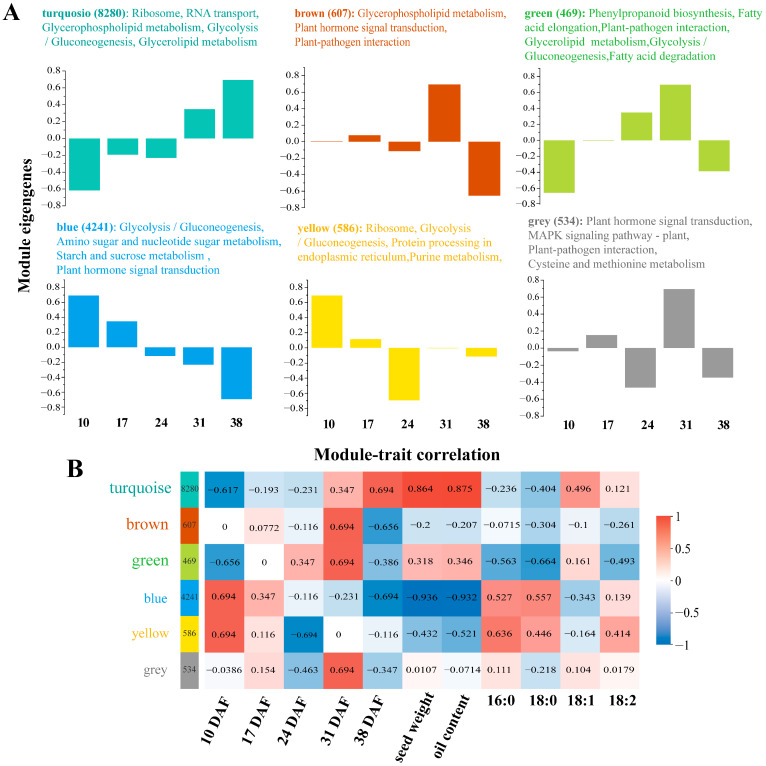
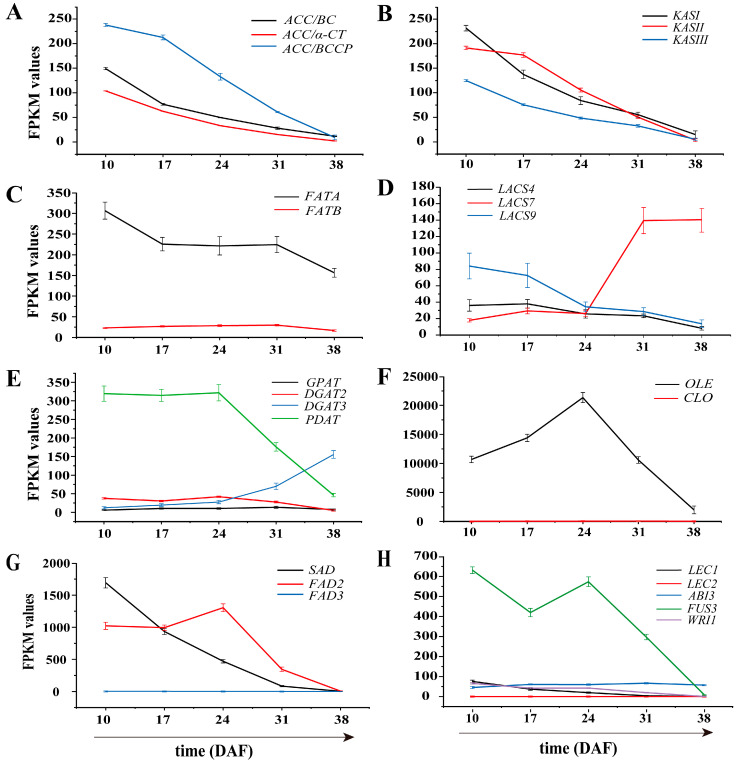
BACKGROUND/OBJECTIVES: Sunflower ( L.) is one of the four major global oilseed crops. Understanding the molecular mechanisms regulating fatty acid synthesis and triacylglycerol (TAG) accumulation is crucial for improving oil yield and quality. In this study, the oilseed sunflower cultivar 'T302', which was wild-cultivated in the northwestern region of China, was analyzed for fatty acid content by targeted lipidomic analysis. RNA sequencing (RNA-seq) was performed on 15 cDNA libraries from sunflower embryos at five developmental stages (10, 17, 24, 31, and 38 days after flowering) to investigate gene expression patterns during oil accumulation. Differentially expressed genes (DEGs) related to fatty acid and triacylglycerol accumulation in developing sunflower seeds were identified. WGCNA was used to gain deeper insights into the mechanisms underlying lipid metabolism.
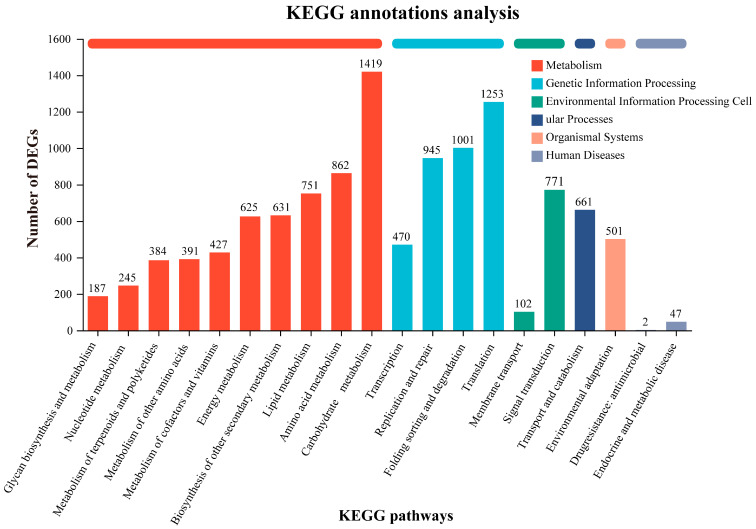
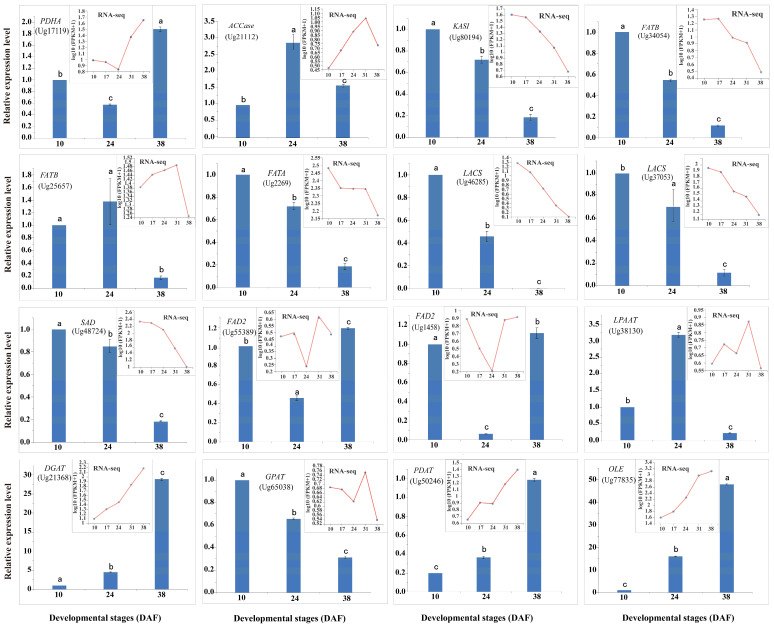
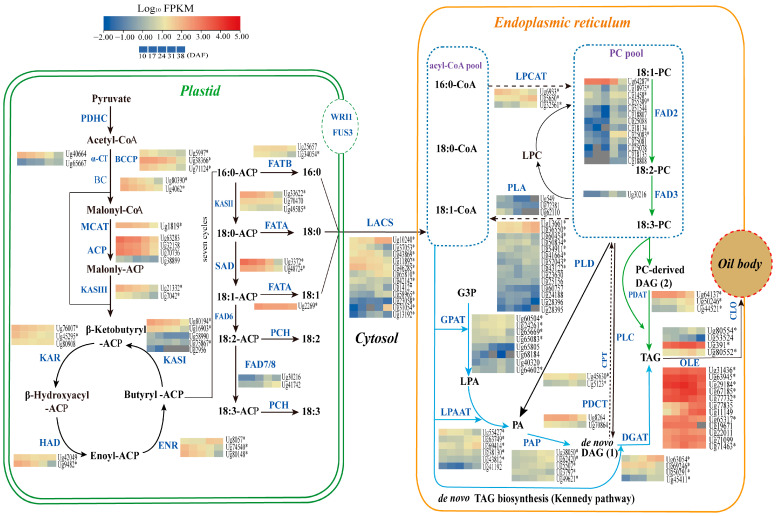
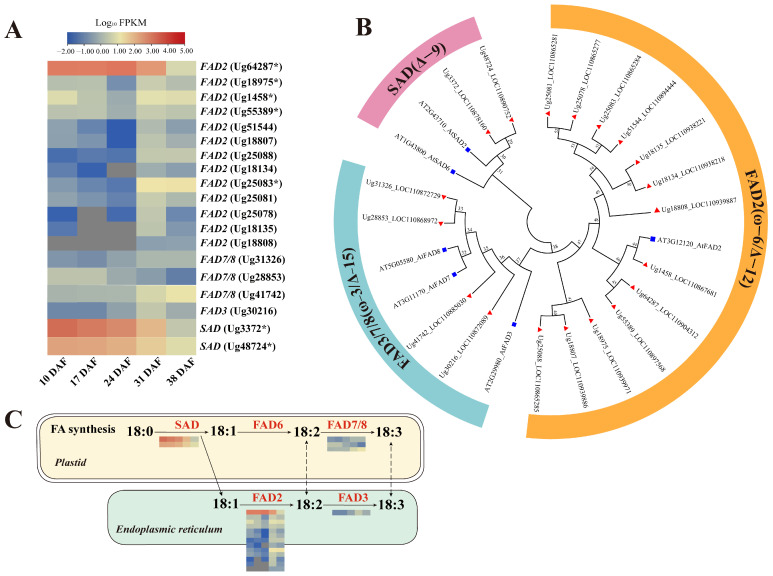
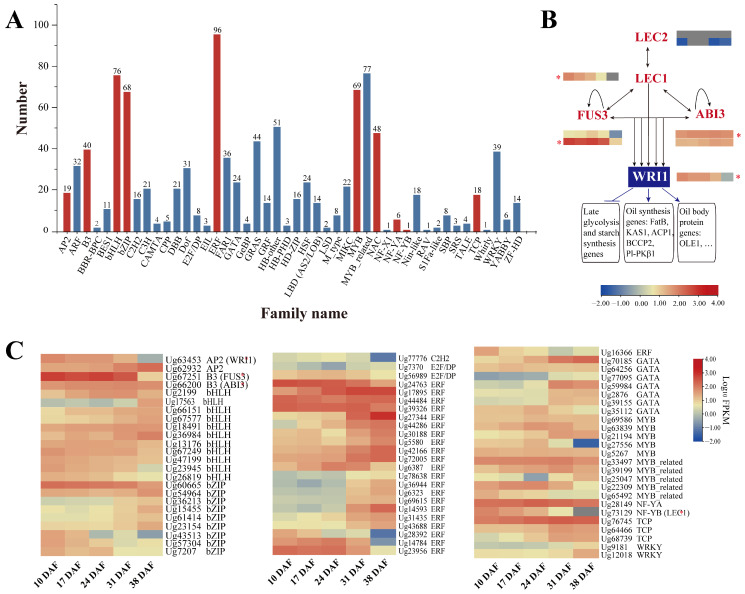
The oil composition of 'T302' consisted of 86.61% unsaturated fatty acids (UFA), mainly linoleic acid (48.47%) and oleic acid (37.25%). Saturated fatty acids (SFAs) accounted for 13.39%, with palmitic acid (7.46%) and stearic acid (5.04%) being the most abundant. A total of 81,676 unigenes were generated from RNA-seq data, and 91 DEGs associated with lipid metabolism were identified, including key enzymes such as , , , , , and . In addition, we identified several novel candidate transcription factor genes, including , , , and , which were found to regulate TAG synthesis during seed maturation and are worthy of further investigation. This study provides valuable insights into the molecular mechanisms of seed oil biosynthesis in oilseed sunflower. The identified key genes and transcription factors provide potential targets for molecular breeding strategies to increase oil content and modify fatty acid compositions in sunflower and other oilseed crops.
背景/目的:向日葵(Helianthus annuus L.)是全球四大主要油料作物之一。了解调节脂肪酸合成和三酰甘油(TAG)积累的分子机制对于提高油产量和质量至关重要。在本研究中,通过靶向脂质组学分析对在中国西北地区野生栽培的油用向日葵品种“T302”的脂肪酸含量进行了分析。对来自向日葵胚胎在五个发育阶段(开花后10、17、24、31和38天)的15个cDNA文库进行了RNA测序(RNA-seq),以研究油脂积累过程中的基因表达模式。鉴定了与发育中的向日葵种子中脂肪酸和三酰甘油积累相关的差异表达基因(DEG)。利用加权基因共表达网络分析(WGCNA)更深入地了解脂质代谢的潜在机制。
“T302”的油组成包括86.61%的不饱和脂肪酸(UFA),主要是亚油酸(48.47%)和油酸(37.25%)。饱和脂肪酸(SFA)占13.39%,其中棕榈酸(7.46%)和硬脂酸(5.04%)含量最高。从RNA-seq数据中总共生成了81,676个单基因,并鉴定了91个与脂质代谢相关的DEG,包括关键酶如……、……、……、……、……和……。此外,我们鉴定了几个新的候选转录因子基因,包括……、……、……和……,发现它们在种子成熟过程中调节TAG合成,值得进一步研究。本研究为油用向日葵种子油生物合成的分子机制提供了有价值的见解。鉴定出的关键基因和转录因子为分子育种策略提供了潜在靶点,以提高向日葵和其他油籽作物的油含量并改变脂肪酸组成。