Prince Tritto Philippe, Ponce Hiram
Facultad de Derecho, Universidad Panamericana, Augusto Rodin 498, Mexico City 03920, Mexico.
Facultad de Ingeniería, Universidad Panamericana, Augusto Rodin 498, Mexico City 03920, Mexico.
Entropy (Basel). 2025 Mar 28;27(4):351. doi: 10.3390/e27040351.
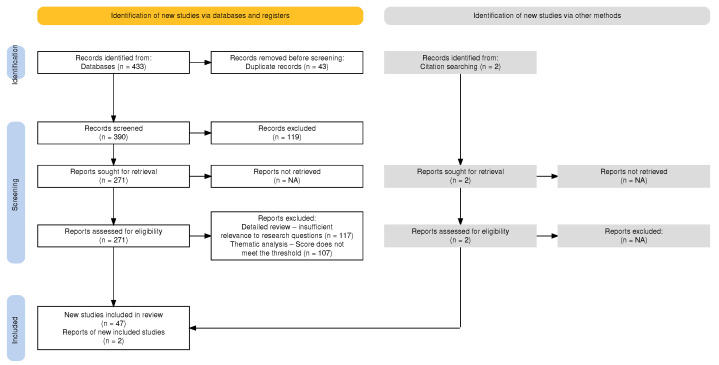
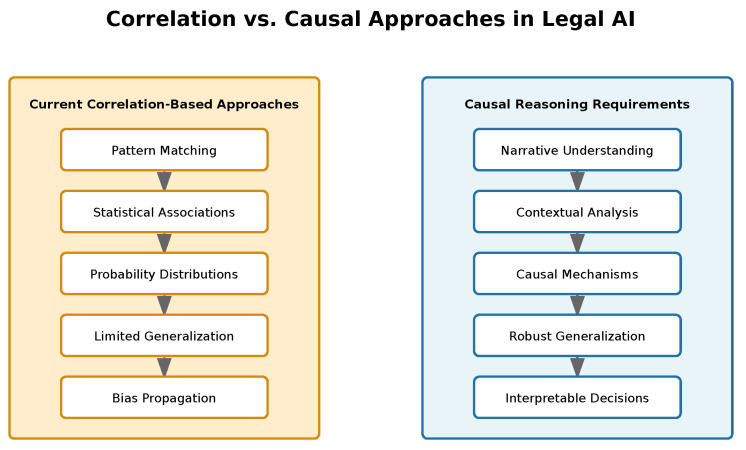
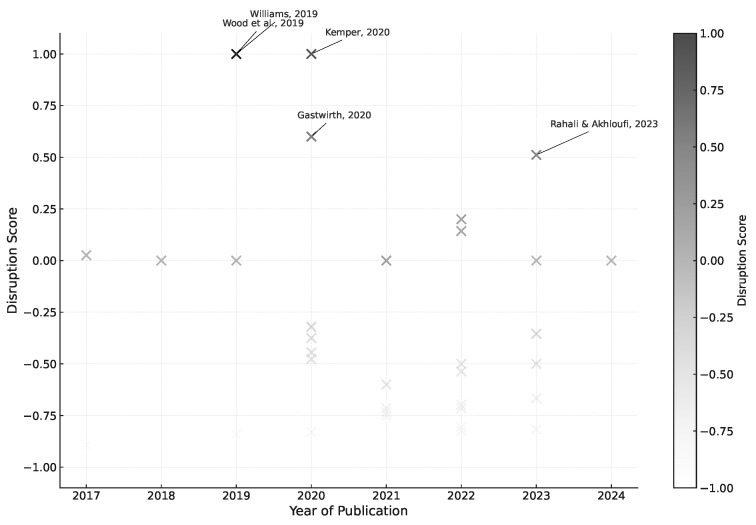
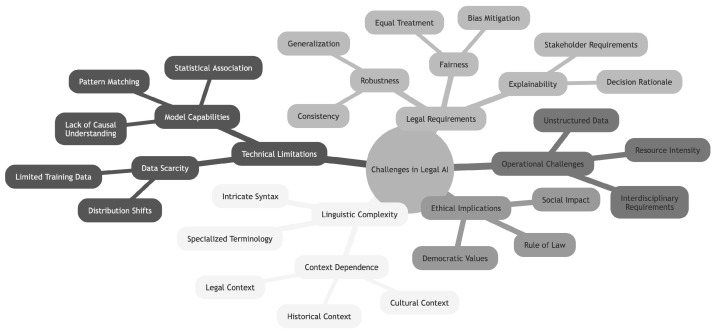
Recent advances in legal language processing have highlighted limitations in correlation-based artificial intelligence approaches, prompting exploration of Causal Artificial Intelligence (AI) techniques for improved legal reasoning. This systematic review examines the challenges, limitations, and potential impact of Causal AI in legal language processing compared to traditional correlation-based methods. Following the Joanna Briggs Institute methodology, we analyzed 47 papers from 2017 to 2024 across academic databases, private sector publications, and policy documents, evaluating their contributions through a rigorous scoring framework assessing Causal AI implementation, legal relevance, interpretation capabilities, and methodological quality. Our findings reveal that while Causal AI frameworks demonstrate superior capability in capturing legal reasoning compared to correlation-based methods, significant challenges remain in handling legal uncertainty, computational scalability, and potential algorithmic bias. The scarcity of comprehensive real-world implementations and overemphasis on transformer architectures without causal reasoning capabilities represent critical gaps in current research. Future development requires balanced integration of AI innovation with law's narrative functions, particularly focusing on scalable architectures for maintaining causal coherence while preserving interpretability in legal analysis.
法律语言处理的最新进展凸显了基于相关性的人工智能方法的局限性,促使人们探索因果人工智能(AI)技术以改进法律推理。与传统的基于相关性的方法相比,本系统综述考察了因果人工智能在法律语言处理中的挑战、局限性和潜在影响。按照乔安娜·布里格斯研究所的方法,我们分析了2017年至2024年期间来自学术数据库、私营部门出版物和政策文件的47篇论文,通过一个严格的评分框架评估它们的贡献,该框架评估因果人工智能的实施情况、法律相关性、解释能力和方法质量。我们的研究结果表明,虽然与基于相关性的方法相比,因果人工智能框架在捕捉法律推理方面表现出卓越能力,但在处理法律不确定性、计算可扩展性和潜在的算法偏差方面仍存在重大挑战。全面的现实世界实施案例稀缺,以及对缺乏因果推理能力的变压器架构的过度强调,是当前研究中的关键差距。未来的发展需要将人工智能创新与法律的叙事功能进行平衡整合,尤其要关注可扩展架构,以便在保持因果连贯性的同时,在法律分析中保持可解释性。