
一个用于生成符合PRISMA 2020标准流程图的R包和Shiny应用程序,具有交互性以实现优化的数字透明度和开放综合。
: An R package and Shiny app for producing PRISMA 2020-compliant flow diagrams, with interactivity for optimised digital transparency and Open Synthesis.
作者信息
Haddaway Neal R, Page Matthew J, Pritchard Chris C, McGuinness Luke A
机构信息
Leibniz-Centre for Agricultural Landscape Research (ZALF) Müncheberg Germany.
Africa Centre for Evidence University of Johannesburg Johannesburg South Africa.
出版信息
Campbell Syst Rev. 2022 Mar 27;18(2):e1230. doi: 10.1002/cl2.1230. eCollection 2022 Jun.
BACKGROUND
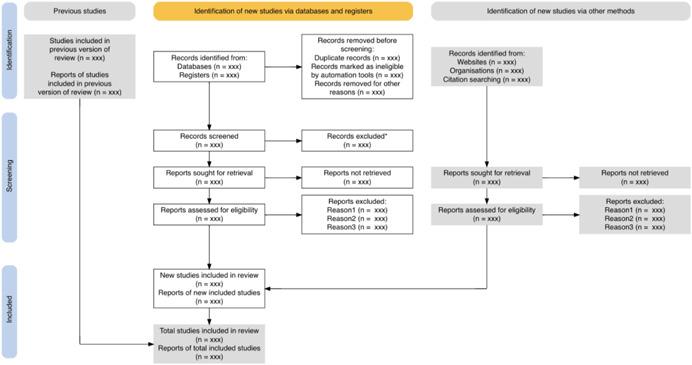
Reporting standards, such as PRISMA aim to ensure that the methods and results of systematic reviews are described in sufficient detail to allow full transparency. Flow diagrams in evidence syntheses allow the reader to rapidly understand the core procedures used in a review and examine the attrition of irrelevant records throughout the review process. Recent research suggests that use of flow diagrams in systematic reviews is poor and of low quality and called for standardised templates to facilitate better reporting in flow diagrams. The increasing options for interactivity provided by the Internet gives us an opportunity to support easy-to-use evidence synthesis tools, and here we report on the development of a tool for the production of PRISMA 2020-compliant systematic review flow diagrams.
METHODS AND FINDINGS
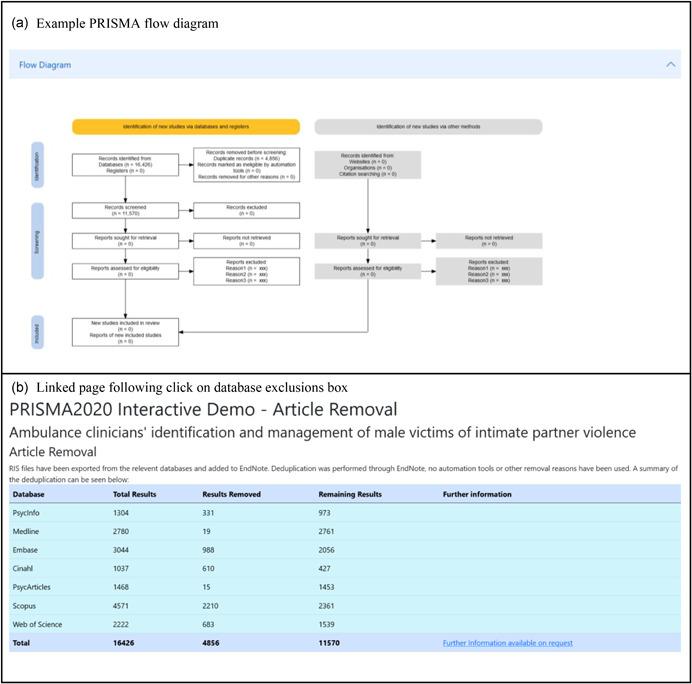
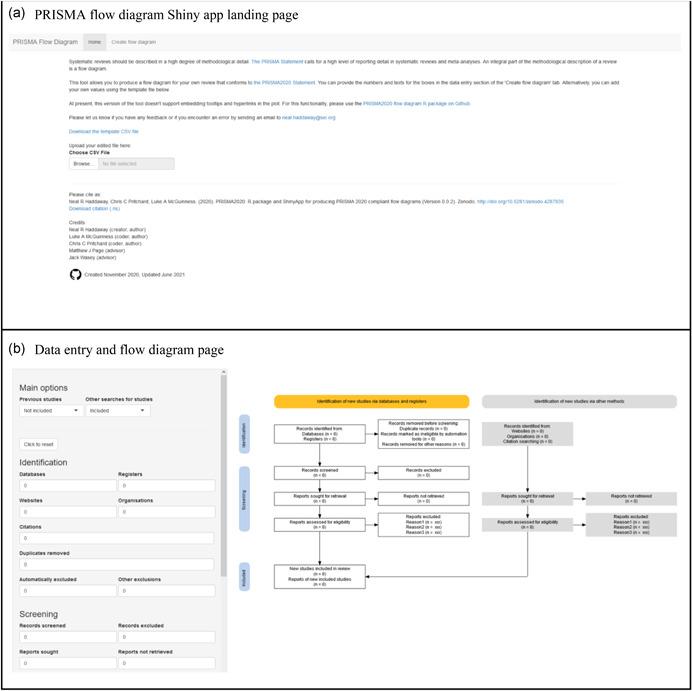
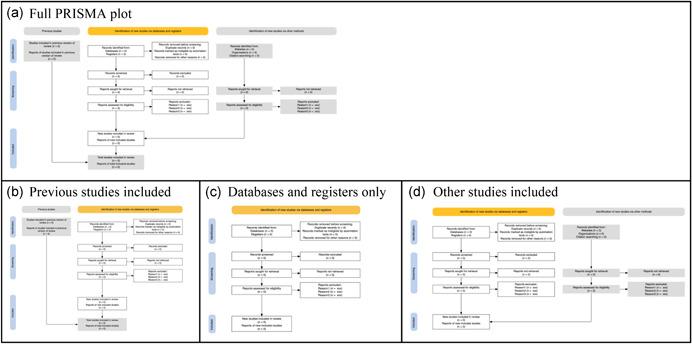
We developed a free-to-use, Open Source R package and web-based Shiny app to allow users to design PRISMA flow diagrams for their own systematic reviews. Our tool allows users to produce standardised visualisations that transparently document the methods and results of a systematic review process in a variety of formats. In addition, we provide the opportunity to produce interactive, web-based flow diagrams (exported as HTML files), that allow readers to click on boxes of the diagram and navigate to further details on methods, results or data files. We provide an interactive example here; https://prisma-flowdiagram.github.io/.
CONCLUSIONS
We have developed a user-friendly tool for producing PRISMA 2020-compliant flow diagrams for users with coding experience and, importantly, for users without prior experience in coding by making use of Shiny (https://estech.shinyapps.io/prisma_flowdiagram/). This free-to-use tool will make it easier to produce clear and PRISMA 2020-compliant systematic review flow diagrams. Significantly, users can also produce interactive flow diagrams for the first time, allowing readers of their reviews to smoothly and swiftly explore and navigate to further details of the methods and results of a review. We believe this tool will increase use of PRISMA flow diagrams, improve the compliance and quality of flow diagrams, and facilitate strong science communication of the methods and results of systematic reviews by making use of interactivity. We encourage the systematic review community to make use of the tool, and provide feedback to streamline and improve their usability and efficiency.
背景
报告标准,如PRISMA,旨在确保系统评价的方法和结果得到足够详细的描述,以实现完全透明。证据综合中的流程图使读者能够快速理解评价中使用的核心程序,并检查整个评价过程中无关记录的损耗情况。最近的研究表明,系统评价中流程图的使用情况不佳且质量较低,并呼吁采用标准化模板以促进流程图更好的报告。互联网提供的越来越多的交互选项为我们提供了一个机会来支持易于使用的证据综合工具,在此我们报告一个用于生成符合PRISMA 2020的系统评价流程图的工具的开发情况。
方法与结果
我们开发了一个免费使用的开源R包和基于网络的Shiny应用程序,允许用户为自己的系统评价设计PRISMA流程图。我们的工具允许用户生成标准化的可视化,以各种格式透明地记录系统评价过程的方法和结果。此外,我们提供了生成基于网络的交互式流程图(导出为HTML文件)的机会,使读者能够点击图中的框并导航到有关方法、结果或数据文件的更多详细信息。我们在此提供一个交互式示例;https://prisma-flowdiagram.github.io/。
结论
我们为有编码经验的用户,更重要的是为没有编码经验的用户开发了一个用户友好的工具,用于生成符合PRISMA 2020的流程图,通过使用Shiny(https://estech.shinyapps.io/prisma_flowdiagram/)。这个免费使用的工具将使生成清晰且符合PRISMA 2020的系统评价流程图变得更加容易。重要的是,用户还可以首次生成交互式流程图,使评价的读者能够顺利且迅速地探索并导航到评价方法和结果的更多详细信息。我们相信这个工具将增加PRISMA流程图的使用,提高流程图的合规性和质量,并通过利用交互性促进系统评价方法和结果的有力科学传播。我们鼓励系统评价社区使用该工具,并提供反馈以简化和提高其可用性和效率。
 Zotero 插件