Abdelmuhsin Abdelmuhsin Abdegadir, Sulieman Abdel Moniem Elhadi, Salih Zakaria Ahmed, Al-Azmi Meshari, Alanaizi Naimah Asid, Goniem Ahmed Eisa, Alam Mohammad Jahoor
Department of Biology, College of Science, University of Ha'il, Ha'il 81422, Saudi Arabia.
Department of Research and Training, Research and Training Station, King Faisal University, Alhsa 31982, Saudi Arabia.
Pharmaceuticals (Basel). 2025 Mar 31;18(4):504. doi: 10.3390/ph18040504.
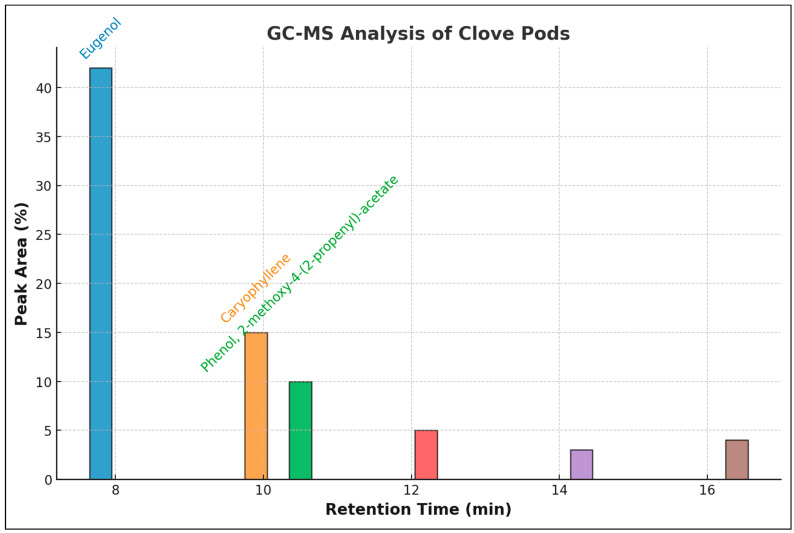
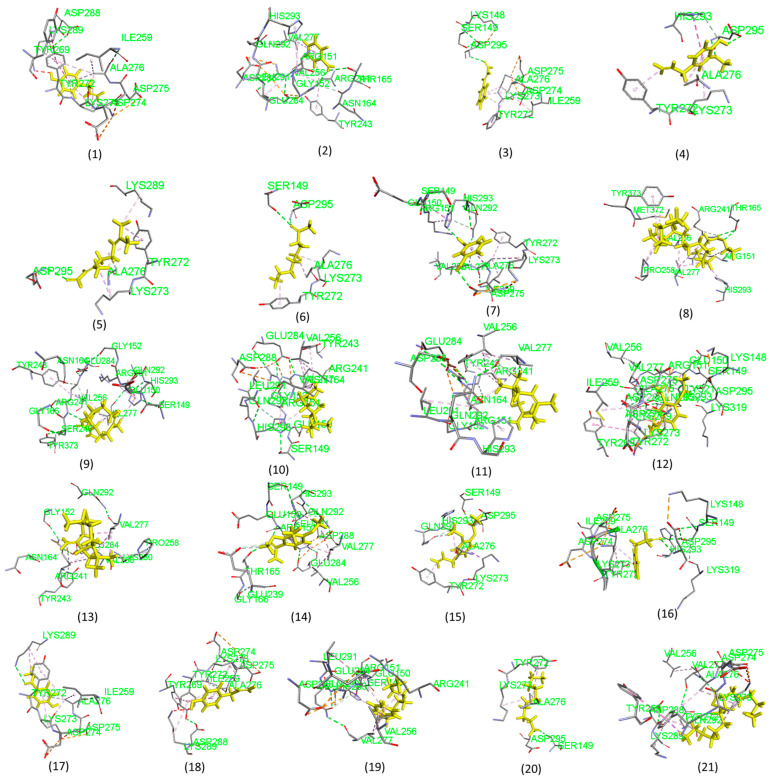
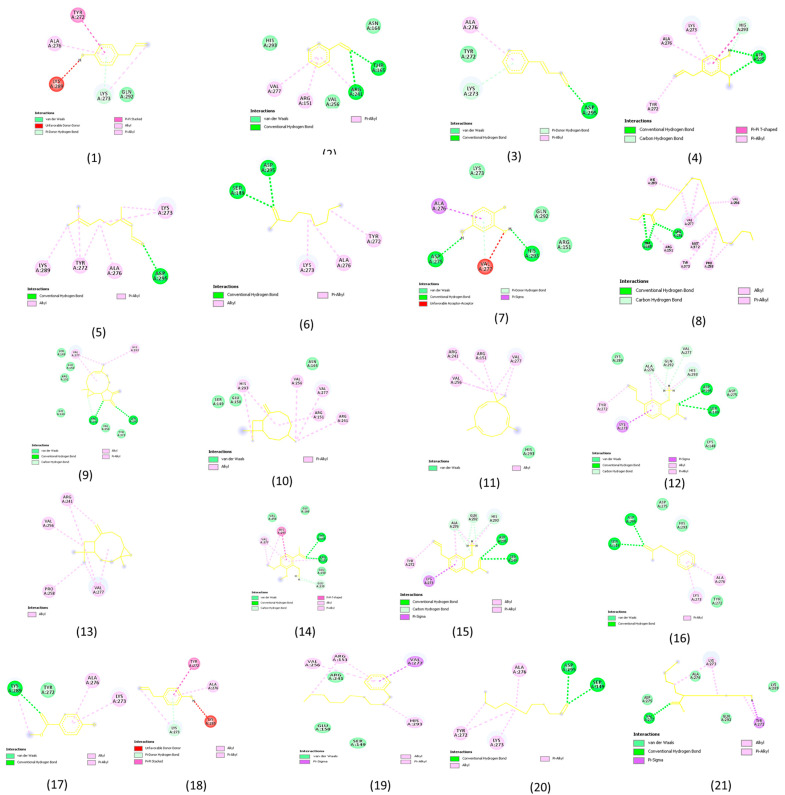
is a tree whose aromatic dried flower buds are known as cloves. When it comes to phenolic chemicals, such as flavonoids, hydroxybenzoic acids, hydroxycinnamic acids, and hydroxyphenyl propane, clove is a major plant source of these substances. Finding out how effective clove buds are as antioxidants was the driving force behind this study's GC-MS investigation and computational discoveries. This inquiry into clove pods focused on the chemical composition of clove using the GC-MS technique, as well as its antioxidant qualities and computational modeling. This antioxidant may be more effective in lower doses than ascorbic acid (A.A.), butylate hydroxytoluene (BHT), and β-carotene, with 57.22 ± 0.41 mg QE/g of total phenols and flavonoids and 7.25 ± 0.12 mg GAE/g of clove extract. Phenols destroy free radicals, which boosts antioxidant activity. Flavonoids defend against ROS, which also boosts antioxidant activity. Clove pod GC-MS analysis identified 21 components, of which eugenol accounted for 58.86%. The absence of nitrogen and chlorine molecules emphasizes the composition's organic nature. Eugenol, the major component of clove oil, is a phenolic molecule that binds strongly to bacterial enzymes such as DNA gyrase and dihydrofolate reductase. Docking experiments have shown that clove chemicals interact with acetylcholinesterase, a crucial enzyme in insect larvae, paralyzing and killing them. This study demonstrates the immense potential of plants in providing novel therapeutic and environmental solutions. We must support further research into nature's inherent benefits. The extensive knowledge that can be gained from botany can be used to improve health, ecology, and sustainability.
是一种树,其芳香的干花芽被称为丁香。说到酚类化学物质,如黄酮类、羟基苯甲酸、羟基肉桂酸和羟基苯丙烷,丁香是这些物质的主要植物来源。弄清楚丁香芽作为抗氧化剂的效果如何,是这项研究进行气相色谱 - 质谱(GC - MS)调查和计算发现的驱动力。这项对丁香荚的研究聚焦于使用GC - MS技术分析丁香的化学成分、其抗氧化特性以及计算建模。这种抗氧化剂在低剂量时可能比抗坏血酸(A.A.)、丁基羟基甲苯(BHT)和β - 胡萝卜素更有效,丁香提取物中总酚和黄酮含量为57.22±0.41毫克没食子酸当量/克,总黄酮含量为7.25±0.12毫克没食子酸当量/克。酚类物质能破坏自由基,从而增强抗氧化活性。黄酮类物质能抵御活性氧,这也能增强抗氧化活性。丁香荚的GC - MS分析鉴定出21种成分,其中丁香酚占58.86%。不含氮和氯分子突出了该成分的有机性质。丁香酚是丁香油的主要成分,是一种酚类分子,能与细菌酶如DNA回旋酶和二氢叶酸还原酶强烈结合。对接实验表明,丁香化学成分与昆虫幼虫体内一种关键酶乙酰胆碱酯酶相互作用,使其麻痹并致死。这项研究证明了植物在提供新型治疗和环境解决方案方面的巨大潜力。我们必须支持对大自然固有益处的进一步研究。从植物学中可获得的广泛知识可用于改善健康、生态和可持续性。