Sun Xianduo, Li Wenjing, Chen Guangming, Hu Gaosheng, Jia Jingming
School of Traditional Chinese Materia Medica, Shenyang Pharmaceutical University, Shenyang 110016, China.
Nutrients. 2025 Apr 19;17(8):1380. doi: 10.3390/nu17081380.
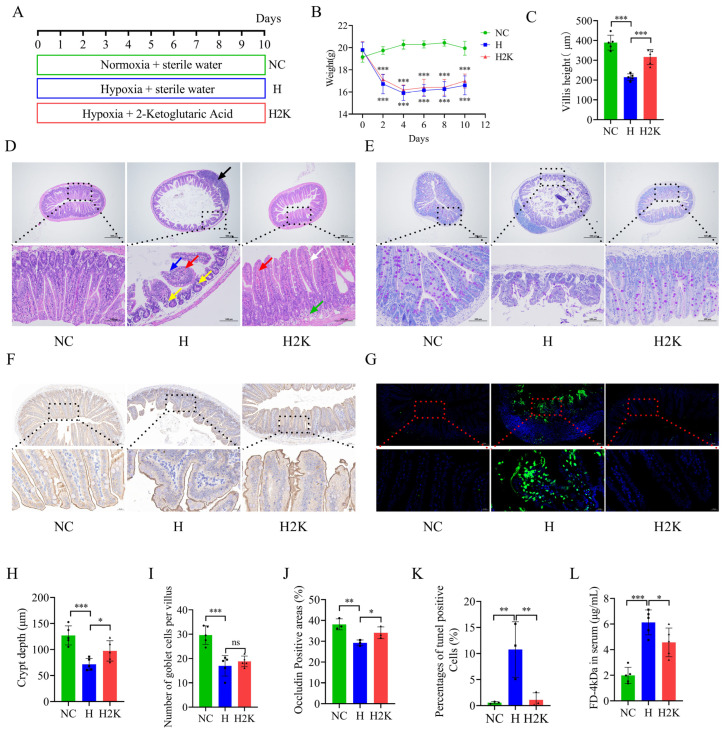
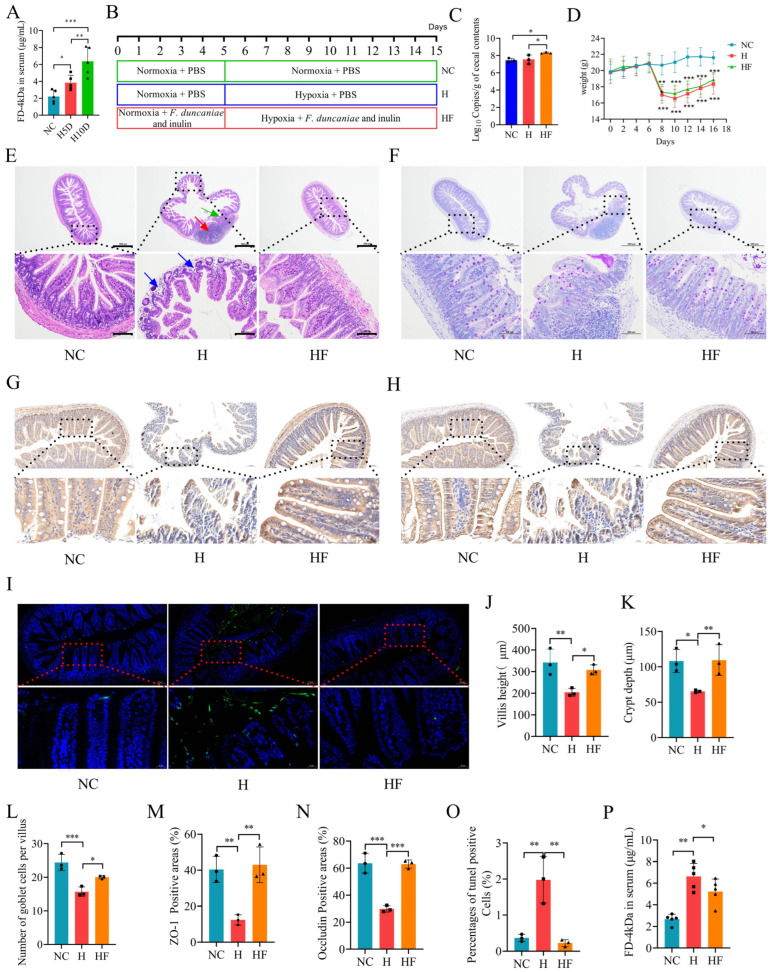
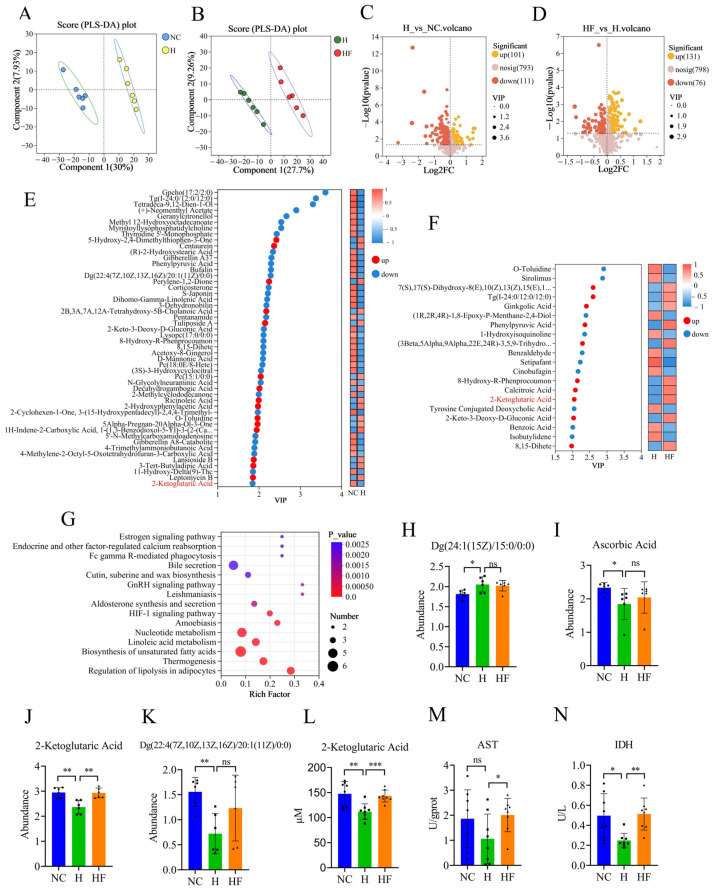
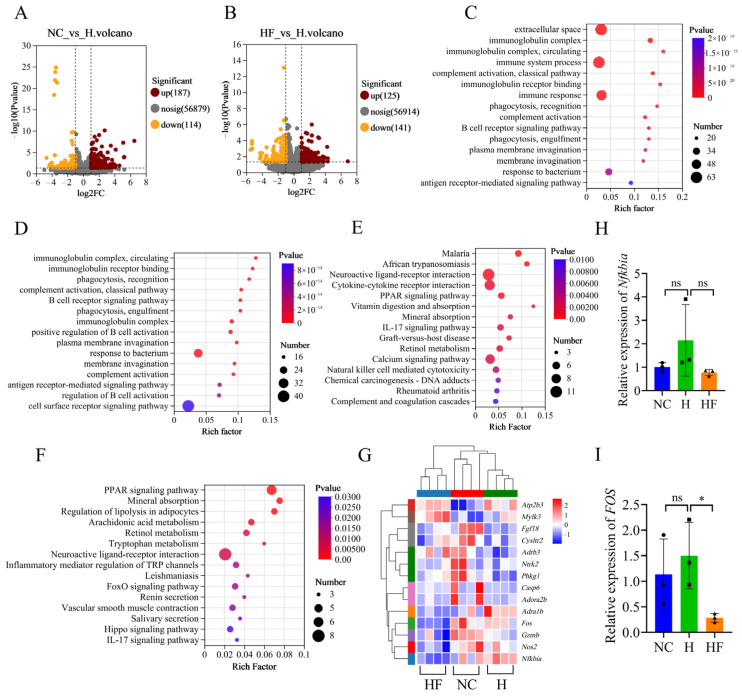
Exposure to high altitudes often results in gastrointestinal disorders. This study aimed to identify probiotic strains that can alleviate such disorders. We conducted a microbiome analysis to investigate the differences in gut microbiota among volunteers during the acute response and acclimatization phases at high altitudes. Subsequently, we established a mouse model of intestinal barrier damage induced by high-altitude exposure to further investigate the roles of probiotic strains and 2-ketoglutaric acid. Additionally, we performed untargeted metabolomics and transcriptomic analyses to elucidate the underlying mechanisms. The microbiome analysis revealed a significant increase in the abundance of Faecalibacterium prausnitzii during the acclimatization phase. () significantly mitigated damage to the intestinal barrier and the reduction of 2-ketoglutaric acid levels in the cecal contents induced by high-altitude exposure in mice. Immunohistochemistry and TUNEL staining demonstrated that high-altitude exposure significantly decreased the expression of ZO-1 and occludin while increasing apoptosis in ileal tissues. In contrast, treatment with alleviated the loss of ZO-1 and occludin, as well as the apoptosis induced by high-altitude exposure. Furthermore, 2-ketoglutaric acid also mitigated this damage, reducing the loss of occludin and apoptosis in mice. Transcriptomic analysis indicated that high-altitude exposure significantly affects the calcium signaling pathway; conversely, the administration of significantly influenced the PPAR signaling pathway, mineral absorption, and the regulation of lipolysis in adipocytes. Additionally, the expression of the () was markedly reduced following the administration of . mitigates hypoxia-induced intestinal barrier damage by increasing levels of 2-ketoglutaric acid and shows promise as a probiotic, ultimately aiding travelers in adapting to high-altitude environments.
暴露于高海拔地区通常会导致胃肠道疾病。本研究旨在鉴定可缓解此类疾病的益生菌菌株。我们进行了微生物组分析,以调查志愿者在高海拔地区急性反应和适应阶段肠道微生物群的差异。随后,我们建立了高海拔暴露诱导的肠道屏障损伤小鼠模型,以进一步研究益生菌菌株和2-酮戊二酸的作用。此外,我们进行了非靶向代谢组学和转录组学分析,以阐明潜在机制。微生物组分析显示,在适应阶段,普拉梭菌的丰度显著增加。()显著减轻了高海拔暴露诱导的小鼠肠道屏障损伤和盲肠内容物中2-酮戊二酸水平的降低。免疫组织化学和TUNEL染色表明,高海拔暴露显著降低了回肠组织中ZO-1和闭合蛋白的表达,同时增加了细胞凋亡。相比之下,用()治疗可减轻ZO-1和闭合蛋白的损失以及高海拔暴露诱导的细胞凋亡。此外,2-酮戊二酸也减轻了这种损伤,减少了小鼠中闭合蛋白的损失和细胞凋亡。转录组分析表明,高海拔暴露显著影响钙信号通路;相反,施用()显著影响PPAR信号通路、矿物质吸收和脂肪细胞中脂解的调节。此外,施用()后,()的表达明显降低。()通过提高2-酮戊二酸水平减轻缺氧诱导的肠道屏障损伤,并显示出作为益生菌的潜力,最终帮助旅行者适应高海拔环境。