Mołdoch Jarosław, Agacka-Mołdoch Monika, Jóźwiak Grzegorz, Wojtunik-Kulesza Karolina
Department of Biochemistry and Crop Quality, Institute of Soil Science and Plant Cultivation, State Research Institute, 24-100 Puławy, Poland.
Department of Plant Breeding and Biotechnology, Institute of Soil Science and Plant Cultivation, State Research Institute, Czartoryskich 8, 24-100 Puławy, Poland.
Molecules. 2025 Mar 27;30(7):1480. doi: 10.3390/molecules30071480.
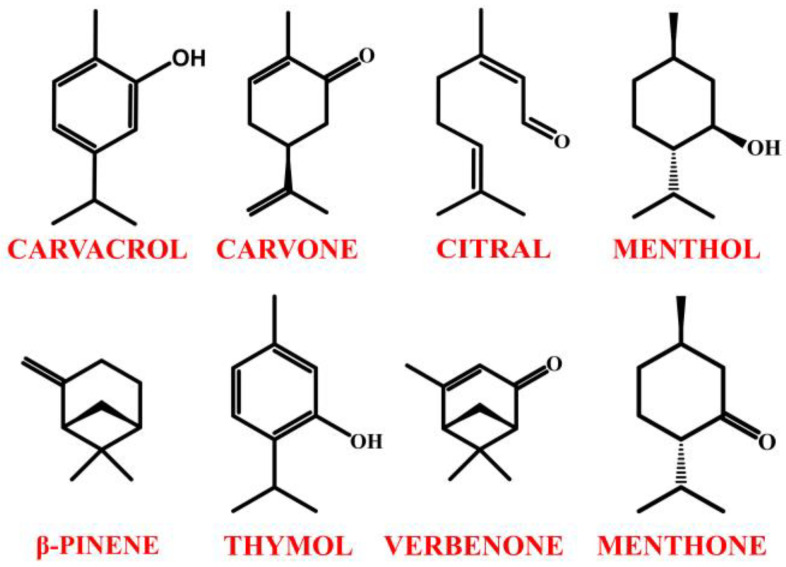
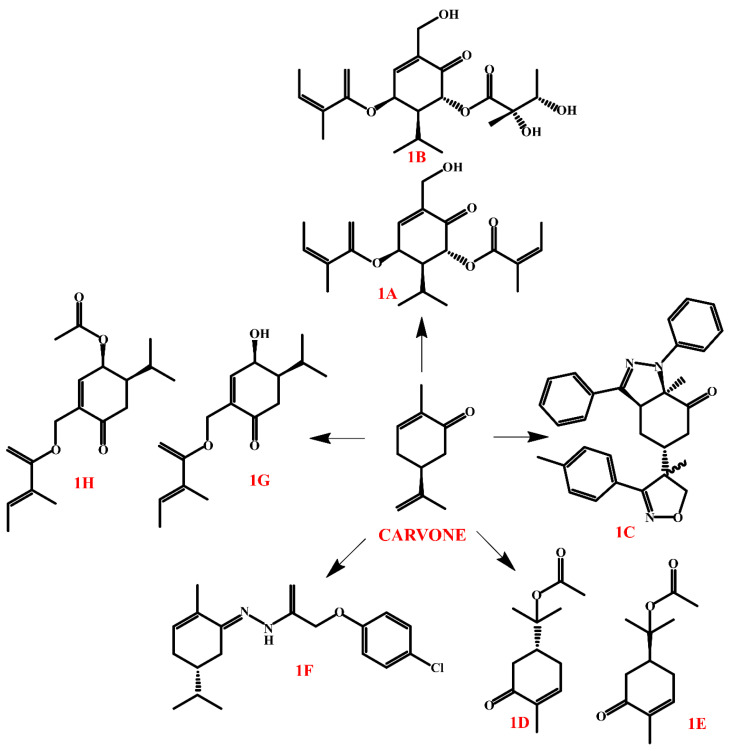
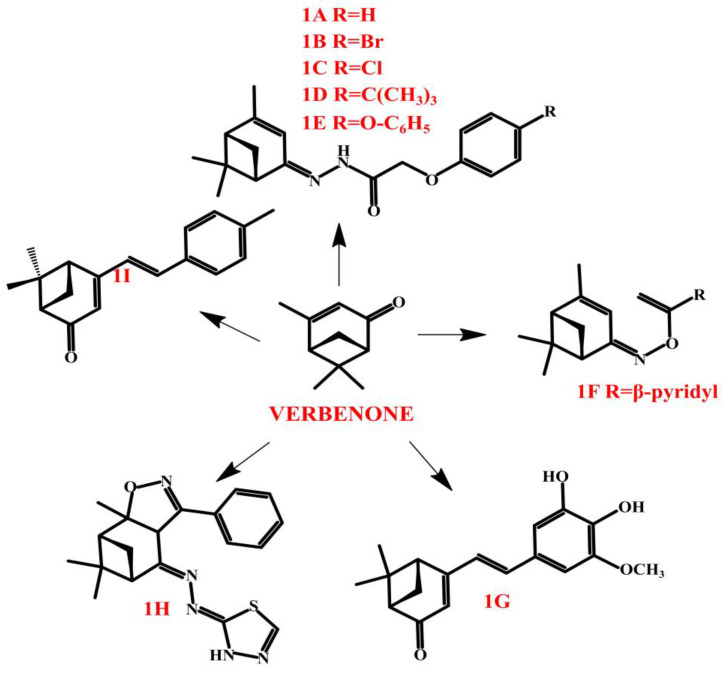
One of the most common strategies used in drug design is the molecular scaffold approach, which combines traditional medicine based on natural active compounds derived from plants with modern synthetic drug development. Designing new compounds based on natural skeletons enables extensive modifications of both bioavailability and biological activity. An excellent example of a natural molecular scaffold is the monoterpenes group, which serves as a core structure for building more complex molecules by attaching various chemical groups. Their ability to interact with biological targets, combined with structural versatility, makes them promising molecular scaffolds in pharmaceutical research and green chemistry applications. This review paper focuses on selected monoterpenes (carvacrol, carvone, citral, menthol, menthone, -pinene, thymol, and verbenone), which are frequently used as molecular scaffolds. The newly designed derivatives exhibit various biological activities, including anticancer, antibacterial, antiviral, neuroprotective, and many others.
药物设计中最常用的策略之一是分子骨架方法,该方法将基于植物天然活性化合物的传统药物与现代合成药物开发相结合。基于天然骨架设计新化合物能够对生物利用度和生物活性进行广泛修饰。天然分子骨架的一个出色例子是单萜类基团,它通过连接各种化学基团作为构建更复杂分子的核心结构。它们与生物靶点相互作用的能力,再加上结构的多功能性,使其成为药物研究和绿色化学应用中很有前景的分子骨架。这篇综述论文聚焦于选定的单萜类化合物(香芹酚、香芹酮、柠檬醛、薄荷醇、薄荷酮、α-蒎烯、百里香酚和马鞭草酮),它们常被用作分子骨架。新设计的衍生物具有多种生物活性,包括抗癌、抗菌、抗病毒、神经保护等诸多活性。