Aran Veronica, Santos Cavalcanti Amanda, Meohas Walter, Canteri Bruna, Perini Jamila Alessandra, Pino Minguez Jesus, Guimarães João Antônio Matheus, Moura Neto Vivaldo, Leite Duarte Maria Eugênia
Laboratório de Biomedicina do Cérebro, Instituto Estadual do Cérebro Paulo Niemeyer, Rio de Janeiro, RJ, Brazil; Laboratório de Morfogênese Celular (LMC), Instituto de Ciencias Biomédicas (ICB), Universidade Federal do Rio de Janeiro (UFRJ), Rio de Janeiro, Brazil.
Divisão de Pesquisa, Instituto Nacional de Traumatologia e Ortopedia (INTO), Rio de Janeiro, RJ, Brazil.
Clinics (Sao Paulo). 2025 Apr 26;80:100661. doi: 10.1016/j.clinsp.2025.100661. eCollection 2025.
Sarcomas represent a heterogeneous group of malignancies characterized by varying clinical behaviors and treatment responses. Liquid biopsy has emerged as a promising non-invasive method for monitoring tumor dynamics by detecting actionable mutations in cancer patients. The emergence of circulating DNA as a non-invasive biomarker offers promising avenues for improving diagnostic accuracy and treatment monitoring in sarcoma patients.
In this study, the authors employed mutation-specific droplet digital PCR (ddPCR) to analyze tumor-derived cell-free DNA, also known as circulating tumor DNA (ctDNA), belonging to plasma samples of sarcoma patients, aiming to characterize mutation profiles in the IDH2 and TP53 genes. Between July 2019 and June 2023, the authors collected and analyzed 38 samples from patients diagnosed with osteosarcoma, chondrosarcoma, or Ewing's sarcoma. Histopathological confirmation of diagnoses was performed, followed by ddPCR analysis on 36 valid plasma samples.
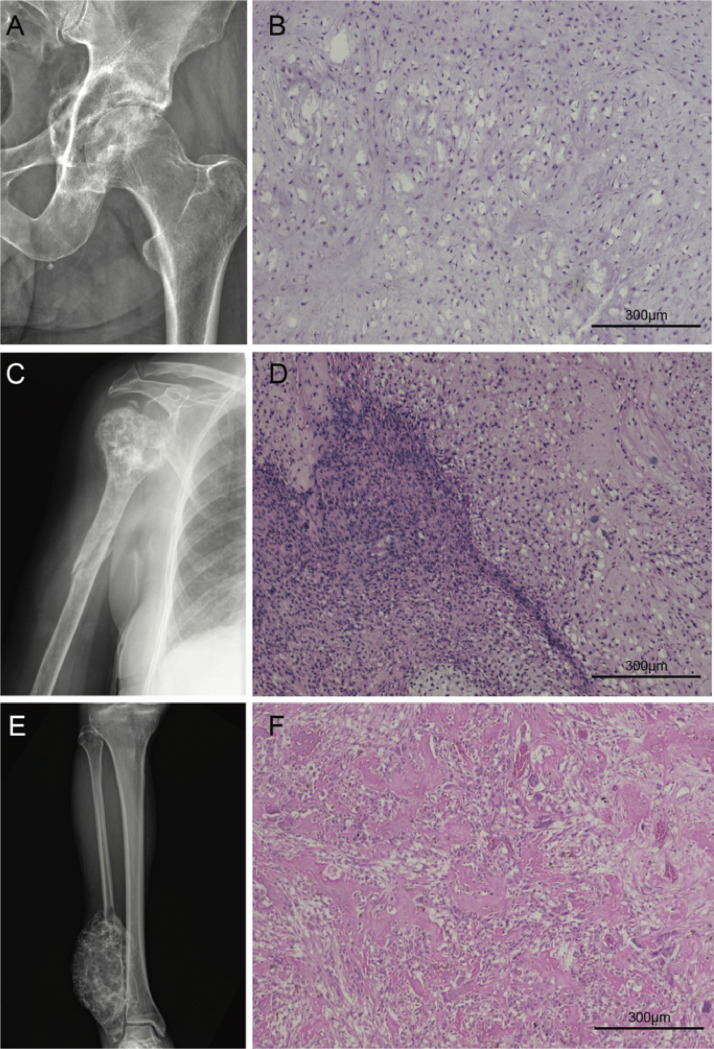
The results showed mutations in three out of thirty-six sarcoma patients. Patient 1 exhibited a 12.6 % mutant IDH2 (R172S) allele fraction, Patient 2 had a 0.27 % mutant TP53 (R175H), and Patient 3 showed a 17 % mutant IDH2 (R172K). Notably, Patients 1 and 2 were diagnosed with chondrosarcoma, while Patient 3 had osteosarcoma.
The present study provided evidence for the feasibility of ctDNA detection in sarcoma patients, where mutations were found in IDH2 and TP53 genes, including a novel IDH2 mutation in osteosarcoma. The evaluation of ctDNA has the potential to transform clinical strategies in this challenging group of malignancies and this may be further confirmed in larger cohort studies. Continued research efforts are essential to optimize ctDNA detection methods and validate its utility across diverse sarcoma subtypes.
肉瘤是一组异质性恶性肿瘤,具有不同的临床行为和治疗反应。液体活检已成为一种有前景的非侵入性方法,可通过检测癌症患者的可操作突变来监测肿瘤动态。循环DNA作为一种非侵入性生物标志物的出现,为提高肉瘤患者的诊断准确性和治疗监测提供了有前景的途径。
在本研究中,作者采用突变特异性数字液滴PCR(ddPCR)分析肉瘤患者血浆样本中肿瘤来源的游离DNA,即循环肿瘤DNA(ctDNA),旨在表征异柠檬酸脱氢酶2(IDH2)和肿瘤蛋白p53(TP53)基因的突变谱。在2019年7月至2023年6月期间,作者收集并分析了38例诊断为骨肉瘤、软骨肉瘤或尤因肉瘤患者的样本。进行了组织病理学诊断确认,随后对36份有效血浆样本进行了ddPCR分析。
结果显示,36例肉瘤患者中有3例存在突变。患者1的突变型IDH2(R172S)等位基因比例为12.6%,患者2的突变型TP53(R175H)为0.27%,患者3的突变型IDH2(R172K)为17%。值得注意的是,患者1和患者2被诊断为软骨肉瘤,而患者3患有骨肉瘤。
本研究为肉瘤患者ctDNA检测的可行性提供了证据,其中在IDH2和TP53基因中发现了突变,包括骨肉瘤中的一种新的IDH2突变。ctDNA的评估有可能改变这一具有挑战性的恶性肿瘤群体的临床策略,这可能在更大规模的队列研究中得到进一步证实。持续的研究工作对于优化ctDNA检测方法并验证其在不同肉瘤亚型中的效用至关重要。