Afshar Faeze, Daraie Morteza, Mohammadi Fatemeh, Seifouri Kiana, Amin Afshari Samira, Heidari Some'eh Soheil, Yadegar Amirhossein, Naghavi Parnian, Esteghamati Alireza, Rabizadeh Soghra, Abbaszadeh Mahsa, Nakhjavani Manouchehr, Karimpour Reyhan Sahar
Endocrinology and Metabolism Research Center (EMRC), Vali-Asr Hospital, Tehran University of Medical Sciences, Tehran, Iran.
Internal Medicine Department, Imam Khomeini Hospital, Tehran University of Medical Sciences, Tehran, Iran.
BMC Endocr Disord. 2025 Apr 27;25(1):120. doi: 10.1186/s12902-025-01941-0.
Diabetic foot ulcer (DFU) is a well-known complication of diabetes. The main therapeutic options for treating DFU include surgical debridement. However, conditions such as sensory loss and insufficient blood supply can lead to lower extremity amputations. Inflammatory biomarkers, including the neutrophil‒lymphocyte ratio (NLR) and platelet‒lymphocyte ratio (PLR), have shown promise in predicting the development of diabetes complications.
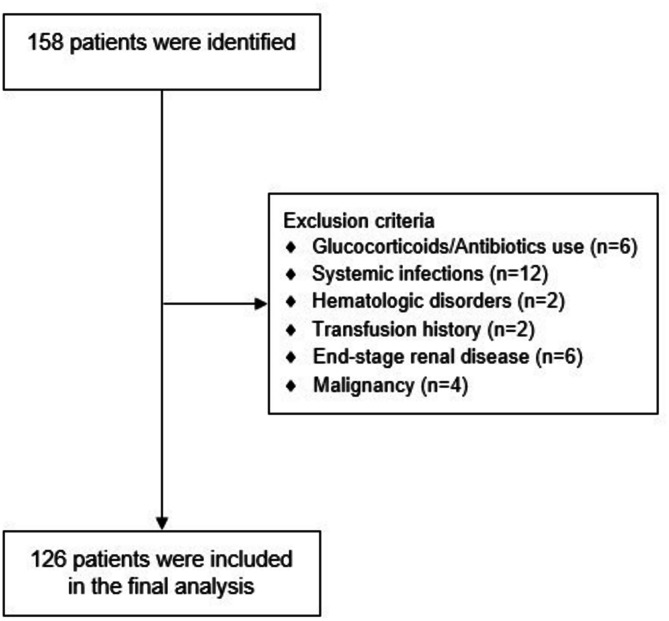
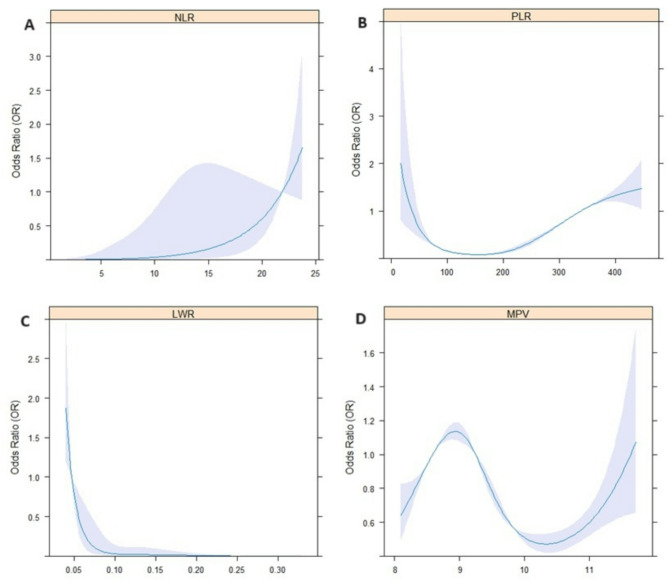
This study included 126 individuals with known DFUs who underwent amputation or debridement surgery during hospitalization between January 2017 and December 2022. The participants were divided into two groups, each containing 63 patients, based on the treatment they received. Analyses were conducted via univariate and multivariate regression models. The linearity of the relationship between each inflammatory index and the risk of amputation was further examined via restricted cubic spline (RCS) curves with four knots.
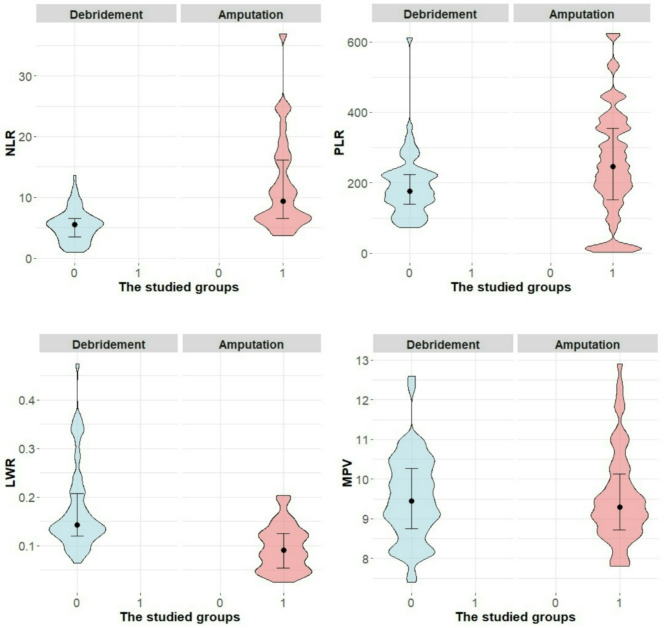
Categorical regression analysis showed an elevated risk of amputation in patients with an NLR greater than 6.08, with an OR of 13.090 (95% CI: 5.143-33.320, P < 0.001), compared with those with an NLR less than 6.08. Additionally, patients with a PLR greater than 210 demonstrated a similarly elevated risk of amputation with an OR of 2.31 (95% CI: 1.066‒4.669, P = 0.033); however, those with lymphocyte‒white blood cell ratio (LWR) levels of greater than 0.1265 exhibited reduced likelihood of having amputation (OR: 0.092 (95% CI: 0.038‒0.226, P < 0.001)).
This study supports that NLR, PLR and LWR may have value as a predictive marker for amputation in patients with DFUs.
糖尿病足溃疡(DFU)是糖尿病一种众所周知的并发症。治疗DFU的主要治疗选择包括手术清创。然而,感觉丧失和血液供应不足等情况可导致下肢截肢。包括中性粒细胞-淋巴细胞比值(NLR)和血小板-淋巴细胞比值(PLR)在内的炎症生物标志物在预测糖尿病并发症的发生方面已显示出前景。
本研究纳入了126例已知患有DFU的个体,他们在2017年1月至2022年12月住院期间接受了截肢或清创手术。根据参与者接受的治疗将他们分为两组,每组63例患者。通过单变量和多变量回归模型进行分析。通过具有四个节点的受限立方样条(RCS)曲线进一步检查每个炎症指标与截肢风险之间关系的线性。
分类回归分析显示,与NLR小于6.08的患者相比,NLR大于6.08的患者截肢风险升高,比值比(OR)为13.090(95%置信区间:5.143 - 33.320,P < 0.001)。此外,PLR大于210的患者截肢风险同样升高,OR为2.31(95%置信区间:1.066 - 4.669,P = 0.033);然而,淋巴细胞-白细胞比值(LWR)水平大于0.1265的患者截肢可能性降低(OR:0.092(95%置信区间:0.038 - 0.226,P < 0.001))。
本研究支持NLR、PLR和LWR可能作为DFU患者截肢的预测标志物具有价值。