Kodio Aly, Coulibaly Drissa, Doumbo Safiatou, Konaté Salimata, Koné Abdoulaye Kassoum, Dama Souleymane, Niangaly Amadou, Tall Mamadou Lamine, Konaté Ahmed Mohamed, L'Ollivier Coralie, Levasseur A, Bittar Fadi, Djimdé Abdoulaye, Doumbo Ogobara K, Raoult Didier, Thera Mahamadou Ali, Ranque Stéphane
Aix Marseille Université, Service de Santé des Armées, RITMES, 19-21 Boulevard Jean Moulin, 13005, Marseille, France.
IHU Méditerranée Infection, 19-21 Bd Jean Moulin, 13005, Marseille, France.
New Microbes New Infect. 2025 Apr 14;65:101586. doi: 10.1016/j.nmni.2025.101586. eCollection 2025 Jun.
The gut microbiota has recently been associated with malaria susceptibility/resistance in animal models and humans. This study aimed to assess its influence on malaria attack and parasitemia in children living in a malaria-endemic area of Mali.
Healthy children were enrolled in a 16-month cohort study in Bandiagara. Their gut bacteria and fungi community structures were characterized via 16S and ITS metabarcoding at enrolment. Clinicians monitored malaria attacks. Asymptomatic carriage was assessed by real-time polymerase chain reaction.
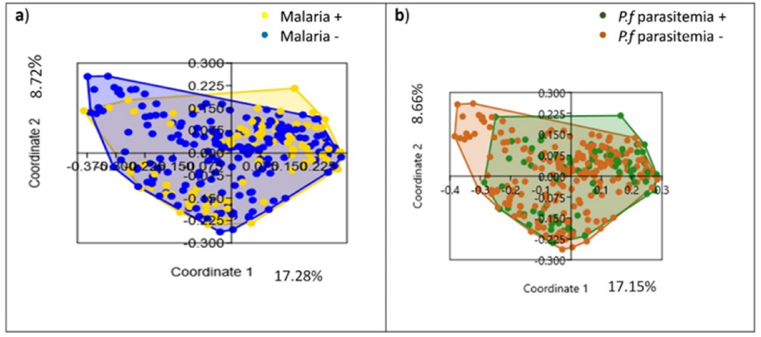
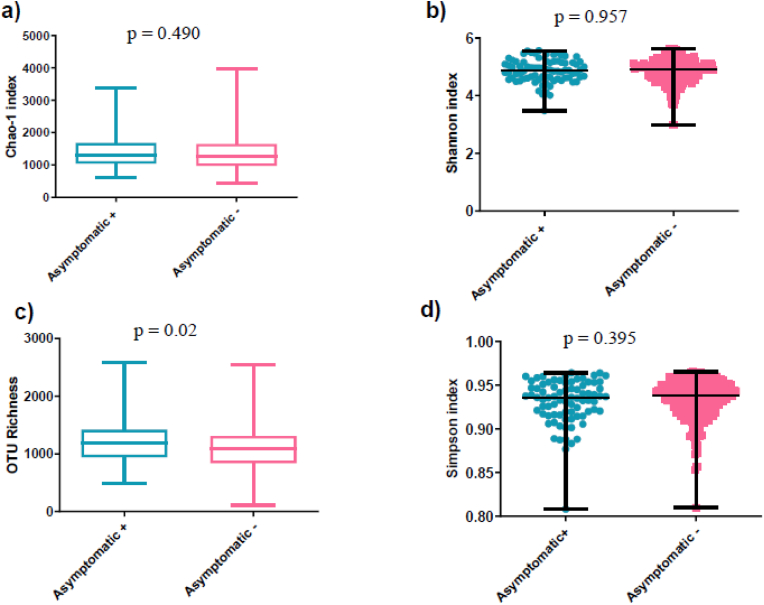
Of the 300 children, 107 (36 %) had at least one malaria attack, and 82 (27 %) had at least one episode of asymptomatic parasitemia. The gut bacterial community structure, but not the fungal community, was associated with susceptibility/resistance to both malaria attacks and asymptomatic parasitemia. Higher gut bacteria richness was independently associated with susceptibility to both asymptomatic parasitemia episodes and malaria attacks. 17 bacteria, and 7 fungi were associated with susceptibility to malaria attacks, and 8 bacteria, and 3 fungi were associated with resistance. 15 bacteria and 13 fungi were associated with susceptibility to asymptomatic parasitemia episodes, and 19 bacteria and 3 fungi were associated with resistance.
Further studies are needed to confirm these findings, which point the way to strategies aimed at reducing the risk of malaria by modulating gut microbiota components in at-risk populations.
肠道微生物群最近在动物模型和人类中被发现与疟疾易感性/抗性有关。本研究旨在评估其对生活在马里疟疾流行地区儿童疟疾发作和寄生虫血症的影响。
在班迪亚加拉对健康儿童进行了一项为期16个月的队列研究。在入组时通过16S和ITS宏条形码对他们的肠道细菌和真菌群落结构进行了表征。临床医生监测疟疾发作情况。通过实时聚合酶链反应评估无症状携带情况。
在300名儿童中,107名(36%)至少有一次疟疾发作,82名(27%)至少有一次无症状寄生虫血症发作。肠道细菌群落结构而非真菌群落与疟疾发作和无症状寄生虫血症的易感性/抗性有关。较高的肠道细菌丰富度与无症状寄生虫血症发作和疟疾发作的易感性独立相关。17种细菌和7种真菌与疟疾发作易感性有关,8种细菌和3种真菌与抗性有关。15种细菌和13种真菌与无症状寄生虫血症发作易感性有关,19种细菌和3种真菌与抗性有关。
需要进一步研究来证实这些发现,这些发现为旨在通过调节高危人群肠道微生物群组成来降低疟疾风险的策略指明了方向。