Opsasnick Lauren A, Zhao Wei, Schmitz Lauren L, Ratliff Scott M, Faul Jessica D, Zhou Xiang, Needham Belinda L, Smith Jennifer A
Department of Epidemiology, School of Public Health, University of Michigan, Ann Arbor, MI, United States of America.
Division of General Internal Medicine, Northwestern University Feinberg School of Medicine, Chicago, IL, 60611, United States of America.
Brain Behav Immun Health. 2025 Apr 12;45:100994. doi: 10.1016/j.bbih.2025.100994. eCollection 2025 May.
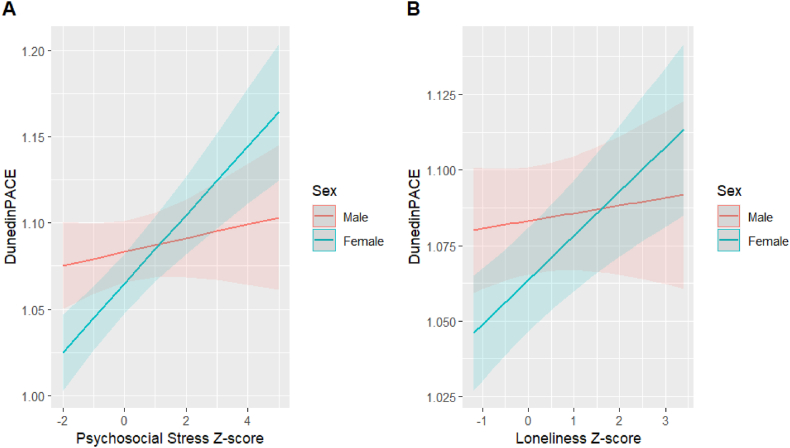
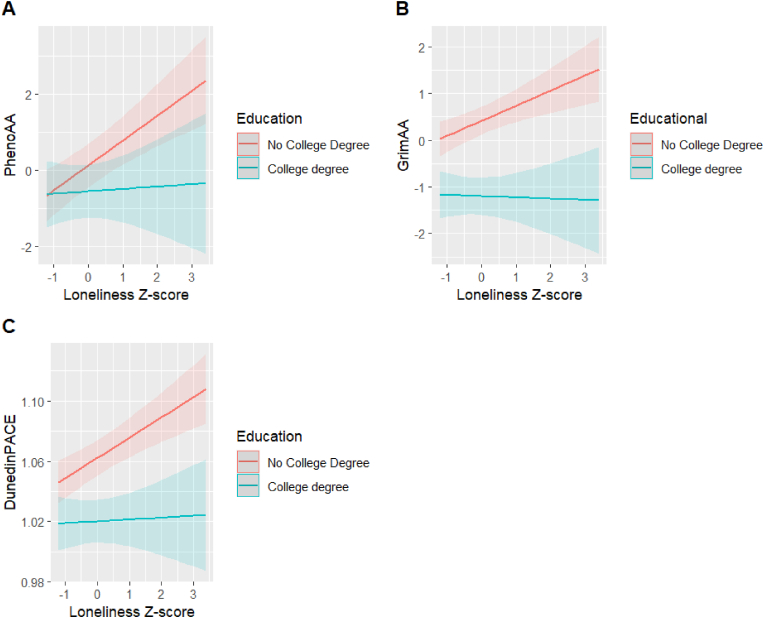
Psychosocial factors, including cumulative psychosocial stress and loneliness, have been linked to epigenetic aging in older adults. Further, depressive symptoms have established relationships with both psychosocial factors and epigenetic aging. However, it is not known whether depressive symptoms mediate the association between psychosocial factors and epigenetic aging.We conducted linear regression models to examine associations between psychosocial stress, loneliness, and depressive symptoms and five epigenetic age acceleration (AA) measures estimated by DNA methylation in a multi-racial/ethnic sample of 2681 older adults from the Health and Retirement Study (mean age: 70.4 years). For all identified associations, we tested for effect modification by sex and educational attainment and performed mediation analysis to characterize the role of depressive symptoms on these associations.Psychosocial stress, loneliness, and depressive symptoms were each associated with at least one measure of epigenetic AA (FDR q < 0.05). Further, we observed interactions between loneliness, psychosocial stress, and sex on DunedinPACE, as well as loneliness and educational attainment on GrimAA, PhenoAA, and DunedinPACE, with females and individuals without a college degree appearing more sensitive to the psychosocial effects on epigenetic aging. Depressive symptoms mediated between 24 % and 35 % of the relationships between psychosocial stress and HannumAA, GrimAA, and DunedinPACE, as well as 40 % and 37 % of the relationships between loneliness and both GrimAA and DunedinPACE, respectively.
from this study may help elucidate the relationship between psychosocial factors and epigenetic aging, which is critical in understanding the biological mechanisms through which psychosocial factors may contribute to age-related disease.
社会心理因素,包括累积的社会心理压力和孤独感,已被证明与老年人的表观遗传衰老有关。此外,抑郁症状与社会心理因素和表观遗传衰老均存在关联。然而,尚不清楚抑郁症状是否介导了社会心理因素与表观遗传衰老之间的关联。我们进行了线性回归模型分析,以检验在来自健康与退休研究的2681名多种族/族裔老年人(平均年龄:70.4岁)样本中,社会心理压力、孤独感、抑郁症状与通过DNA甲基化估计的五种表观遗传年龄加速(AA)指标之间的关联。对于所有确定的关联,我们检验了性别和教育程度的效应修饰作用,并进行了中介分析,以描述抑郁症状在这些关联中的作用。社会心理压力、孤独感和抑郁症状均与至少一种表观遗传AA指标相关(FDR q < 0.05)。此外,我们观察到孤独感、社会心理压力与性别在达尼丁PACE上存在交互作用,孤独感与教育程度在格里姆AA、表型AA和达尼丁PACE上存在交互作用,女性和未获得大学学位的个体似乎对社会心理因素对表观遗传衰老的影响更为敏感。抑郁症状分别介导了社会心理压力与汉努姆AA、格里姆AA和达尼丁PACE之间24%至35%的关系,以及孤独感与格里姆AA和达尼丁PACE之间40%和37%的关系。
本研究的结果可能有助于阐明社会心理因素与表观遗传衰老之间的关系,这对于理解社会心理因素可能导致与年龄相关疾病的生物学机制至关重要。