Wu Xiaohong, Mei Jingwen, Qiao Shicun, Long Wen, Feng Zhoushan, Feng Guo
Department of Neonatology, Guangzhou Key Laboratory of Neonatal Intestinal Diseases, The Third Affiliated Hospital, Guangzhou Medical University, Guangzhou, China.
Department of Pediatric, The Third Affiliated Hospital, Guangzhou Medical University, Guangzhou, China.
Medicine (Baltimore). 2025 Apr 25;104(17):e42323. doi: 10.1097/MD.0000000000042323.
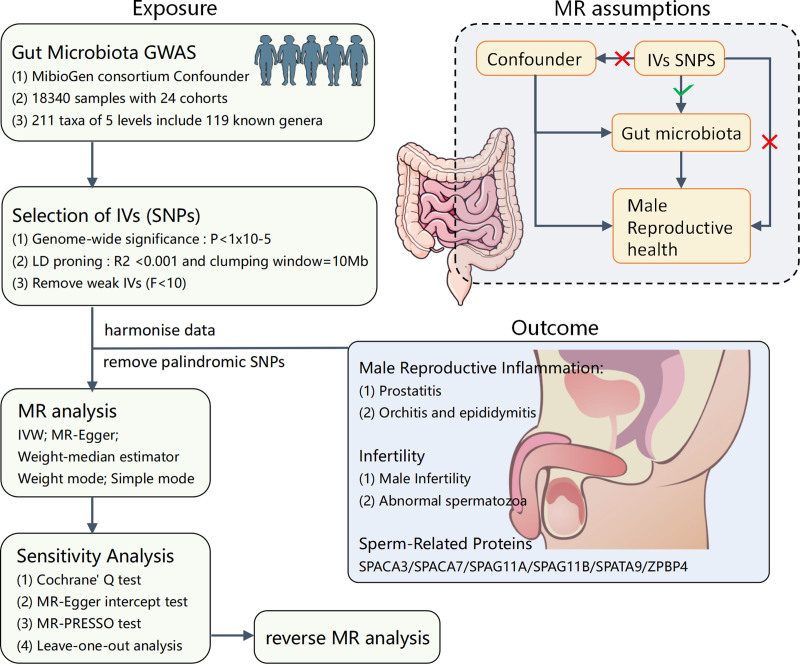
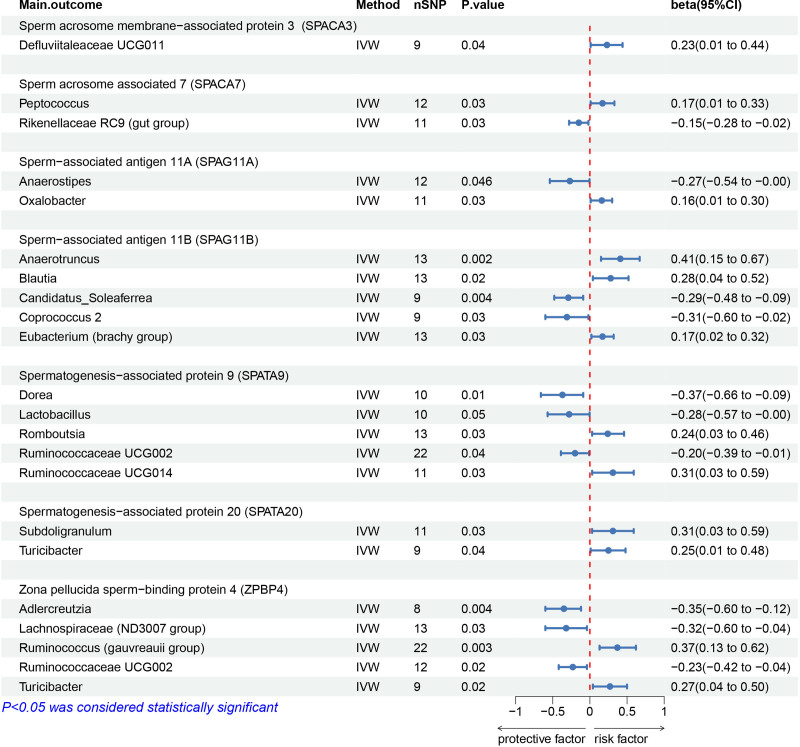
The study observed interactions between gut microbiota and male reproductive health, noting that the causal relationships were previously unclear. It aimed to explore the potential cause-and-effect relationship between gut bacteria and male reproductive problems such as inflammation, infertility, and sperm functionality, using a two-sample Mendelian randomization method to examine these connections. The analysis found that certain bacterial genera, such as Erysipelatoclostridium (0.71 [0.55-0.92]), Parasutterella (0.74 [0.57-0.96]), Ruminococcaceae UCG-009 (0.77 [0.60-0.98]), and Slackia (0.69 [0.49-0.96]), showed protective effects against prostatitis. In contrast, other genera like Faecalibacterium (1.59 [1.08-2.34]), Lachnospiraceae UCG004 (1.64 [1.15-2.34]), Odoribacter (1.68 [1.01-2.81]), Paraprevotella (1.28 [1.03-1.60]), and Sutterella (1.58 [1.13-2.19]) were detrimental. Additionally, causal relationships were identified between 2 genera and orchitis and epididymitis, 3 genera and male infertility, and 5 genera and abnormal spermatozoa. Further analysis of sperm-related proteins revealed causal associations between specific bacterial genera and proteins such as SPACA3, SPACA7, SPAG11A, SPAG11B, SPATA9, SPATA20, and ZPBP4. The results remained robust after sensitivity analysis and reverse Mendelian randomization analysis. The study concluded that specific bacterial genera have causal roles in reproductive inflammation, infertility, and sperm-associated proteins. This provides a novel strategy for the early diagnosis and identification of therapeutic targets in reproductive inflammation and infertility.
该研究观察了肠道微生物群与男性生殖健康之间的相互作用,并指出此前因果关系尚不清楚。其目的是利用两样本孟德尔随机化方法探究肠道细菌与男性生殖问题(如炎症、不育和精子功能)之间潜在的因果关系,以检验这些联系。分析发现,某些细菌属,如丹毒梭状芽孢杆菌(0.71 [0.55 - 0.92])、副萨特氏菌属(0.74 [0.57 - 0.96])、瘤胃球菌科UCG - 009(0.77 [0.60 - 0.98])和斯拉氏菌属(0.69 [0.49 - 0.96]),对前列腺炎具有保护作用。相比之下,其他属,如粪杆菌属(1.59 [1.08 - 2.34])、毛螺菌科UCG004(1.64 [1.15 - 2.34])、气味杆菌属(1.68 [1.01 - 2.81])、副普雷沃氏菌属(1.28 [1.03 - 1.60])和萨特氏菌属(1.58 [1.13 - 2.19])则具有有害作用。此外,还确定了2个属与睾丸炎和附睾炎、3个属与男性不育以及5个属与精子异常之间的因果关系。对精子相关蛋白的进一步分析揭示了特定细菌属与SPACA3、SPACA7、SPAG11A、SPAG11B、SPATA9、SPATA20和ZPBP4等蛋白之间的因果关联。在敏感性分析和反向孟德尔随机化分析后,结果依然稳健。该研究得出结论,特定细菌属在生殖炎症、不育和精子相关蛋白中具有因果作用。这为生殖炎症和不育的早期诊断及治疗靶点的识别提供了一种新策略。