Bukaeva Anna A, Blokhina Anastasia V, Kharlap Maria S, Zaicenoka Marija, Zotova Evgenia D, Petukhova Anna V, Garbuzova Elizaveta V, Zharikova Anastasia A, Divashuk Mikhail G, Kiseleva Anna V, Ershova Alexandra I, Meshkov Alexey N, Drapkina Oxana M
National Medical Research Center for Therapy and Preventive Medicine, 101990 Moscow, Russia.
Moscow Center for Advanced Studies, 123592 Moscow, Russia.
Biomedicines. 2025 Apr 21;13(4):1008. doi: 10.3390/biomedicines13041008.
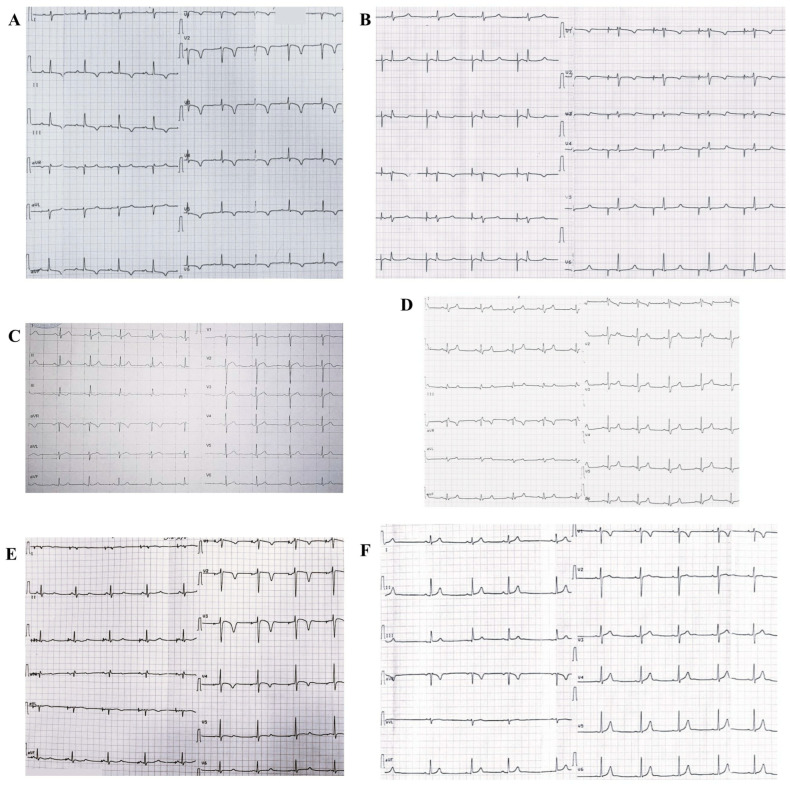
Genetic testing for long QT syndrome (LQTS) is straightforward in many families; however, in severe and complex cases, a single disease-causing variant may not be enough to explain all clinical features. In such cases, the search for genetic modifiers may be beneficial for precise diagnosis and management. We describe a three-generational family affected with clinically heterogeneous LQTS type 3 and bradycardia in which a novel missense variant p.V642M in was identified in addition to the known pathogenic variant p.E1784K in . We performed the detailed clinical investigation of the family and a deep in silico analysis of the discovered variants, showing the causal role of a new variant in sinus bradycardia and its possible contribution to the phenotypic heterogeneity of LQTS type 3. This case is the first description of a functional variant in as a candidate modifier in LQTS type 3 and demonstrates the importance of analyzing additional genetic variations in families with complex LQTS phenotypes.
在许多家庭中,长QT综合征(LQTS)的基因检测很简单;然而,在严重和复杂的病例中,单一的致病变异可能不足以解释所有临床特征。在这种情况下,寻找基因修饰因子可能有助于精确诊断和管理。我们描述了一个三代家族,患有临床异质性的3型LQTS和心动过缓,除了已知的致病变异p.E1784K外,还在其中鉴定出一个新的错义变异p.V642M。我们对该家族进行了详细的临床调查,并对发现的变异进行了深入的计算机模拟分析,显示了一个新变异在窦性心动过缓中的因果作用及其对3型LQTS表型异质性的可能贡献。该病例首次描述了作为3型LQTS候选修饰因子的功能性变异,并证明了在具有复杂LQTS表型的家族中分析其他基因变异的重要性。