Chen Zihao, Wang Lifeng, Zhang Yongde, Li Guanghui, Yin Jiaxiang, Fan Jingyan, Liu Tianxu, Wu Han, Huang Yue, Huang Wenhui, Liu Donglin, Zheng Xiaoxiang, Zang Xia, Huang Xingcheng, Song Liuwei, Wen Shunhua, Li Jiayu, Ying Dong, Fang Mujin, Wang Yingbin, Wu Ting, Sridhar Siddharth, Zhang Jun, Xia Ningshao, Wang Lin, Lu Yihan, Zheng Zizheng
State Key Laboratory of Vaccines for Infectious Diseases, Xiang An Biomedicine Laboratory, Department of Laboratory Medicine, School of Public Health, Xiamen University, Xiamen, Fujian, PR China.
National Institute of Diagnostics and Vaccine Development in Infectious Diseases, National Innovation Platform for Industry-Education Integration in Vaccine Research, NMPA Key Laboratory for Research and Evaluation of Infectious Disease Diagnostic Technology, School of Public Health, School of Life Sciences, Xiamen University, Xiamen, Fujian, PR China.
Nat Commun. 2025 Apr 29;16(1):4038. doi: 10.1038/s41467-025-59345-6.
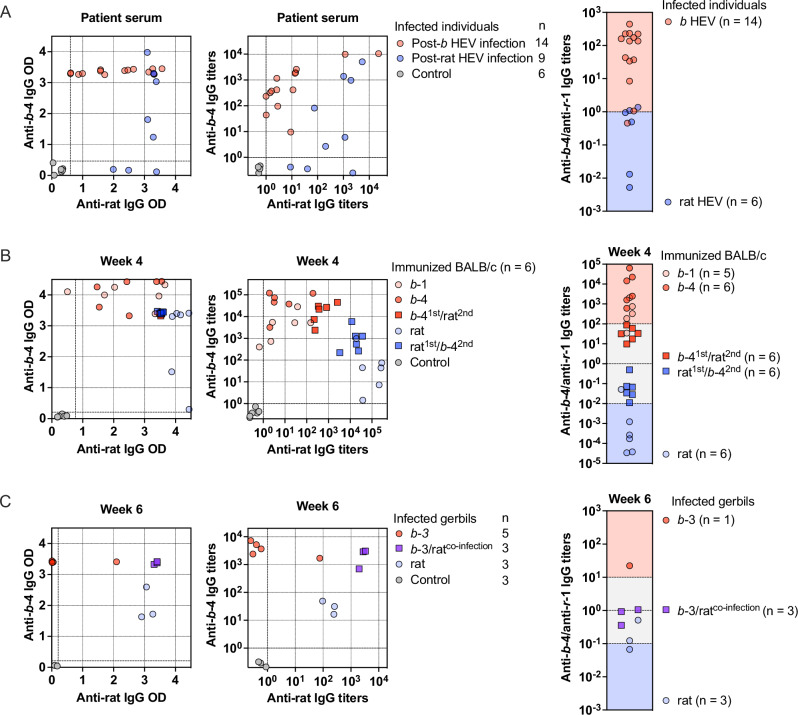
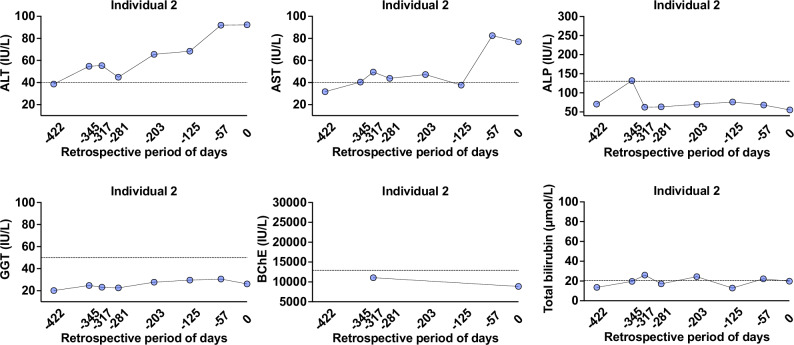
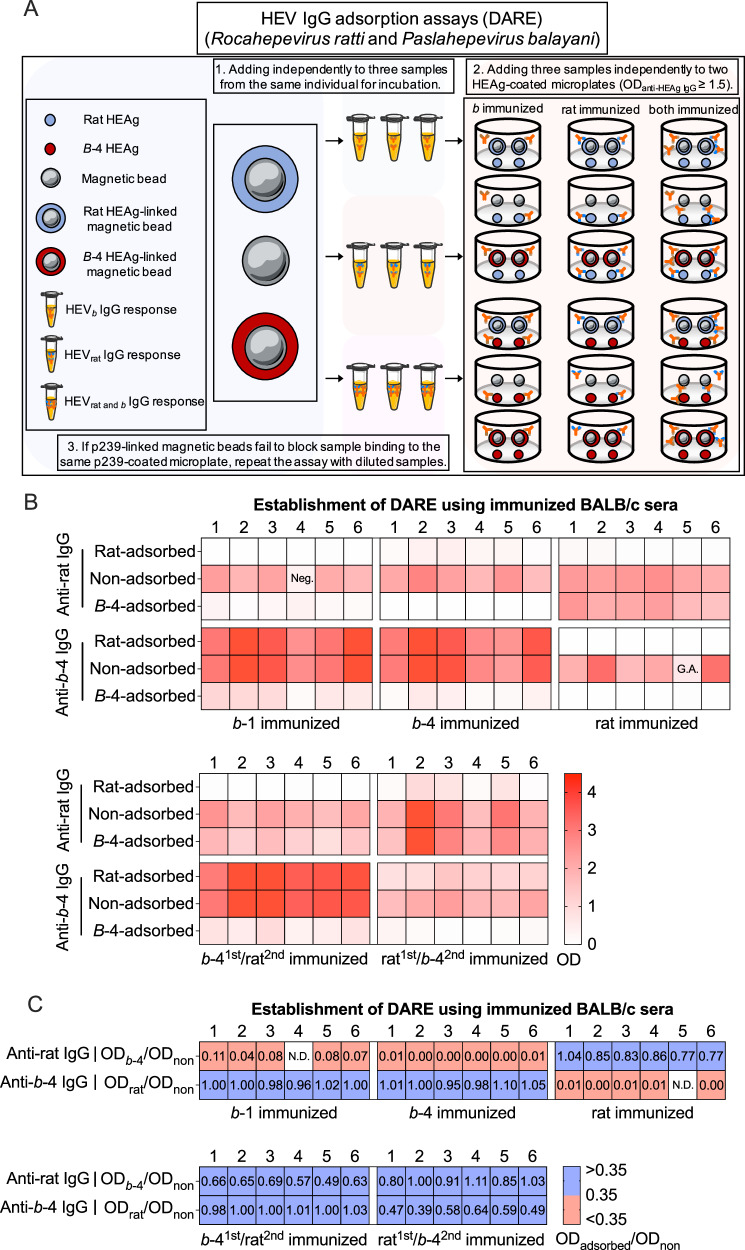
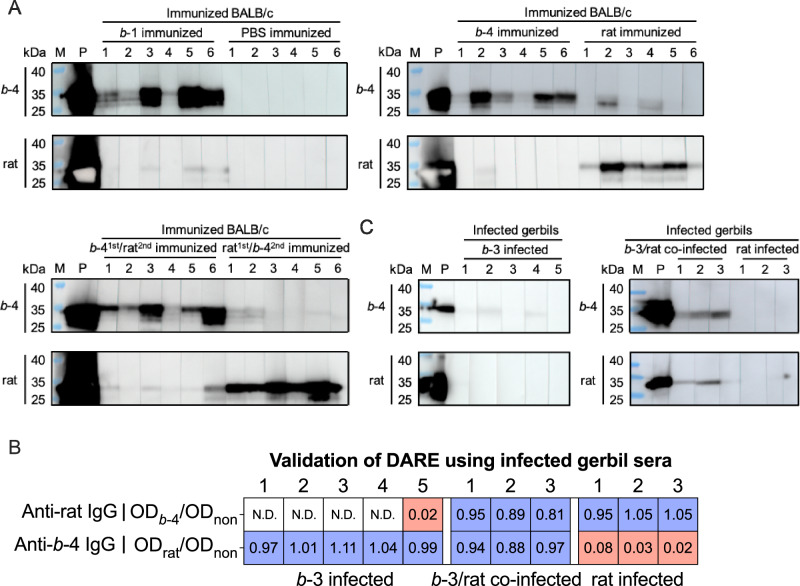
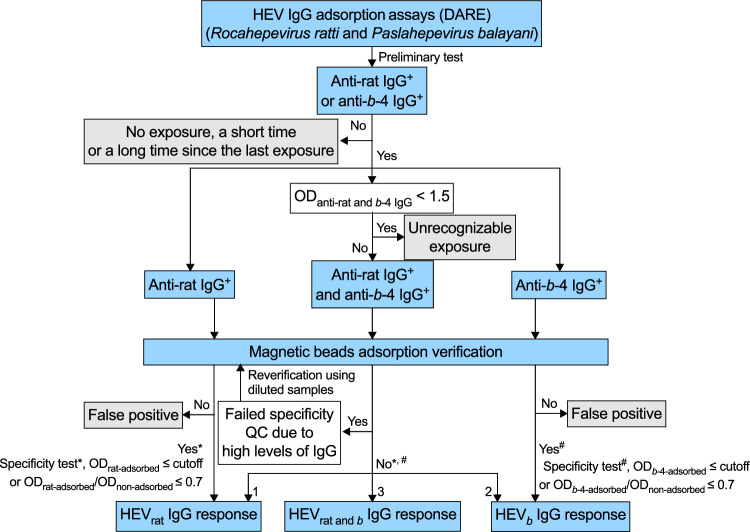
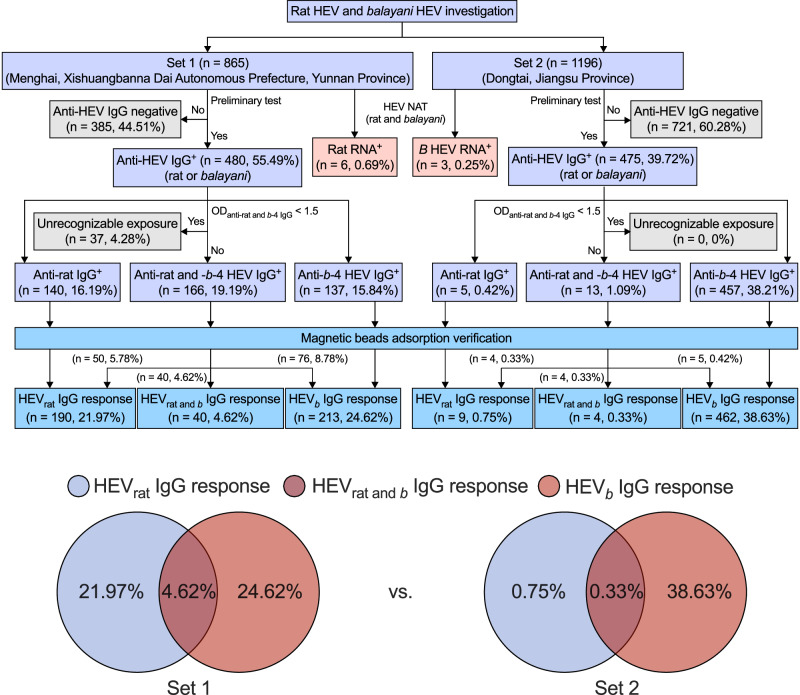
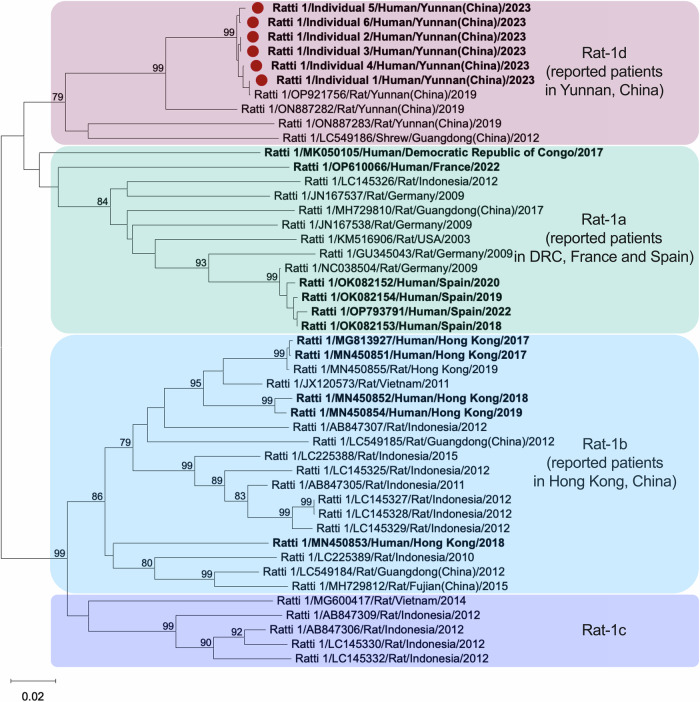
The emergence of Rocahepevirus ratti genotype 1 (rat hepatitis E virus; rat HEV) in humans presents an unprecedented threat; however, the risk of rat HEV transmission to humans is not well understood. Here, we report the "Distinguishing Antibody Response Elicitation (DARE)" method, which distinguishes exposure to rat HEV. We use four study sets from China for large-scale population analysis: set 1 (hospital visit) and set 3 (ALT abnormality) from Yunnan province, a biodiversity hotspot, and set 2 (received physical examination) and set 4 (ALT abnormality) from Jiangsu province, a non-hotspot control region. rat HEV exposure risk is significantly higher in Yunnan, with 21.97% (190 of 865) in set 1 and 13.97% (70 of 501) in set 3, compared to 0.75% (9 of 1196) in Jiangsu's set 2. Six spillover infections for rat HEV are identified in set 1, with one case of abnormal ALT. The rat-1d strains carried by rats are closely related to those human infections. Our study reveals the substantial spillover burden posed by rat HEV in biodiversity hotspots and highlights the utility of DARE method for proactive surveillance of public health emergencies.
罗卡河戊型肝炎病毒1型(大鼠戊型肝炎病毒;大鼠HEV)在人类中的出现带来了前所未有的威胁;然而,大鼠HEV传播给人类的风险尚未得到充分了解。在此,我们报告了“区分抗体反应激发(DARE)”方法,该方法可区分是否接触过大鼠HEV。我们使用来自中国的四组研究进行大规模人群分析:来自生物多样性热点地区云南省的第1组(医院就诊)和第3组(ALT异常),以及来自非热点对照地区江苏省的第2组(接受体检)和第4组(ALT异常)。在云南,大鼠HEV暴露风险显著更高,第1组为21.97%(865例中的190例),第3组为13.97%(501例中的70例),相比之下,江苏省第2组为0.75%(1196例中的9例)。在第1组中确定了6例大鼠HEV的溢出感染病例,其中1例ALT异常。大鼠携带的rat-1d毒株与人类感染毒株密切相关。我们的研究揭示了生物多样性热点地区大鼠HEV造成的巨大溢出负担,并强调了DARE方法在公共卫生突发事件主动监测中的作用。