Chia Cheryl Shu Ming, Fu Sai-Chuen, Ko Violet Man-Chi, Wang Ming, Zuo Yuxin, Yung Patrick Shu-Hang, Ling Samuel Ka-Kin
Department of Orthopaedics and Traumatology, Faculty of Medicine, The Chinese University of Hong Kong (CUHK), Hong Kong SAR, China.
Office of Graduate Studies and Professional Learning, National Institute of Education, Nanyang Technological University, Singapore, Singapore.
Sci Rep. 2025 Apr 29;15(1):15090. doi: 10.1038/s41598-025-00175-3.
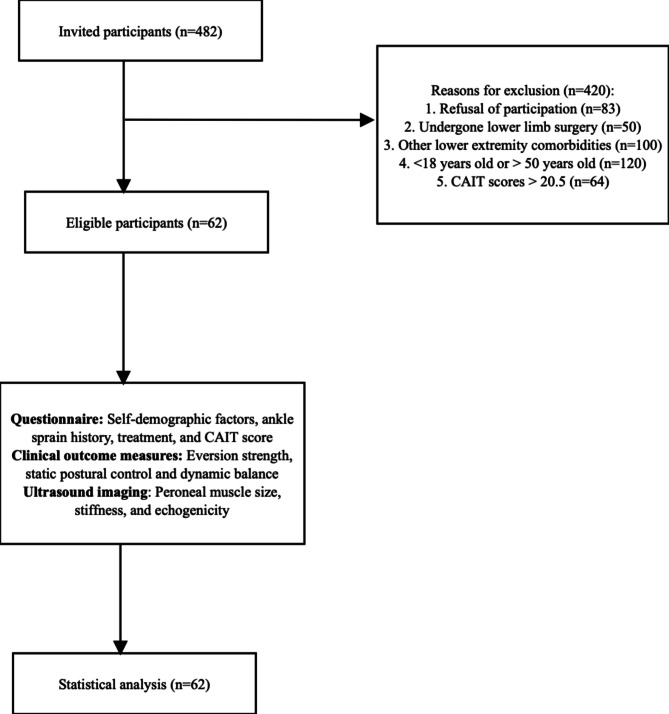
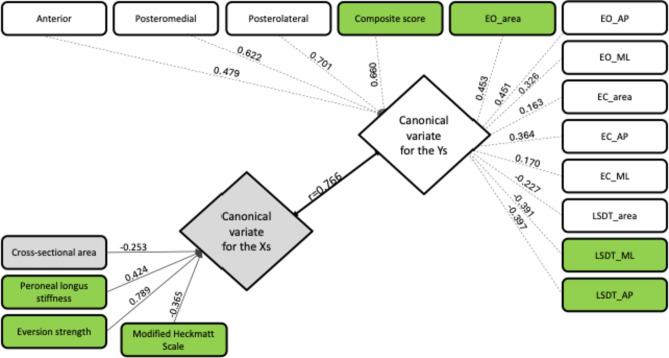
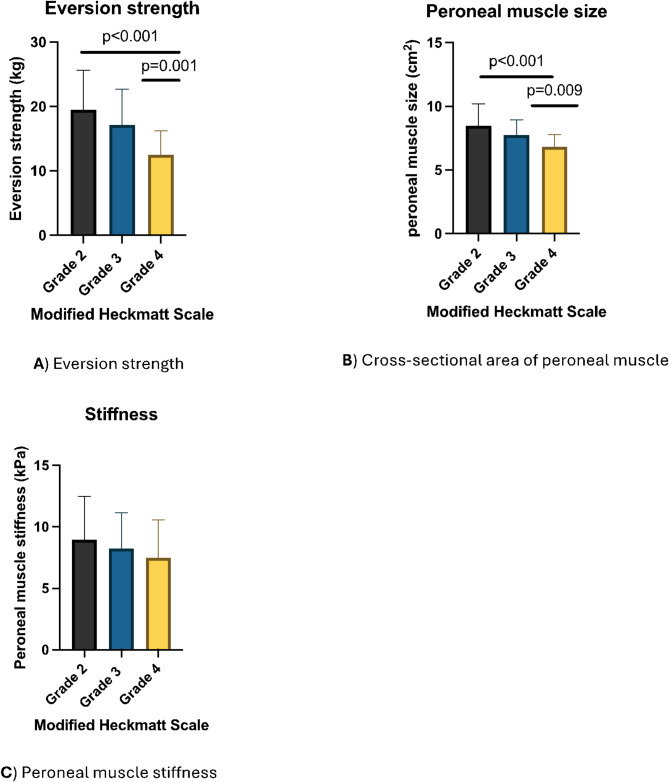
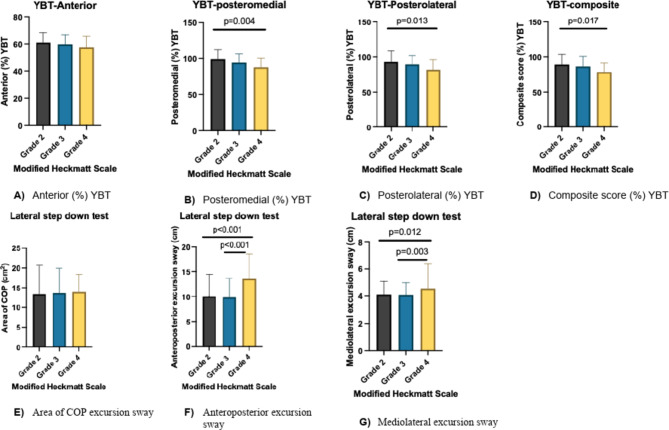
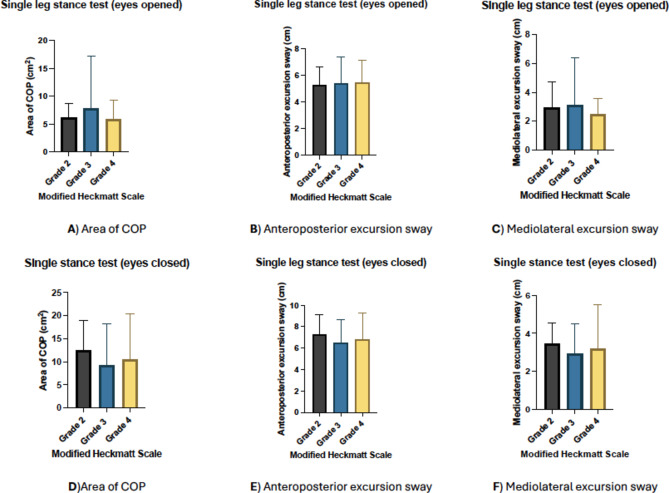
This study investigated the relationship between peroneal muscle echogenicity and balance function in individuals with chronic ankle instability (CAI). While prior research has examined peroneal muscle activity, reaction time, and balance, the impact of echogenicity-an indicator of myosteatosis/fibrosis-remained underexplored. Cross-sectional study. Sixty-two adults with CAI were included. Peroneal muscle size, echogenicity, and stiffness were assessed using ultrasound. Dynamic balance was evaluated via the Y balance test (YBT), and static postural control was evaluated during lateral step-down (LSDT) and single-leg stance test (SLST). Eversion strength was assessed with a dynamometer. The relationship between muscle characteristics and balance was assessed using canonical correlation and stepwise linear regression. Individuals with increased peroneal muscle echogenicity had reduced muscle size, poorer eversion strength, and poorer balance. Eversion strength is positively associated with YBT scores across all echogenicity levels and negatively associated with posture parameters during the LSDT in moderate echogenicity. Peroneal longus stiffness was positively associated with YBT in severe echogenicity and posture parameters during the SLST. Increased peroneal muscle echogenicity is associated with poorer eversion strength and stiffness, resulting in poorer balance performance. Improving the peroneal muscle quality may enhance functions in the CAI condition.
本研究调查了慢性踝关节不稳(CAI)患者腓骨肌回声性与平衡功能之间的关系。虽然先前的研究已经考察了腓骨肌活动、反应时间和平衡,但作为肌脂肪变性/纤维化指标的回声性的影响仍未得到充分探索。横断面研究。纳入了62名患有CAI的成年人。使用超声评估腓骨肌的大小、回声性和硬度。通过Y平衡测试(YBT)评估动态平衡,在侧向下台阶测试(LSDT)和单腿站立测试(SLST)期间评估静态姿势控制。用测力计评估外翻力量。使用典型相关分析和逐步线性回归评估肌肉特征与平衡之间的关系。腓骨肌回声性增加的个体肌肉大小减小、外翻力量较差且平衡能力较差。在所有回声性水平上,外翻力量与YBT评分呈正相关,在中等回声性时,外翻力量与LSDT期间的姿势参数呈负相关。在严重回声性时,腓骨长肌硬度与YBT呈正相关,与SLST期间的姿势参数呈正相关。腓骨肌回声性增加与较差的外翻力量和硬度相关,导致平衡能力较差。改善腓骨肌质量可能会增强CAI患者的功能。