Liang Li, Liu Wei, Zhong Youping, Guo Tengfei, Ye Chenfei, Ma Ting
Department of Electronic & Information Engineering, Harbin Institute of Technology (Shenzhen), Shenzhen, China.
Department of Networked Intelligence, Peng Cheng Laboratory, Shenzhen, China.
Alzheimers Dement. 2025 Apr;21(4):e70098. doi: 10.1002/alz.70098.
The interactive relationships between Alzheimer's disease (AD) and white matter hyperintensities (WMHs) in multiscale brain structural networks still need to be clarified.
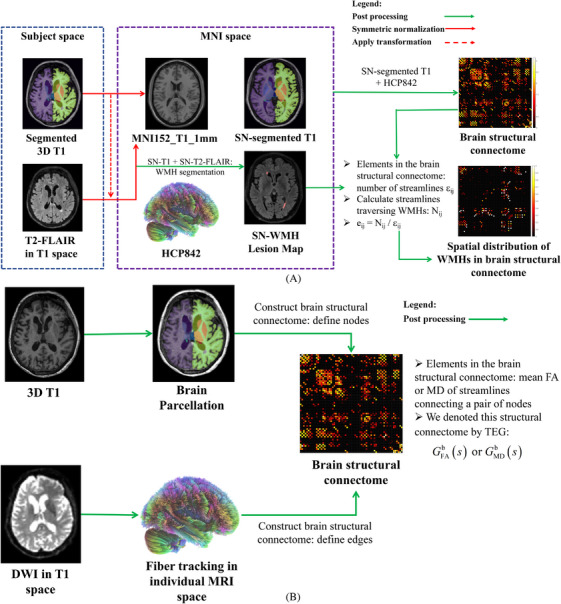
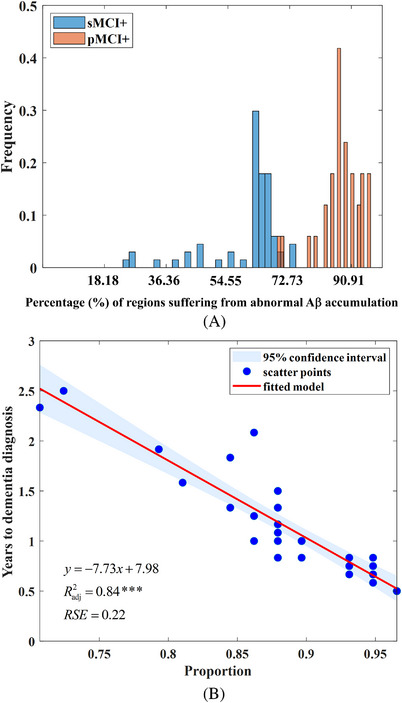
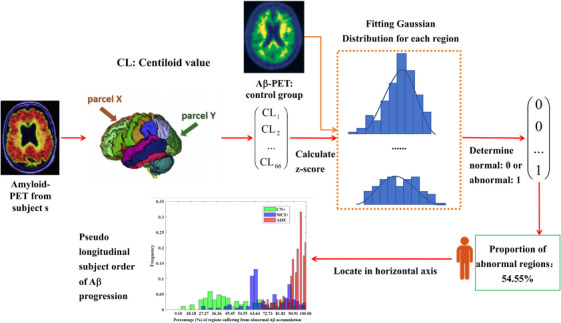
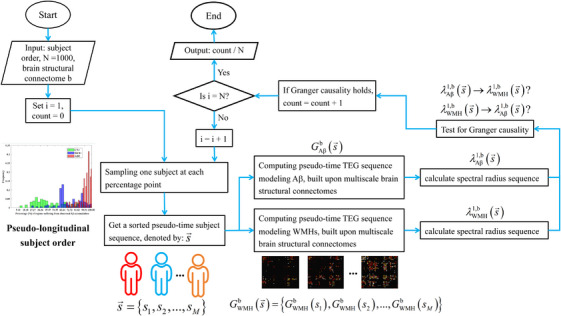
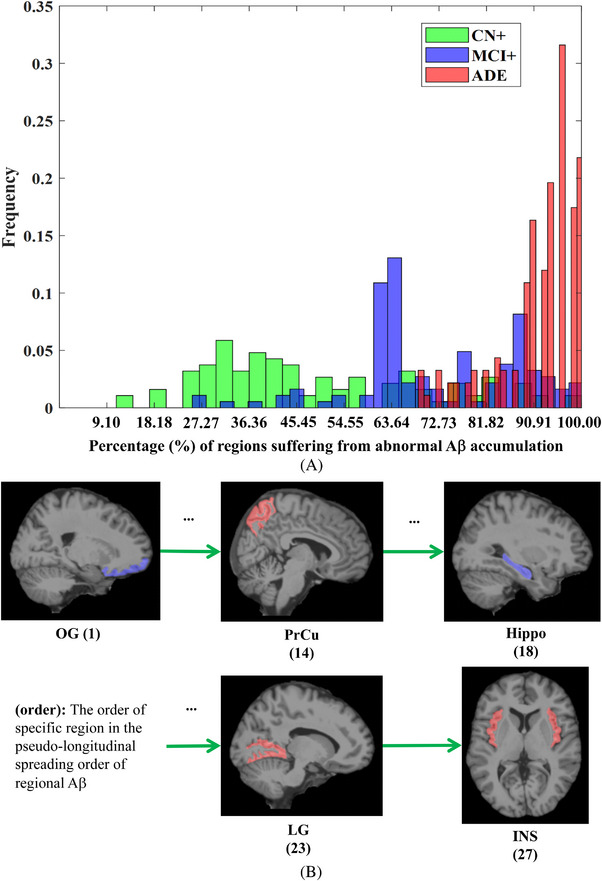
Based on subjects enrolled from the Alzheimer's Disease Neuroimaging Initiative (ADNI) database, regional WMHs, amyloid beta (Aβ) accumulation, and microstructural changes detected by diffusion weighted imaging (DWI) in multiscale brain networks were modeled by time-evolving graphs; their interactive relationships were further investigated using Granger causality after constructing pseudo-time subject sequences.
In up to 86% of the extracted pseudo-time subject sequences, Aβ was determined to be the Granger cause of WMHs in the structural connectivity of the inferior longitudinal fasciculus (ILF). Meanwhile WMHs were significantly correlated with microstructural changes measured by reduced fractional anisotropy in the inferior fronto-occipital fasciculus, ILF, and cingulum, which Granger causality pathways detected in 91%, 94%, and 93% of pseudo-time subject sequences, respectively.
These findings provide novel insights for understanding the multiscale space-time interactions between WMHs and AD pathologies.
This study proposed time-evolving graph modeling of heterogeneous disease markers (amyloid beta [Aβ], white matter hyperintensities [WMHs], and microstructural changes of white matter tracts) across the Alzheimer's disease (AD) continuum to investigate their complex interactions in multiscale brain structural networks. Regional accumulation of Aβ promoted WMH progression in subnetworks connected by the inferior longitudinal fasciculus (ILF). Regional WMHs were strongly associated with bundle-specific microstructural changes in the ILF, inferior fronto-occipital fasciculus, and cingulum. These results might provide novel insights for understanding the interactive relationship between cerebral small vessel disease and AD.
阿尔茨海默病(AD)与多尺度脑结构网络中的白质高信号(WMHs)之间的交互关系仍有待阐明。
基于从阿尔茨海默病神经影像倡议(ADNI)数据库招募的受试者,通过时间演化图对多尺度脑网络中区域WMHs、淀粉样β蛋白(Aβ)积累以及扩散加权成像(DWI)检测到的微观结构变化进行建模;在构建伪时间受试者序列后,使用格兰杰因果关系进一步研究它们的交互关系。
在高达86%的提取伪时间受试者序列中,Aβ被确定为下纵束(ILF)结构连接中WMHs的格兰杰原因。同时,WMHs与下额枕束、ILF和扣带束中通过降低各向异性分数测量的微观结构变化显著相关,格兰杰因果关系路径分别在91%、94%和93%的伪时间受试者序列中被检测到。
这些发现为理解WMHs与AD病理之间的多尺度时空相互作用提供了新的见解。
本研究提出了跨阿尔茨海默病(AD)连续体的异质性疾病标志物(淀粉样β蛋白[Aβ]、白质高信号[WMHs]和白质束微观结构变化)的时间演化图建模,以研究它们在多尺度脑结构网络中的复杂相互作用。Aβ的区域积累促进了由下纵束(ILF)连接的子网络中WMHs的进展。区域WMHs与ILF、下额枕束和扣带束中特定束的微观结构变化密切相关。这些结果可能为理解脑小血管疾病与AD之间的交互关系提供新的见解。