Alzghaibi Haitham, Hutchings Hayley A
Department of Health Informatics, College of Applied Medical Sciences, Qassim University, Buraydah, Saudi Arabia.
Swansea University, Medical School, Swansea, United Kingdom.
Front Med (Lausanne). 2025 Apr 15;12:1516714. doi: 10.3389/fmed.2025.1516714. eCollection 2025.
In the past two decades, policymakers have increasingly prioritized the integration of technology to enhance healthcare quality and efficiency. However, nearly half of these initiatives have failed to achieve their intended objectives due to various challenges, including financial constraints and implementation complexities. The Saudi Ministry of Health (MoH) launched a nationwide initiative to implement an Electronic Health Record System (EHRS) across approximately 2,200 Primary Healthcare Centers (PHCs). However, previous attempts at deployment encountered significant obstacles, leading to project failure. Key challenges identified by the MoH included inadequate infrastructure, limited connectivity, and lack of system interoperability.
To explore the key barriers hindering the effective implementation of EHRS in PHCs in Saudi Arabia, with a focus on technical, organizational, and user-related challenges.
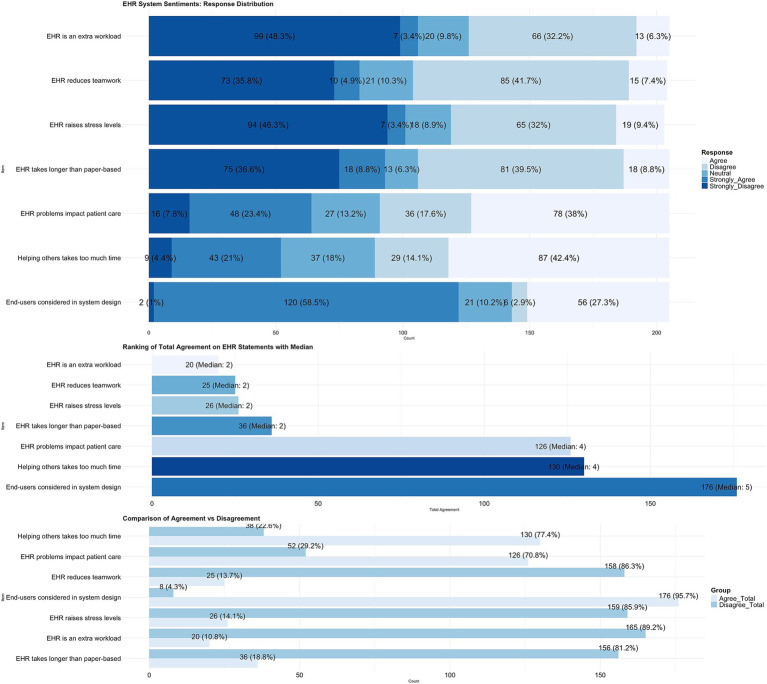
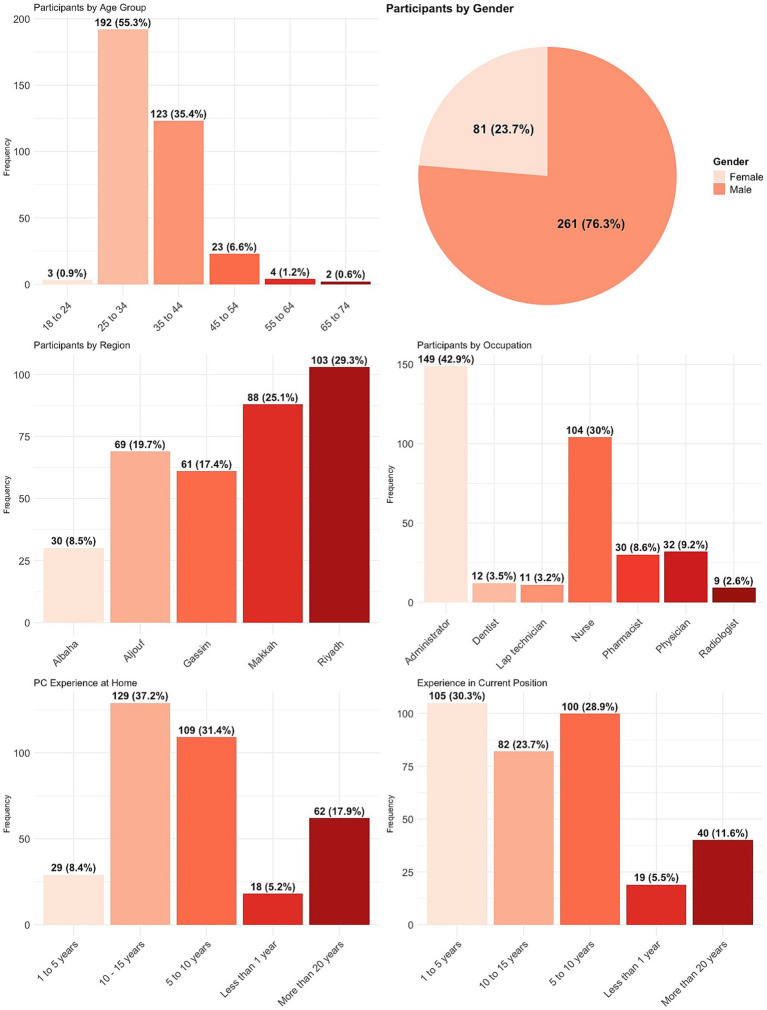
This study adopted a mixed methods approach using an exploratory sequential design to capture both strategic and operational perspectives on EHRS implementation. The qualitative phase involved semi-structured interviews with 14 key informants from the MoH who were directly involved in the EHRS deployment, aiming to identify structural and policy-related barriers. The quantitative phase consisted of an online survey completed by 351 PHC practitioners to assess user-level challenges, including system usability, training adequacy, and technical support availability. This sequential approach ensured that the survey was informed by the insights gained from the qualitative phase.
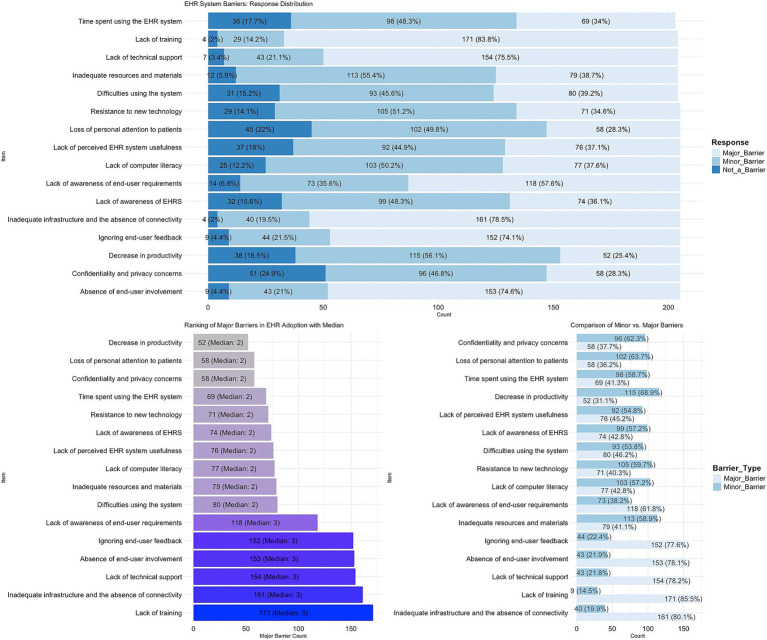
Findings from both phases revealed multiple barriers affecting EHRS implementation. Key challenges included the large-scale nature of the project, resistance to change, insufficient training, lack of technical support, poor system interoperability, geographical limitations, and inadequate user engagement. Additionally, unclear software selection criteria contributed to integration difficulties. To address these barriers, the study proposes several strategies, including collaborating with telecom providers to improve connectivity, implementing a phased regional deployment strategy, and enhancing training and technical support frameworks.
The study highlights insufficient connectivity, inadequate technical support, and high turnover in key leadership positions as major contributors to previous implementation failures. Notably, training and ongoing support emerged as critical obstacles, whereas concerns related to privacy and confidentiality were found to be less significant. To ensure successful EHRS adoption, decision-makers must allocate sufficient resources for software selection, infrastructure improvements, workforce training, and continuous technical support. This study fills a research gap by providing evidence-based recommendations for optimizing large-scale EHRS implementation in healthcare settings, particularly in resource-constrained environments.
在过去二十年中,政策制定者越来越重视技术整合,以提高医疗质量和效率。然而,由于包括资金限制和实施复杂性在内的各种挑战,近一半的此类举措未能实现其预期目标。沙特阿拉伯卫生部发起了一项全国性倡议,在约2200个初级医疗保健中心实施电子健康记录系统(EHRS)。然而,此前的部署尝试遇到了重大障碍,导致项目失败。卫生部确定的主要挑战包括基础设施不足、连接有限以及系统缺乏互操作性。
探讨阻碍沙特阿拉伯初级医疗保健中心有效实施电子健康记录系统的关键障碍,重点关注技术、组织和用户相关挑战。
本研究采用混合方法,使用探索性序列设计来获取关于电子健康记录系统实施的战略和运营视角。定性阶段包括对14名直接参与电子健康记录系统部署的沙特卫生部关键信息提供者进行半结构化访谈,旨在识别与结构和政策相关的障碍。定量阶段包括351名初级医疗保健中心从业者完成的在线调查,以评估用户层面的挑战,包括系统可用性、培训充分性和技术支持的可获得性。这种序列方法确保了调查基于定性阶段获得的见解。
两个阶段的研究结果都揭示了影响电子健康记录系统实施的多重障碍。主要挑战包括项目规模大、对变革的抵制、培训不足、缺乏技术支持、系统互操作性差、地理限制以及用户参与不足。此外,软件选择标准不明确导致了整合困难。为解决这些障碍,该研究提出了多项策略,包括与电信提供商合作改善连接、实施分阶段的区域部署策略以及加强培训和技术支持框架。
该研究强调连接不足、技术支持不足以及关键领导职位人员流动率高是此前实施失败的主要原因。值得注意的是,培训和持续支持成为关键障碍,而与隐私和保密性相关的担忧则不太重要。为确保成功采用电子健康记录系统,决策者必须为软件选择、基础设施改善、员工培训和持续技术支持分配足够的资源。本研究通过为优化医疗环境中大规模电子健康记录系统的实施,特别是在资源受限环境中,提供基于证据的建议,填补了研究空白。