Akin Ibrahim, Ozcan Ozge, Ozturan Yalcin Alper
Department of Surgery, Faculty of Veterinary Medicine, Aydin Adnan Menderes University, 09100, Aydin, Turkey.
Vet Res Commun. 2025 Apr 30;49(3):181. doi: 10.1007/s11259-025-10754-4.
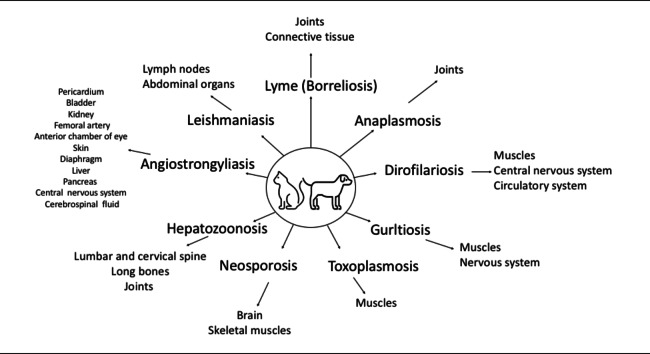
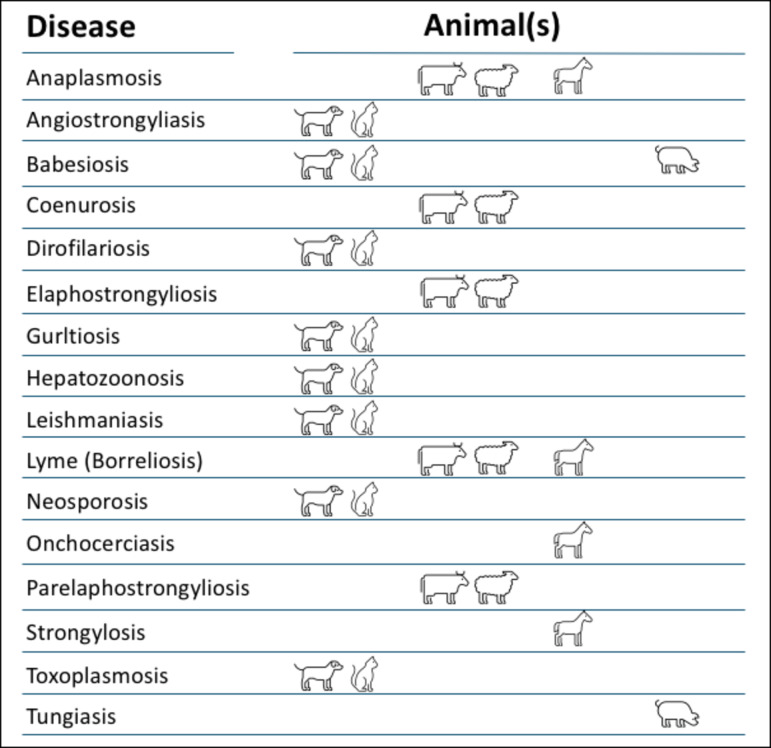
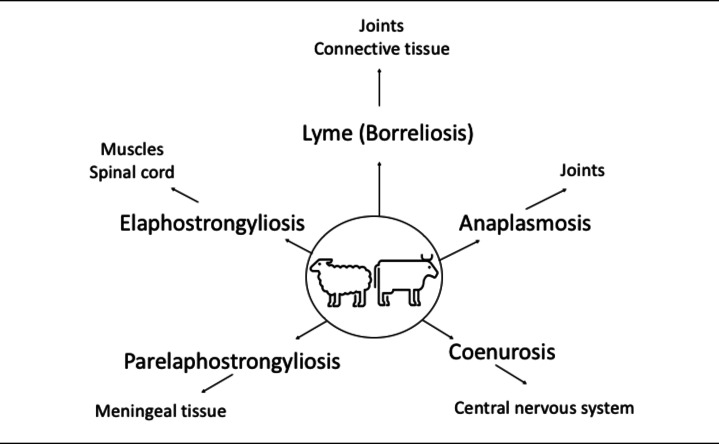
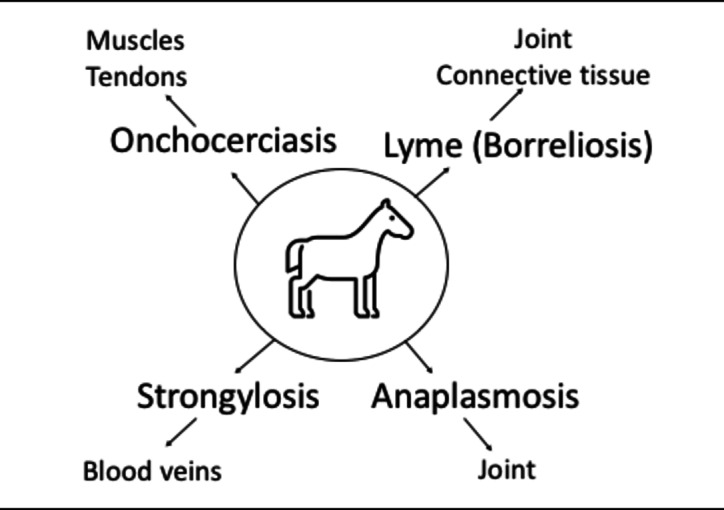
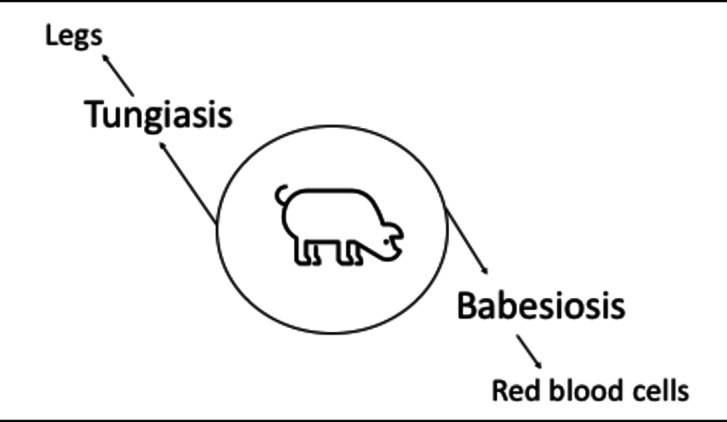
Lameness is a significant welfare issue in domestic animals, and it may also result in productivity losses in farm animals. While traumatic injuries are the primary cause of lameness in animals, parasitic infections may be a potential factor in cases where the underlying cause of lameness remains unclear. Parasites may cause lameness in animals by inflicting extensive pathological damage to various organs and tissues, inducing severe anemia, producing endo- and exotoxins that act on the host, and more. However, the mechanisms by which many parasites induce lameness remain unknown. This review summarizes the literature on parasitic-induced lameness, which is classified as direct or indirect. Direct lameness occurs when parasites damage tissues such as muscles, bones, joints, tendons, and nerves, leading to a loss of function in these structures and subsequent lameness. Neurotoxins produced by some parasites may also cause coordination disorders, paralysis, and lameness in animals. Indirect lameness is caused by Égaré parasites-misplaced parasites that reside in tissues unrelated to their typical target location. These parasites may be found in the central nervous system, muscles, nerves, tendons, interdigital region, or femoral artery. Some endoparasites may cause tissue damage during migration, while others may induce lameness by affecting the circulatory system through blood parasites.
跛行是家畜中一个重要的福利问题,它还可能导致农场动物的生产力损失。虽然创伤性损伤是动物跛行的主要原因,但在跛行根本原因不明的情况下,寄生虫感染可能是一个潜在因素。寄生虫可通过对各种器官和组织造成广泛的病理损害、导致严重贫血、产生作用于宿主的内毒素和外毒素等多种方式,引起动物跛行。然而,许多寄生虫导致跛行的机制仍不清楚。本综述总结了关于寄生虫引起跛行的文献,其被分为直接或间接两种类型。当寄生虫损害肌肉、骨骼、关节、肌腱和神经等组织时,会导致这些结构功能丧失并随后引发跛行,这种情况称为直接跛行。一些寄生虫产生的神经毒素也可能导致动物出现协调障碍、麻痹和跛行。间接跛行是由异位寄生虫引起的,即寄生于与其典型目标位置无关的组织中的寄生虫。这些寄生虫可能存在于中枢神经系统、肌肉、神经、肌腱、指间区域或股动脉中。一些体内寄生虫在移行过程中可能会造成组织损伤,而另一些可能通过血液寄生虫影响循环系统从而导致跛行。