Fried Daniel, Zhu Yihua
Department of Preventive and Restorative Dental Sciences, University of California, San Francisco, 707 Parnassus Ave, San Francisco, CA 94143, USA.
Diagnostics (Basel). 2025 Apr 18;15(8):1034. doi: 10.3390/diagnostics15081034.
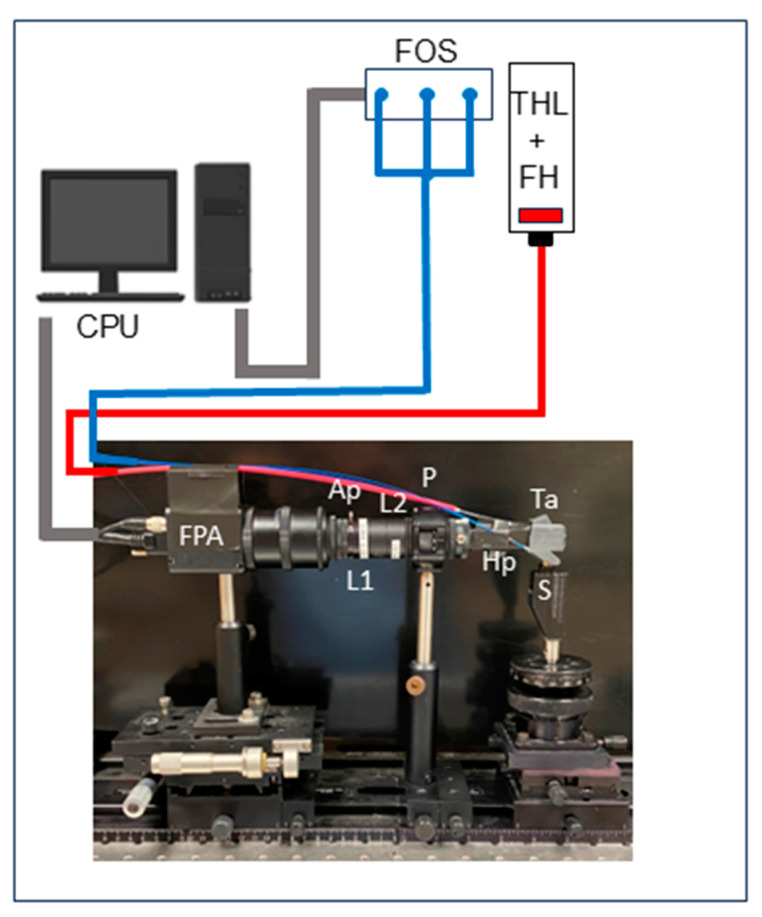
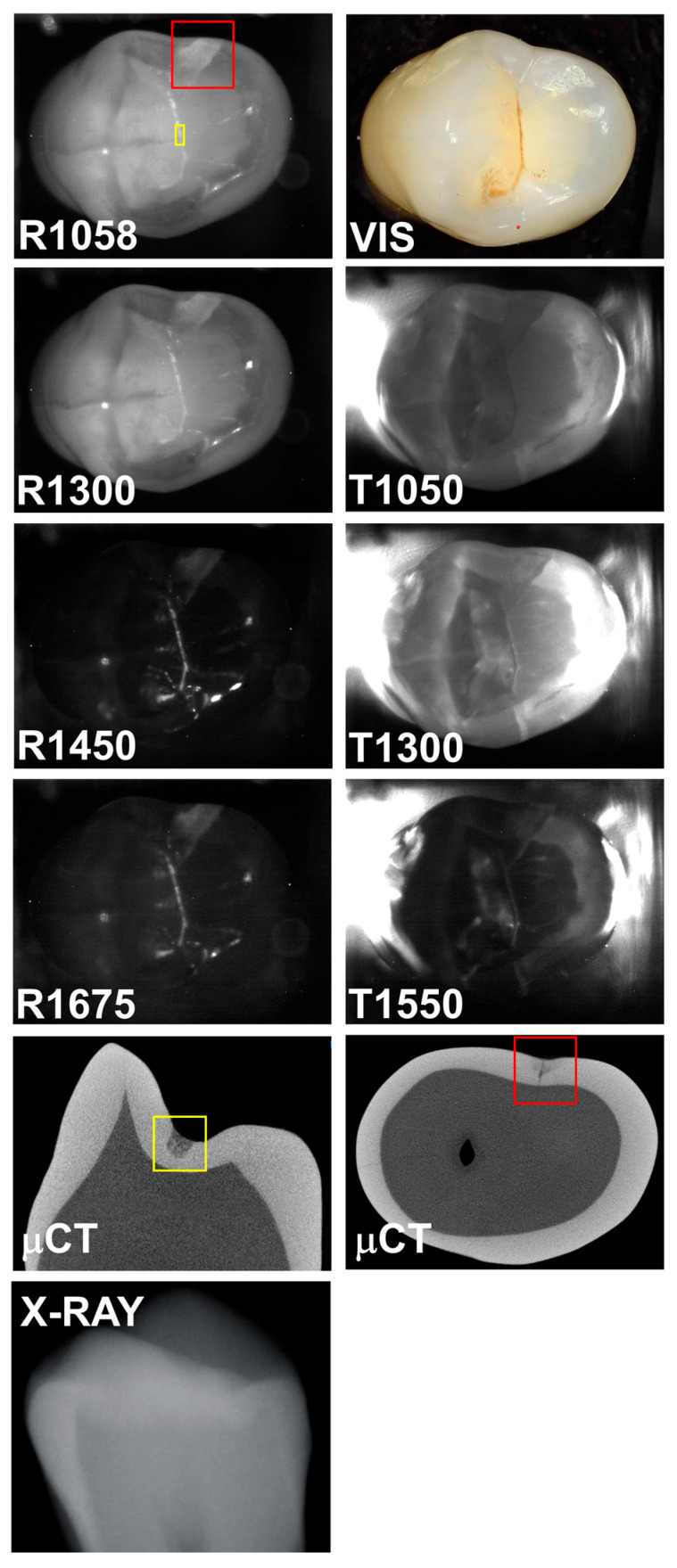
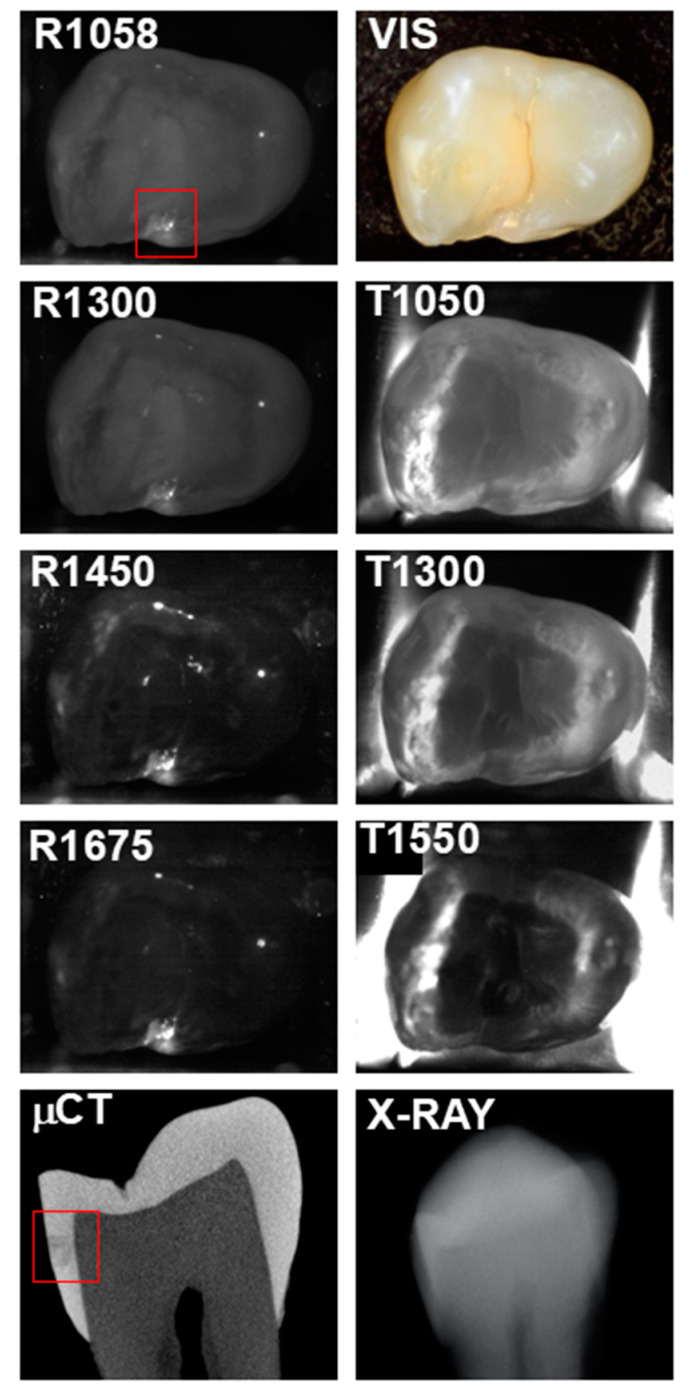
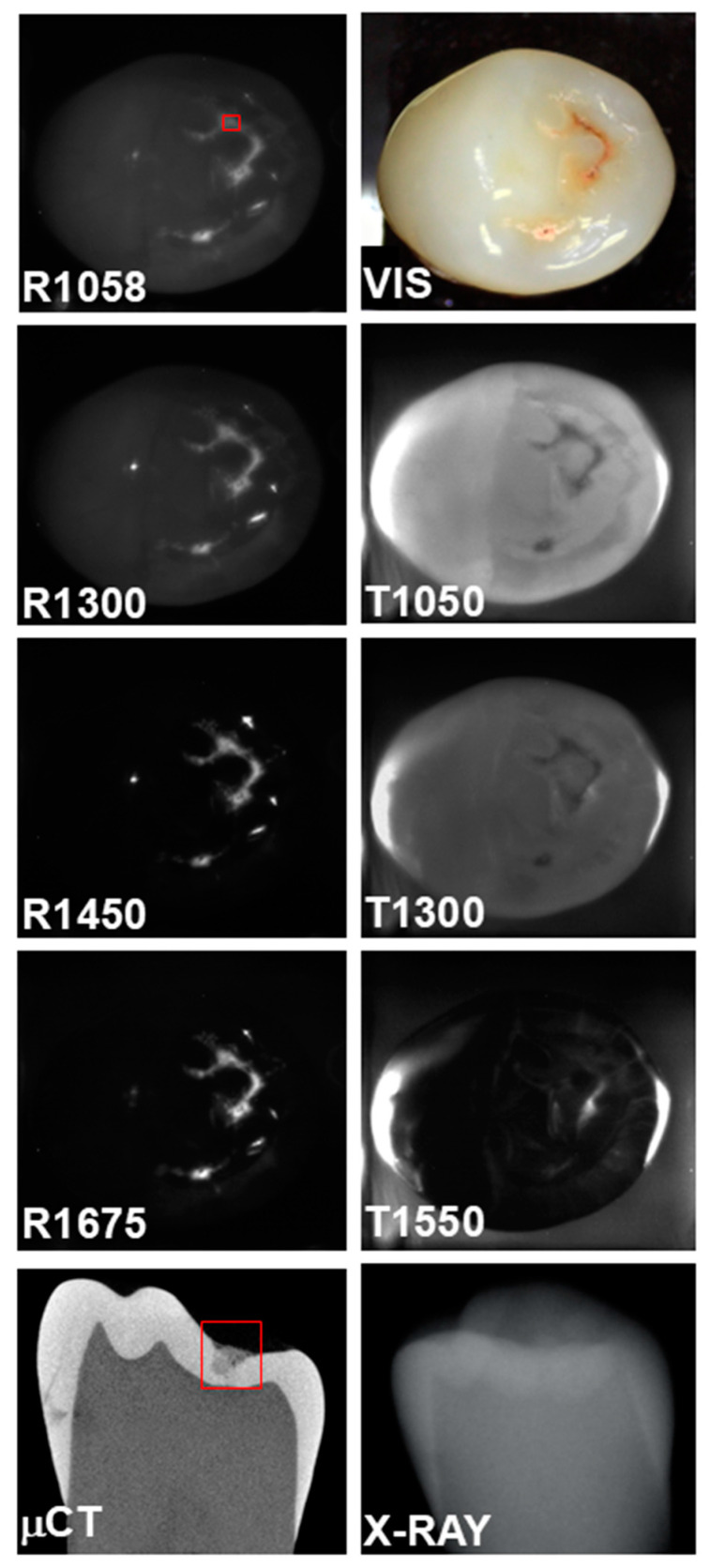
The aim of this in vitro study was to determine the optimal combinations of wavelengths for short wavelength infrared (SWIR) multispectral transillumination and reflectance imaging of caries lesions on proximal and occlusal surfaces. The contrasts of ( = 76) caries lesions on the occlusal and proximal surfaces of extracted teeth were measured at 1050, 1300, and 1550 nm for occlusal transillumination and 1058, 1300, 1450, and 1675 nm for occlusal reflectance. All teeth were also imaged using radiography and microcomputed tomography (μCT) to verify lesion presence. A custom-fabricated handheld imaging probe suitable for clinical use and for the simultaneous acquisition of SWIR occlusal transillumination and reflectance (SWIR-OTR) images was used. Three high-power superluminescent diode lasers were used for transillumination, and a fiber-optic switch was used to switch between the transillumination wavelengths. Optical bandpass filters coupled with a tungsten halogen lamp were used for reflectance. All images were acquired at the same position and with the same field of view for comparison. The highest contrasts in reflection were at 1450 and 1675 nm for occlusal and interproximal lesions, and the highest contrasts for transillumination were at 1050 and 1300 nm. This study suggests that the best wavelengths for SWIR-OTR are between 1000 and 1300 nm for transillumination and greater than 1400 nm for reflectance. Wavelengths beyond 1400 nm are advantageous for reflectance and yield significantly higher contrast. Wavelengths beyond 1300 nm are not promising for occlusal transillumination since internal water absorption leads to contrast inversion.
这项体外研究的目的是确定用于近中面和咬合面龋损的短波红外(SWIR)多光谱透照和反射成像的最佳波长组合。在1050、1300和1550nm处测量了离体牙咬合面龋损的对比度( = 76),用于咬合面透照,在1058、1300、1450和1675nm处测量了近中面龋损的对比度,用于咬合面反射。所有牙齿还使用X线摄影和微型计算机断层扫描(μCT)成像以验证龋损的存在。使用了一种定制的手持式成像探头,适用于临床使用以及同时采集SWIR咬合面透照和反射(SWIR-OTR)图像。使用三个高功率超发光二极管激光器进行透照,并使用光纤开关在透照波长之间切换。与钨卤灯耦合的光学带通滤波器用于反射。所有图像均在相同位置和相同视野下采集以进行比较。咬合面和邻面龋损反射的最高对比度分别在1450和1675nm处,透照的最高对比度分别在1050和1300nm处。这项研究表明,SWIR-OTR的最佳波长对于透照是在1000至1300nm之间,对于反射是大于1400nm。超过1400nm的波长对于反射是有利的,并且产生明显更高的对比度。超过1300nm的波长对于咬合面透照没有前景,因为内部水吸收会导致对比度反转。