Liao Wei-Ju, Jiang Yuan-Hong, Jhang Jia-Fong, Chen Sheng-Fu, Lee Yu Khun, Lee Cheng-Ling, Chang Tien-Lin, Kuo Hann-Chorng
Department of Urology, Hualien Tzu Chi Hospital, Buddhist Tzu Chi Medical Foundation, Hualien, Taiwan.
Department of Urology, School of Medicine, Tzu Chi University, Hualien, Taiwan.
Tzu Chi Med J. 2025 Apr 7;37(2):117-124. doi: 10.4103/tcmj.tcmj_286_24. eCollection 2025 Apr-Jun.
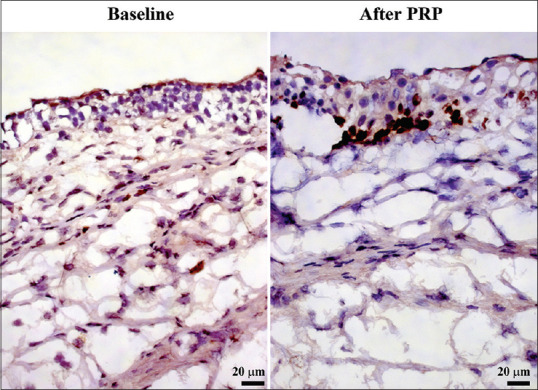
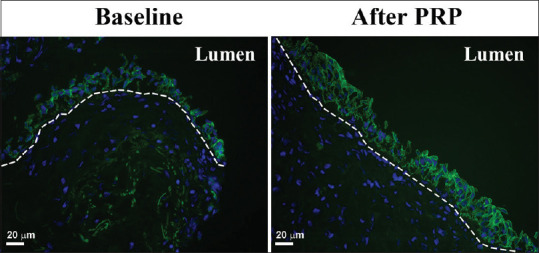
Urinary tract infection (UTI) of the urinary bladder is a common bacterial infection that predominantly affects women, with many experiencing recurrent episodes. Recurrent UTIs (rUTIs) are associated with significant physical, psychological, and social difficulties. Further, they are closely related to lower urinary tract dysfunction (LUTD). LUTD affects bladder function and structure, thereby contributing to urinary urgency, frequency, and incontinence, which, in turn, increases the risk of recurrent infections due to impaired urothelial defense mechanisms. The current study explored the pathophysiology of LUTD in women with rUTIs. Potential treatments for rUTIs include long-term prophylactic antibiotics, probiotics, D-mannose, vaccines, small molecule inhibitors, and stem cell therapy. Moreover, it evaluated the use of platelet-rich plasma (PRP) therapy as a treatment modality for LUTD. PRP has regenerative and anti-inflammatory properties. Hence, it can be a promising option for enhancing urothelial barrier integrity and reducing infection recurrence. Repeated intravesical PRP injections are effective in improving bladder symptoms and decreasing UTI recurrences by enhancing the proliferative ability of the urothelium in patients with rUTIs. Further, this review examined the potential predictors of successful PRP treatment outcomes such as cytokine and urothelial biomarker levels, which provided insights into patient selection and individualized treatment strategies. Identifying the predictive biomarkers of treatment responsiveness is essential for optimizing PRP therapy. Hence, to improve the clinical outcomes and quality of life of patients with rUTIs, future research should focus on refining the use of PRP, exploring combination therapies, and validating biomarkers.
膀胱炎是一种常见的细菌感染,主要影响女性,许多患者会反复发作。复发性膀胱炎(rUTIs)会带来严重的身体、心理和社会问题。此外,它们与下尿路功能障碍(LUTD)密切相关。LUTD会影响膀胱功能和结构,进而导致尿急、尿频和尿失禁,而这反过来又会因尿路上皮防御机制受损而增加反复感染的风险。本研究探讨了rUTIs女性患者LUTD的病理生理学。rUTIs的潜在治疗方法包括长期预防性使用抗生素、益生菌、D-甘露糖、疫苗、小分子抑制剂和干细胞疗法。此外,该研究评估了富血小板血浆(PRP)疗法作为LUTD治疗方式的应用。PRP具有再生和抗炎特性。因此,它可能是增强尿路上皮屏障完整性和减少感染复发的一个有前景的选择。反复膀胱内注射PRP可有效改善rUTIs患者的膀胱症状并减少膀胱炎复发,这是通过增强尿路上皮的增殖能力实现的。此外,本综述研究了PRP治疗成功结果的潜在预测因素,如细胞因子和尿路上皮生物标志物水平,这为患者选择和个体化治疗策略提供了见解。确定治疗反应性的预测生物标志物对于优化PRP治疗至关重要。因此,为改善rUTIs患者的临床结果和生活质量,未来的研究应专注于优化PRP的使用、探索联合治疗方法以及验证生物标志物。