Ke Qian-Sheng, Jhang Jia-Fong, Lin Teng-Yi, Ho Han-Chen, Jiang Yuan-Hong, Hsu Yuan-Hsiang, Kuo Hann-Chorng
Department of Urology, Buddhist Tzu Chi General Hospital and Tzu Chi University, Hualien, Taiwan.
Department of Laboratory Medicine, Buddhist Tzu Chi General Hospital and Tzu Chi University, Hualien, Taiwan.
Tzu Chi Med J. 2019 Jul-Sep;31(3):135-143. doi: 10.4103/tcmj.tcmj_92_19.
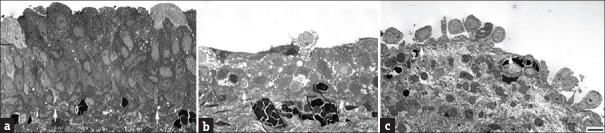
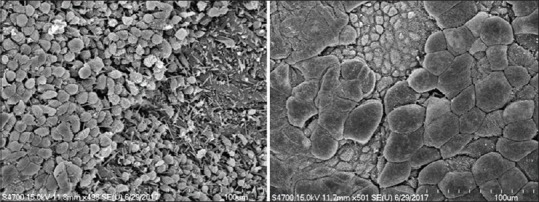
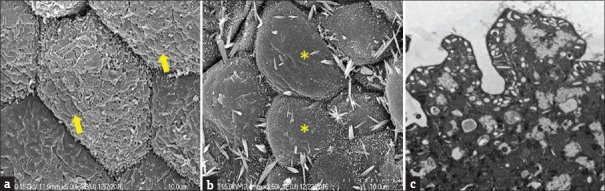
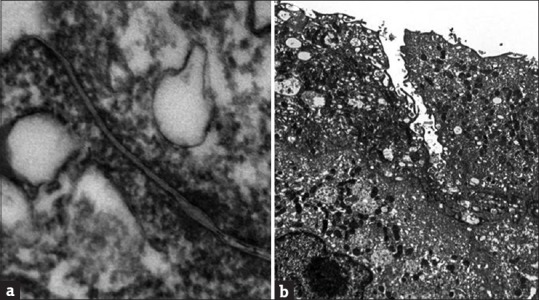
The bladder urothelium plays an important role of barrier function to prevent influx of urinary toxic substance and bacteria. When there is insult to the urinary bladder, the urothelium will start to regenerate on injury. However, several factors might affect the regenerative function of bladder urothelium, including aging, chronic inflammation, and system diseases such as diabetes and chronic kidney diseases (CKDs). Impairment of bladder mucosal regenerative function might result in defective urothelial cell differentiation as well as barrier function, which might be the underlying pathophysiology of interstitial cystitis/bladder pain syndrome (IC/BPS) and recurrent bacterial cystitis. Our previous immunohistochemistry (IHC) study and electron microscopic study revealed that the loss of normal umbrella cells and defective junction proteins in IC/BPS and recurrent cystitis. Platelet-rich plasma (PRP) has been previously used in many medical aspects as regenerative medicine therapy. PRP is rich in many growth factors and cytokines which modulate the process of inflammation and regeneration in the wound healing process. Recent pilot studies have shown that intravesical PRP injections improve IC symptoms and yield a success rate of 70% at 3 months after treatment. The results highly suggest that PRP injection could improve urothelial regenerative function and reduce chronic inflammation in IC patients. This article reviews recently published researches on the urothelial dysfunction biomarkers, urothelial cell differentiation, and urinary regenerative and inflammatory proteins in patients with IC/BPS or recurrent bacterial cystitis. The pathophysiology of the insufficient urothelial regeneration and differentiation; and chronic inflammation may induce urothelial dysfunction and further affect the regenerative ability of the diseased bladder urothelium in IC/BPS and recurrent bacterial cystitis are discussed.
膀胱尿路上皮在防止尿液中有毒物质和细菌侵入方面起着重要的屏障功能作用。当膀胱受到损伤时,尿路上皮会在损伤处开始再生。然而,包括衰老、慢性炎症以及糖尿病和慢性肾脏病(CKD)等系统性疾病在内的多种因素可能会影响膀胱尿路上皮的再生功能。膀胱黏膜再生功能受损可能导致尿路上皮细胞分化缺陷以及屏障功能受损,这可能是间质性膀胱炎/膀胱疼痛综合征(IC/BPS)和复发性细菌性膀胱炎的潜在病理生理学机制。我们之前的免疫组织化学(IHC)研究和电子显微镜研究表明,IC/BPS和复发性膀胱炎中正常伞细胞缺失且连接蛋白存在缺陷。富血小板血浆(PRP)此前已在许多医学领域用作再生医学疗法。PRP富含多种生长因子和细胞因子,可调节伤口愈合过程中的炎症和再生过程。最近的初步研究表明,膀胱内注射PRP可改善IC症状,治疗3个月后的成功率为70%。这些结果强烈表明,PRP注射可改善IC患者的尿路上皮再生功能并减轻慢性炎症。本文综述了最近发表的关于IC/BPS或复发性细菌性膀胱炎患者尿路上皮功能障碍生物标志物、尿路上皮细胞分化以及尿液中的再生和炎症蛋白的研究。讨论了尿路上皮再生和分化不足的病理生理学;以及慢性炎症可能导致尿路上皮功能障碍,并进一步影响IC/BPS和复发性细菌性膀胱炎中患病膀胱尿路上皮的再生能力。