Haque Md Rashedul, Ahmed Wahida, Rahman Md Ashikur, Md Zulfiker Rahman Khondoker, Rahman Md Mostafizur
Laboratory of Environmental Health and Ecotoxicology, Department of Environmental Sciences, Jahangirnagar University, Dhaka, 1342, Bangladesh.
Laboratory of Entomology, Department of Zoology, Jahangirnagar University, Dhaka, 1342, Bangladesh.
Sci Rep. 2025 May 5;15(1):15635. doi: 10.1038/s41598-025-88024-1.
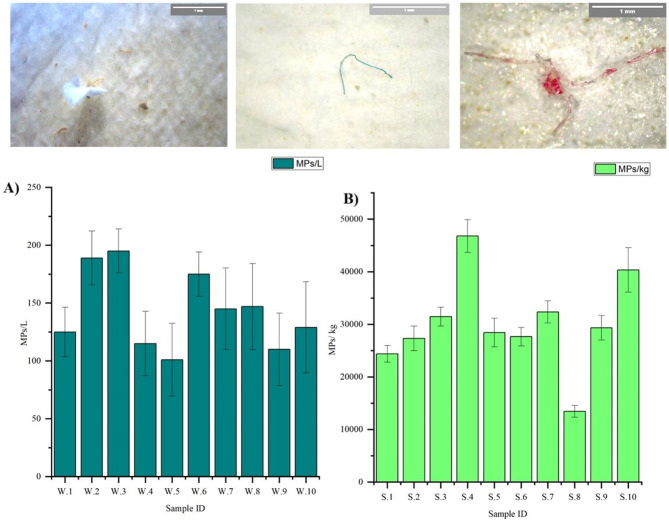
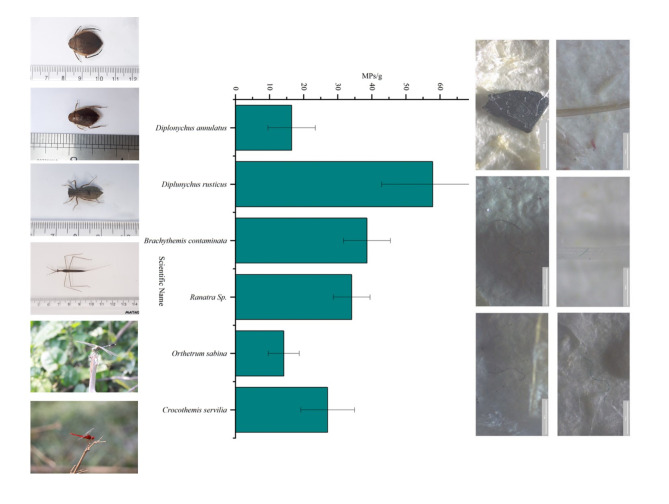
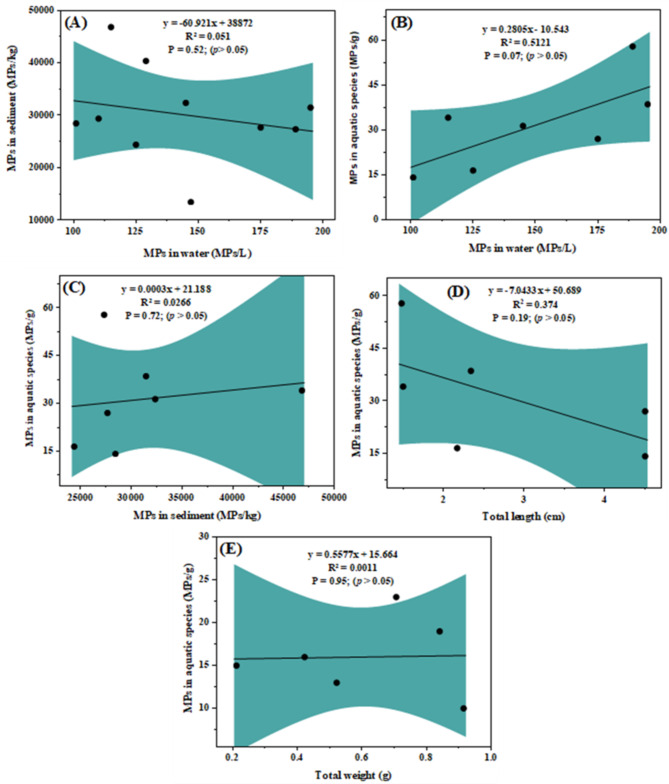
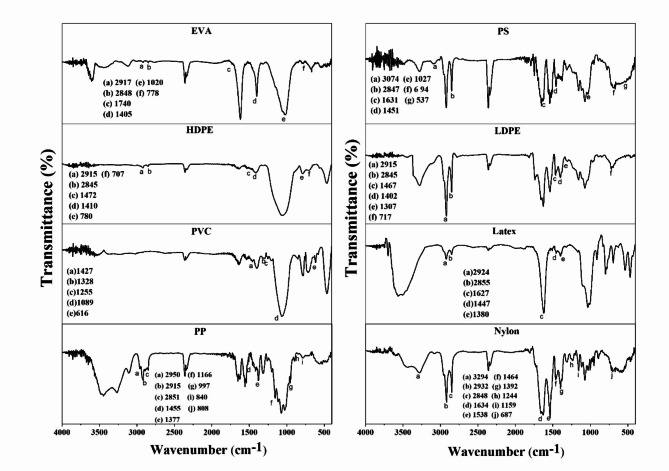
Microplastics (MPs) are emerging pollutants that threaten the aquatic ecosystem. Aquatic insects may play a crucial role in moving MPs into different trophic levels within and across the ecosystems. However, field-level evidence is still insufficient globally despite its tremendous ecological significance. Thus, for the first time in Bangladesh, MPs were explored in six species of aquatic insects along with water and sediment of the Daleshwari River. Digestion and density separation methods were used for the extraction of MPs. Microscopic inspection and Fourier transform spectroscopy (FT-IR) were done to identify and quantify MPs. The average concentration of MPs in sediment and water is 143.1 ± 28.52 of MPs/L and 30153.8 ± 2313.62 of MPs/kg, respectively. In aquatic species, the highest MPs found in D. rusticus (57.82 ± 14.98 MPs/g), followed by B. contaminate (38.53 ± 6.87 MPs/g), Ranatra sp. (34.05 ± 5.39 MPs/g), C. servilia (26.99 ± 7.88 MPs/g), D. annulatus (16.44 ± 6.95 MPs/g), and O. sabina (14.13 ± 4.52 MPs/g). A total of eight types of polymers have been identified. It was important to notice that the studied aquatic insects bear similar MPs (size, shape, and color) found in water and sediments from the river. It reveals the potential for the insects (accumulators of MPs) to be a driving factor for the transport of the MPs across different ecosystems. It has also been found that Aquatic insect's size, weight, feeding habitat, and host reserviour could be responsible for MPs ingestion. In addition, ecological risk assessment (Contamination Factor, Nemerrow Pollution Index, Pollution Load Index, Polymer Hazard Index) indicates different levels of risk for the pertaining river ecosystem.
微塑料是一种新兴污染物,威胁着水生生态系统。水生昆虫可能在将微塑料转移到生态系统内和跨生态系统的不同营养级中发挥关键作用。然而,尽管其具有巨大的生态意义,但全球范围内的实地证据仍然不足。因此,在孟加拉国首次对达莱什瓦里河的六种水生昆虫以及水和沉积物中的微塑料进行了研究。采用消化法和密度分离法提取微塑料。通过显微镜检查和傅里叶变换光谱法(FT-IR)对微塑料进行鉴定和定量。沉积物和水中微塑料的平均浓度分别为143.1±28.52个微塑料/升和30153.8±2313.62个微塑料/千克。在水生物种中,在铁锈色粗腿水黾(57.82±14.98个微塑料/克)中发现的微塑料最多,其次是污染角石蛾(38.53±6.87个微塑料/克)、蝎蝽属(34.05±5.39个微塑料/克)、塞维利亚扁蜉(26.99±7.88个微塑料/克)、环斑粗腿水黾(16.44±6.95个微塑料/克)和萨宾角石蛾(14.13±4.52个微塑料/克)。共鉴定出八种类型的聚合物。值得注意的是,所研究的水生昆虫体内的微塑料(大小、形状和颜色)与河流中的水和沉积物中的微塑料相似。这揭示了昆虫(微塑料积累者)有可能成为微塑料在不同生态系统中迁移的驱动因素。还发现水生昆虫的大小、重量、摄食栖息地和宿主水库可能是其摄入微塑料的原因。此外,生态风险评估(污染因子、内梅罗污染指数、污染负荷指数、聚合物危害指数)表明相关河流生态系统存在不同程度的风险。